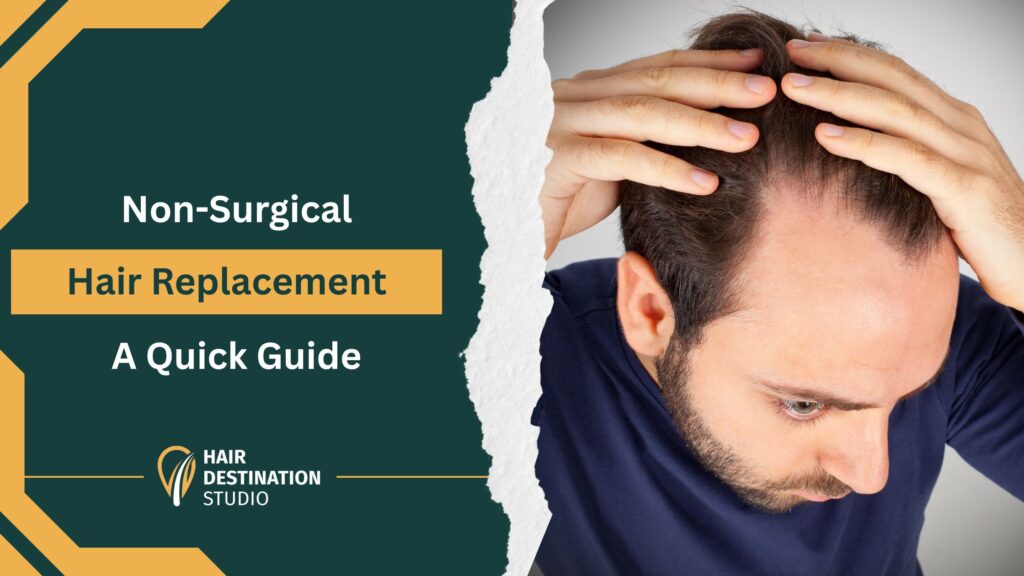
Hair loss rarely arrives with drama.
It settles in slowly—first a thinning crown, then a receding hairline, then a parting that keeps widening no matter how carefully you style it.
What most people don’t anticipate is how quietly it changes behaviour. You start to avoid mirrors and adjust the lighting. Standing a little differently in photos and styling your hair “strategically” instead of confidently.
At Hair Destination Studio, we meet people every week who aren’t chasing miracles. They’re tired of guessing. They’ve tried oils, supplements, serums, home remedies, and sometimes even treatments that promised far more than they delivered.
Almost all of them ask the same thing:
“Is non-surgical hair replacement actually worth it—or is it just another overhyped fix?”
This guide exists to answer that question honestly—before you invest time, money, or emotional energy.
No hype.
No scare tactics.
No one-size-fits-all claims.
Just what you genuinely need to know before you try non-surgical hair replacement.
What Non-Surgical Hair Replacement Really Is (Without Marketing Spin)
Let’s clear the confusion first.
Non-surgical hair replacement is a cosmetic restoration solution, not a medical treatment. A customised hair system is integrated with your scalp and existing hair to recreate the appearance of natural hair—without surgery, medication, or invasive procedures.
It does not:
- Permanently alter your scalp.
- Require incisions, stitches, or recovery time.
- Depend on hair regrowth.
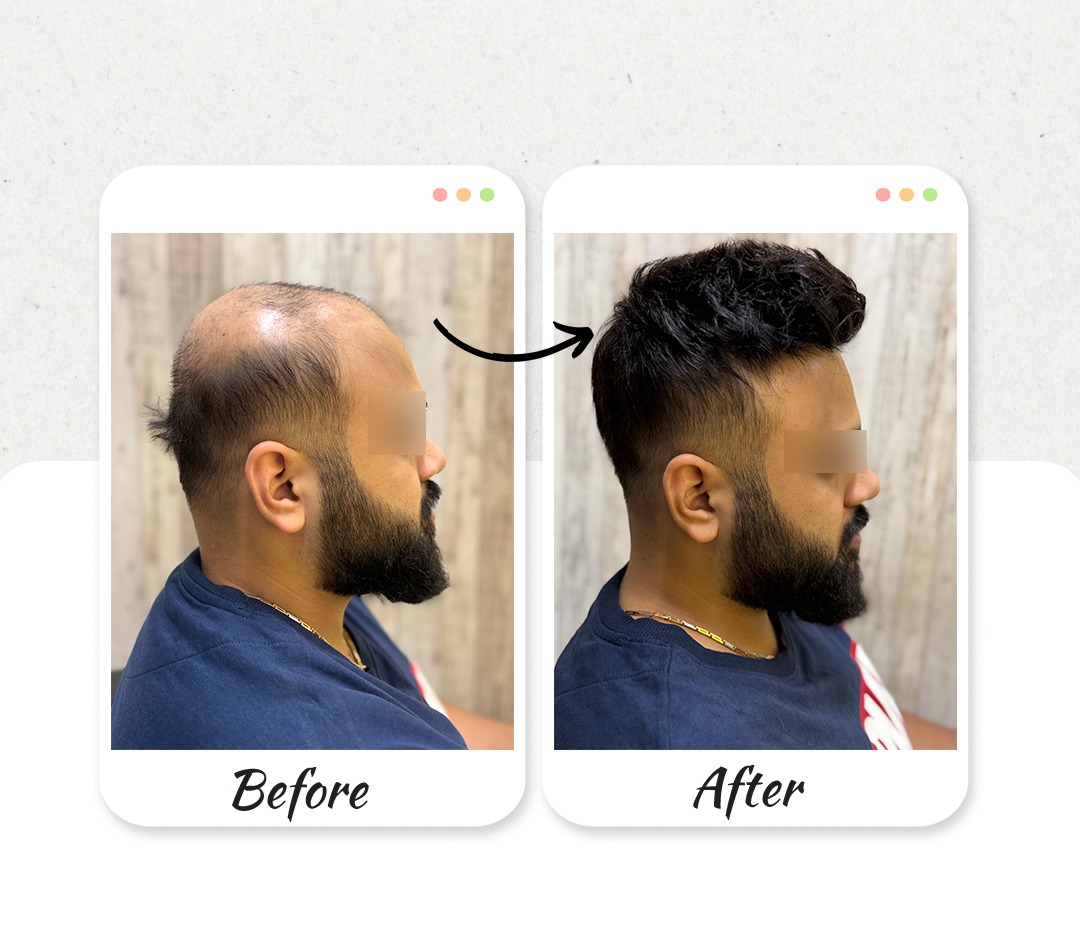
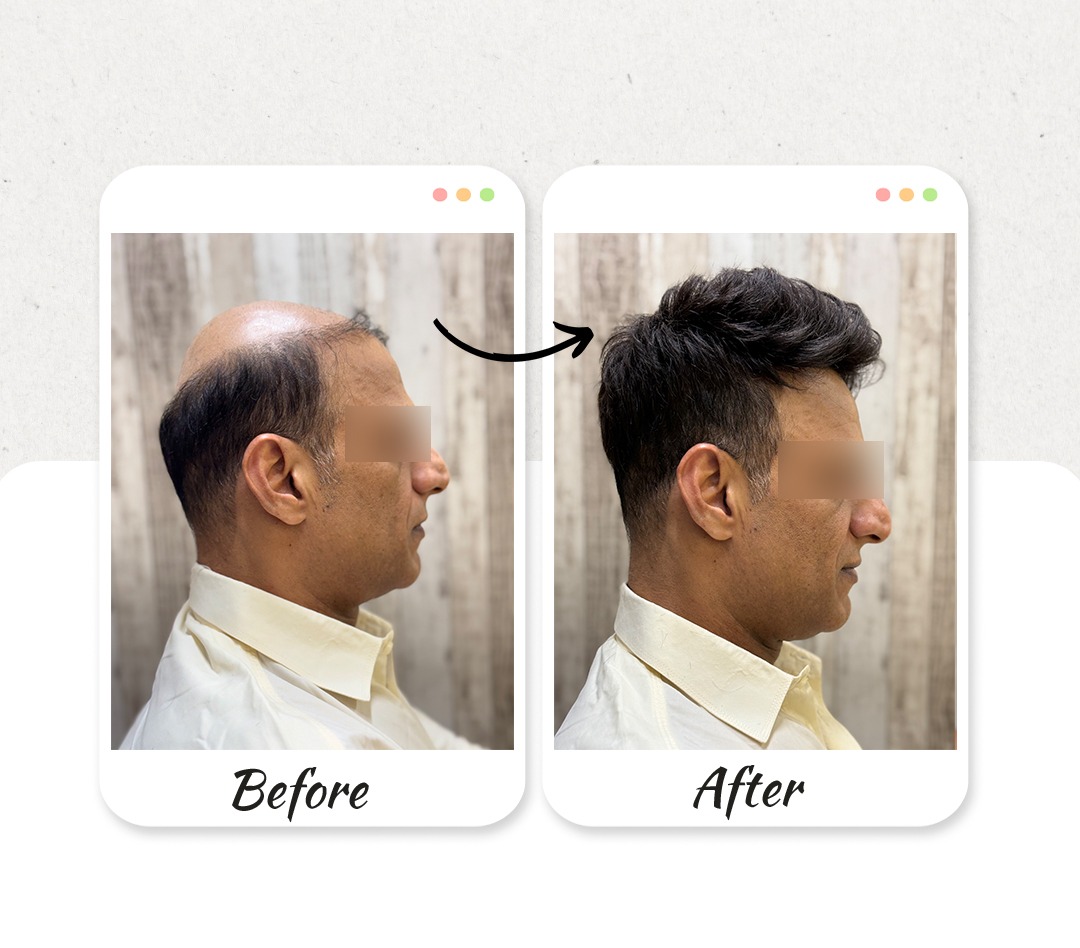
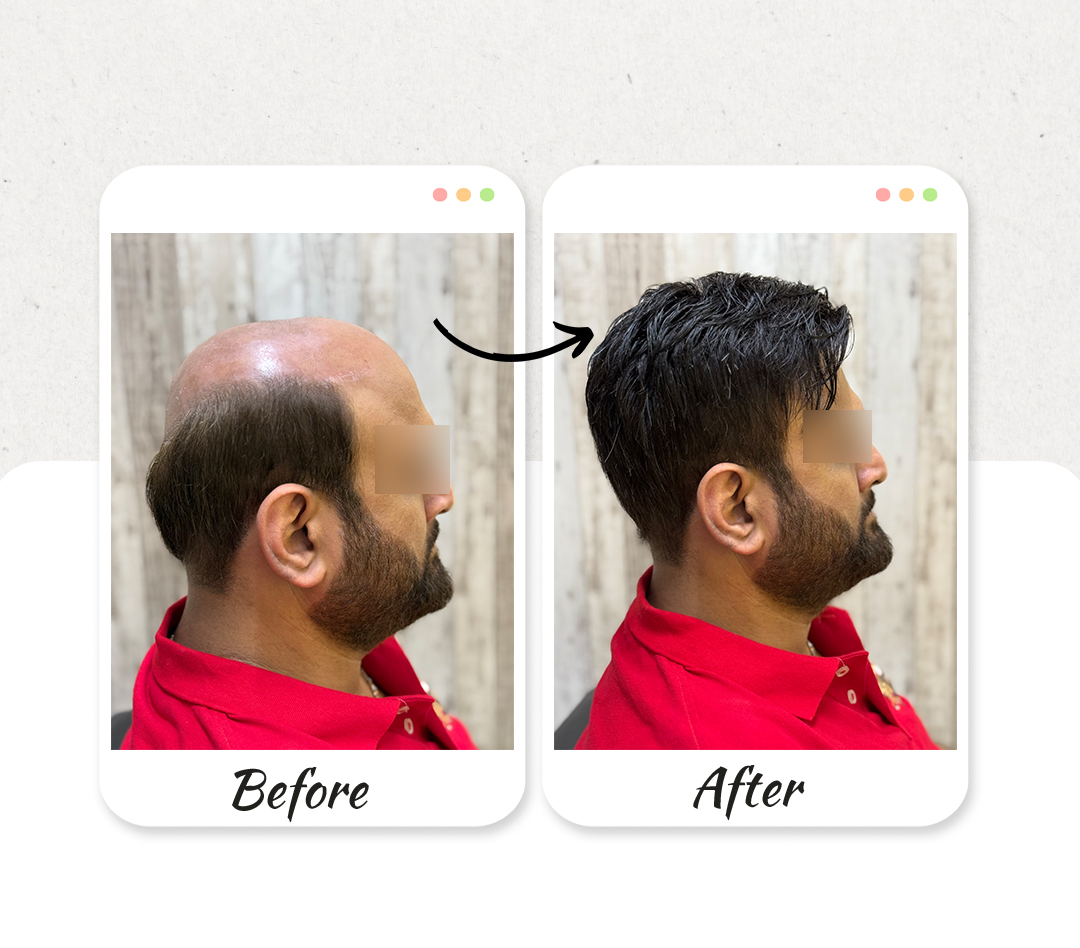
Instead, it focuses on immediate visual restoration—restoring the appearance of density, hairline structure, and overall balance.
At Hair Destination Studio, we’re very clear about this distinction because it sets realistic expectations. Non-surgical hair replacement doesn’t treat hair loss. It solves how hair loss looks—and that difference matters.
Why Non-Surgical Hair Replacement Is Growing So Fast
Most hair loss solutions fall into three categories:
- Medication-based
- Surgical
- Cosmetic (non-surgical)
Non-surgical hair replacement has grown rapidly because it addresses the limitations of the other two.
Immediate Results
There’s no waiting period, no “shedding phase,” and no months of uncertainty. You see the result the same day.
No Medical Risk
No surgery. No anaesthesia. No downtime. No long-term dependency.
Works Even When Other Options Don’t
It doesn’t matter if:
- Hair loss is advanced.
- Donor hair is insufficient.
- Previous treatments failed
This is why many clients at Hair Destination Studio don’t view non-surgical hair replacement as an emotional decision—but a practical one.
Who Is Non-Surgical Hair Replacement Actually For?
Based on real consultations, non-surgical hair replacement is especially suitable if:
- You have moderate-to-advanced thinning or baldness.
- You’re not an ideal candidate for a hair transplant.
- You want a visible improvement immediately.
- You prefer a reversible, non-invasive option.
- You don’t want lifelong medication use.
- You value control and predictability.
It’s particularly popular among:
- Working professionals
- Entrepreneurs and business owners
- Public-facing roles
- Frequent travellers
People who want a consistent appearance without medical uncertainty
What Non-Surgical Hair Replacement Is Not
Let’s address the misconceptions early—because this is where disappointment usually begins.
Non-surgical hair replacement is not:
- A ready-made wig bought online.
- A temporary disguise you wear casually
- A “lazy” shortcut
- A one-time fix that needs no upkeep
At Hair Destination Studio, anyone expecting zero maintenance or permanent biological results is advised against proceeding. Transparency protects outcomes.
How Modern Non-Surgical Hair Replacement Actually Works
Step 1: Consultation & Scalp Assessment
This is the most crucial stage—and the most skipped elsewhere.
We assess:
- Hair loss pattern and progression
- Scalp health and sensitivity
- Lifestyle, work routine, and travel
- Expectations (and whether they’re realistic)
Many people are filtered out here—not because they can’t do hair replacement, but because it may not suit their mindset or lifestyle.
Step 2: Custom System Selection
There is no universal system.
Selection is based on:
- Base type (skin, lace, or hybrid)
- Hair density and age appropriateness
- Colour precision (not just “black” or “brown”)
- Hairline design that suits the facial structure
- Texture, flow, and natural direction
At Hair Destination Studio, customisation is non-negotiable. Templates are where most unnatural results begin.
Step 3: Precision Fixing
The system is integrated using skin-safe bonding techniques designed for comfort, durability, and realism.
A well-fixed system:
- Feels secure but not tight
- Moves naturally with the scalp
- Handles daily activity comfortably
- Doesn’t draw attention
Step 4: Styling & Blending
This is where experience separates good results from obvious ones.
The system is cut, layered, and blended with existing hair. Poor blending—not the system itself—is what usually gives hair replacement away.
Will It Look Natural? (The Honest Answer)
Yes—but only when done correctly.
Modern non-surgical hair replacement can look incredibly natural when:
- Hairline design matches facial proportions.
- Density aligns with age and personality.
- Styling respects natural growth patterns.
- Maintenance is followed correctly.
At Hair Destination Studio, we often remind clients:
Natural hair is imperfect. Perfect hair looks suspicious.
Believability matters more than perfection.
Can You Live Normally With It?
If it’s done right—absolutely.
Clients with non-surgical hair replacement:
- Work long hours
- Travel frequently
- Exercise
- Attend social events
- Style their hair normally.
- Swim (with basic care)
You don’t need to be constantly cautious. You just need to treat it with the same respect you would healthy natural hair.
Maintenance: The Part Most People Underestimate
Non-surgical hair replacement is not maintenance-free—and anyone saying otherwise is overselling.
Typical maintenance includes:
- Periodic refixing
- Cleaning and rebonding
- Scalp hygiene checks
- Styling adjustments
- Ongoing system care education
At Hair Destination Studio, maintenance plans are tailored around your lifestyle—not forced schedules.
Think of it like maintaining a premium car. Ignore servicing, and performance drops. Maintain it well, and reliability stays high.
How Long Does a Hair Replacement System Last?
There’s no single number—but there is an honest range.
Longevity depends on:
- System quality
- Daily wear habits
- Maintenance discipline
- Climate and pollution exposure
- Styling behaviour
With professional care, most systems last several months to over a year.
Promises of “many years without replacement” are usually unrealistic.
Is Non-Surgical Hair Replacement Safe?
When done professionally—yes.
Safety depends on:
- Skin-safe adhesives
- Hygiene standards
- Trained technicians
- Regular scalp monitoring
At Hair Destination Studio, scalp health is checked continuously. Any discomfort or imbalance is addressed immediately—not ignored.
Common Mistakes People Make Before Trying It
Choosing price over expertise
Cheap work almost always costs more in the long run.
Skipping proper consultation
Hair replacement without assessment is guesswork.
Expecting genetic reversal
It’s visual restoration—not regrowth.
Ignoring maintenance guidance
Neglect shortens lifespan and ruins results.
Not communicating concerns
Feedback improves outcomes.
Non-Surgical Hair Replacement vs Other Options
Compared to medications:
- Immediate results vs delayed uncertainty
- No side effects
- No long-term dependency
Compared to hair transplant:
- Non-invasive
- Reversible
- Predictable appearance
- No recovery time|
This is why many Hair Destination Studio clients see non-surgical hair replacement not as a compromise—but as a strategic choice.
The Emotional Impact No One Talks Abou
Hair loss changes how people:
- Show up socially
- Carry themselves
- Engage professionally
- See their reflection
When non-surgical hair replacement is done well, clients often say the most significant change isn’t visual—it’s behavioural.
Confidence returns quietly.
Self-conscious habits fade.
Energy shifts.
And that’s often the most valuable result.
When Non-Surgical Hair Replacement May NOT Be Right for You
Honesty matters.
It may not suit you if:
- You want zero maintenance.
- You expect permanent biological regrowth.
- You’re unwilling to follow care routines.
- You ant absolute invisibility of effort.
- A responsible studio will tell you this upfront.
Why the Studio Matters More Than the System
Hair replacement isn’t a product—it’s a service.
Two people can wear similar systems and have entirely different ones. Different experiences depending on:
- Consultation depth
- Fixing technique
- Styling expertise
- Ongoing support
At Hair Destination Studio, the relationship doesn’t end after installation. That’s what makes long-term success possible.
Final Thoughts
Non-surgical hair replacement is:
- Immediate
- Non-invasive
- Customisable
- Reversible
- Lifestyle-compatible
But it requires:
- Honest expectations
- Professional execution
- Consistent care
If you’re considering non-surgical hair replacement, the most important decision isn’t whether to try it—it’s where and with whom you try it.
Done thoughtfully and professionally, non-surgical hair replacement doesn’t just restore hair; it also enhances the appearance of the hairline.
It restores control.
And that makes all the difference.