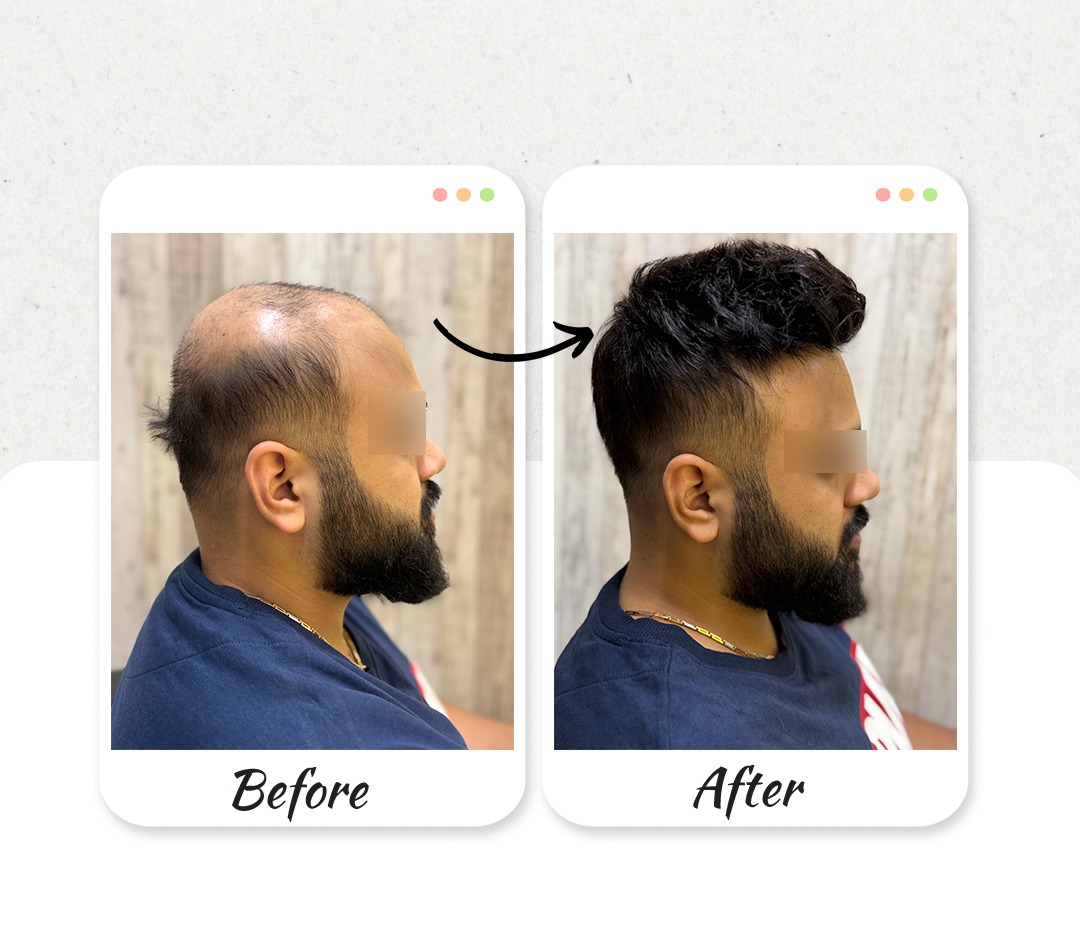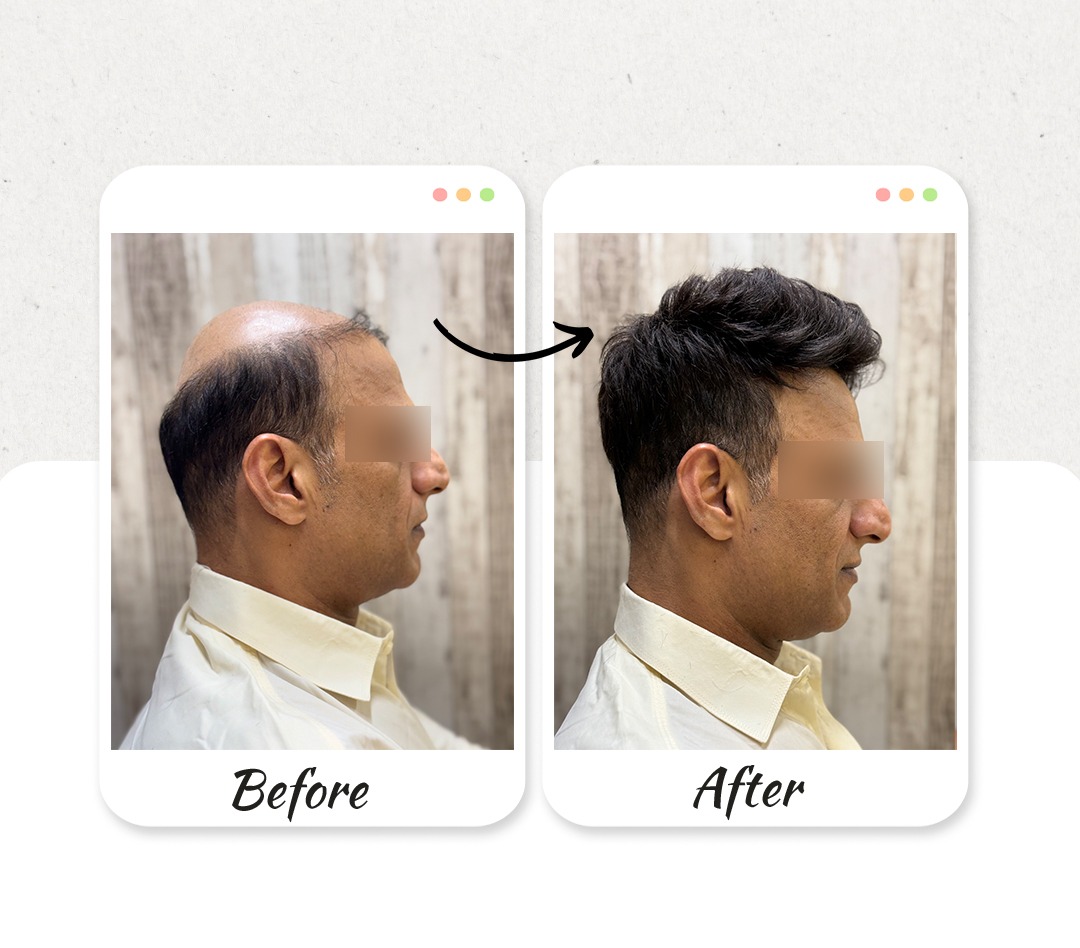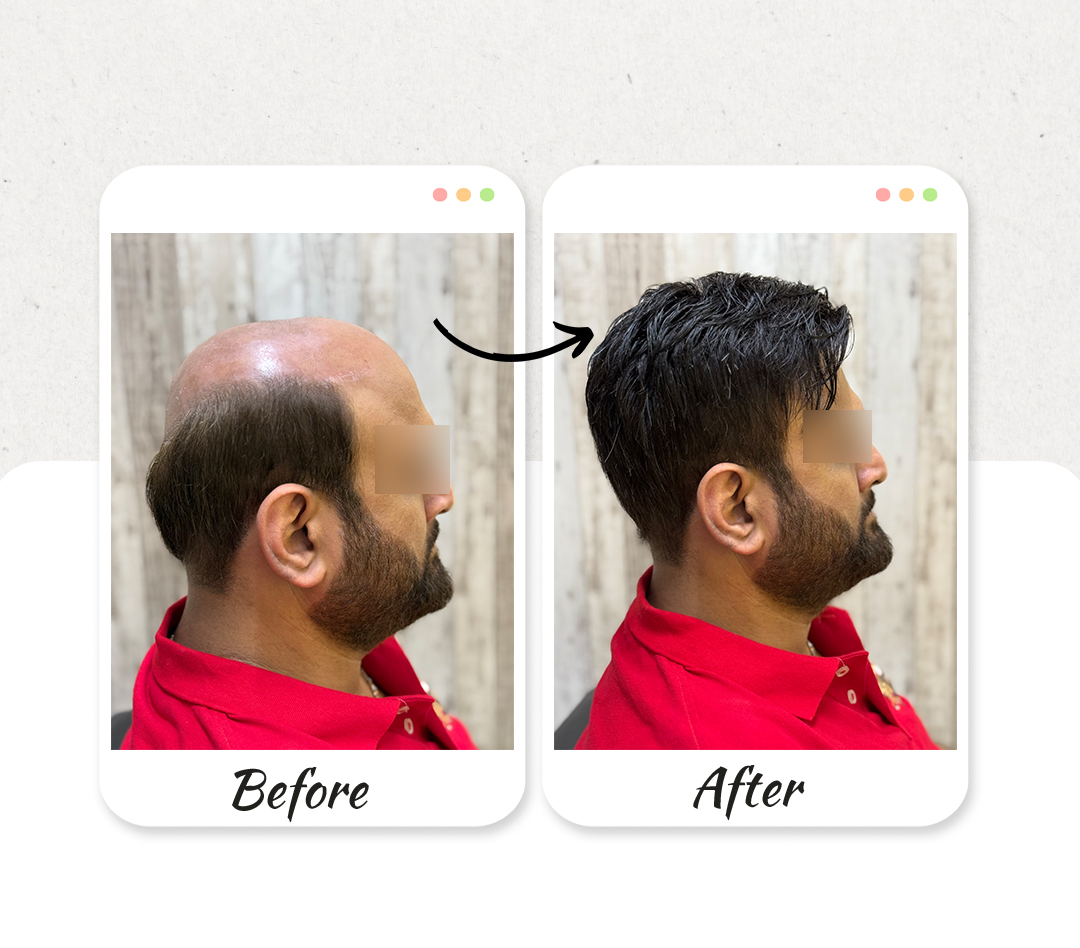
Most people spend weeks choosing the hair system itself, from the density and colour match to the base, and barely ten minutes on how it will stay put. That’s the wrong way round. Hair systems are only as convincing as the method holding them to your scalp. A poor match between attachment and lifestyle is the fastest way to turn a flawless piece into a daily worry.
At our studios in Powai and Malad, the question that follows “will it look natural?” is almost always “how will it stay on?” There are three main routes: clip-ons, tape and adhesive. Each suits a different kind of life, and this guide will help you work out which one suits yours.
Why the Attachment Method Matters More Than You Think
A hair replacement system is a custom-made piece of hair, built on a thin base that sits over the thinning or bald area. It looks natural only if the base lies flat and stays flat. Lifting edges, a visible glue line, or a piece that shifts when you sweat are rarely problems with the hair itself. They usually come from a mismatch between the method and the person wearing it.
What most people don’t realise is that attachment also decides your routine. It affects how often you visit the studio, how freely you can swim or train, how you wash your hair, and how your scalp feels by week three. Modern hair systems give you real choice here, so it’s worth choosing on purpose.
Clip-On Hair Systems: The Removable Option
Clip-ons use small, discreet clips that grip your existing hair. The piece goes on and comes off in minutes, with no glue and no tape residue.
Where they work well
- You’re in the early stages of hair loss and still have healthy hair around the area to anchor the clips.
- You want to wear the piece for work, events or photoshoots and take it off at night.
- You’re curious about hair replacement and want a low-commitment way to try it.
Where they fall short
Clips need strong hair to hold on to. If the surrounding hair is fine or sparse, the grip weakens and the piece can shift. They’re also not ideal for intense workouts, and some people feel the clips against the scalp. For a thinning crown with solid sides, though, they’re a genuinely good solution.
Tape: The Dependable Middle Ground
Medical-grade tape is where most first-time wearers settle. A thin strip of double-sided tape secures the base to your scalp, sits flat, and gives a clean, sharp hairline.
The appeal is balance. Tape holds firmly enough for gym sessions, showers and long days out, yet it’s gentler to remove than a strong adhesive. That makes it a sensible starting point if your skin is on the sensitive side. It typically needs replacing every few weeks, so a regular maintenance visit is part of the arrangement.
The catch is that oily scalps and heavy sweating can loosen tape sooner than expected. Old residue also has to be cleaned off properly at each change, and that’s a job for a trained hand, not a bathroom mirror.
Adhesive Bonding: The Long-Hold Option
Adhesive attachment uses skin-safe bonding to fix the base to the scalp. It’s the most secure of the three, and for anyone who wants to stop thinking about their hair altogether, that security is the whole point.
Bonding suits active people, and it suits a humid city like Mumbai, where a monsoon commute can test any attachment. It generally holds for several weeks between adjustments, so you’re not fussing with it day to day.
The trade-off is commitment. Removal needs the right solvent and some patience, which is why you should never pick at it or peel it off yourself. If your skin reacts easily, this is the method to discuss with your technician first. A good studio will use hypoallergenic, skin-friendly materials and check how your skin responds before going ahead.
Side by Side
| Method | Hold | Removal | Best for |
| Clip-on | Moderate | Instant, at home | Early thinning, occasional wear |
| Tape | Firm | Gentle, at the studio | Everyday wear, first-timers |
| Adhesive | Strongest | Solvent, at the studio | Active lifestyles, long hold |
Five Questions to Ask Before You Choose
How much hair do you have left around the area? Clips depend on it. Tape and adhesive don’t.
How active is your week? The more you move, sweat or swim, the more a firmer hold earns its place.
How does your skin behave? If it’s reactive, start with clip-on or tape and ask for a patch test before anything stronger.
Do you want to wear it daily or occasionally? Part-time wearers usually do best with clip-ons. Full-time wearers tend to prefer tape or bonding.
How do you feel about regular studio visits? Tape and adhesive both rely on them, and that’s not a downside if you plan for it.
A Few Mistakes We See Often
Choosing purely on which method looks cheapest is the big one. A hold that fails halfway through the month costs more in stress and repairs than it saves. Another is trying to remove tape or bonding at home, which can irritate the scalp and damage the base. And some people switch methods without telling their technician, then wonder why the fit feels off. A quick conversation before any change saves a lot of trouble.
Care Matters More Than the Method
Whichever route you take, a hair replacement system behaves like your own hair. It needs washing, conditioning and gentle handling. With proper upkeep, systems like ours last around 6 to 8 months, and regular visits for cleaning, re-attachment and styling are what get you there.
Skipping maintenance shortens a system’s life faster than any attachment choice. It also helps to have the same team fit and service it, because they get to know your scalp, your hairline and how your hair behaves over time.
Choosing the Method That Fits Your Life
There’s no single best answer here, only the one that fits your hair, your skin and your week. Clip-ons give you freedom, tape gives you balance, and adhesive gives you staying power. Hair systems work best when the attachment matches how you actually live, not how you imagine you’ll live.
If you’re still weighing it up, the simplest way to decide is to see and feel each option. Hair Destination Studio offers free consultations and demos at both the Powai and Malad studios, so you can try before you commit and talk it through with someone who’s done it hundreds of times.