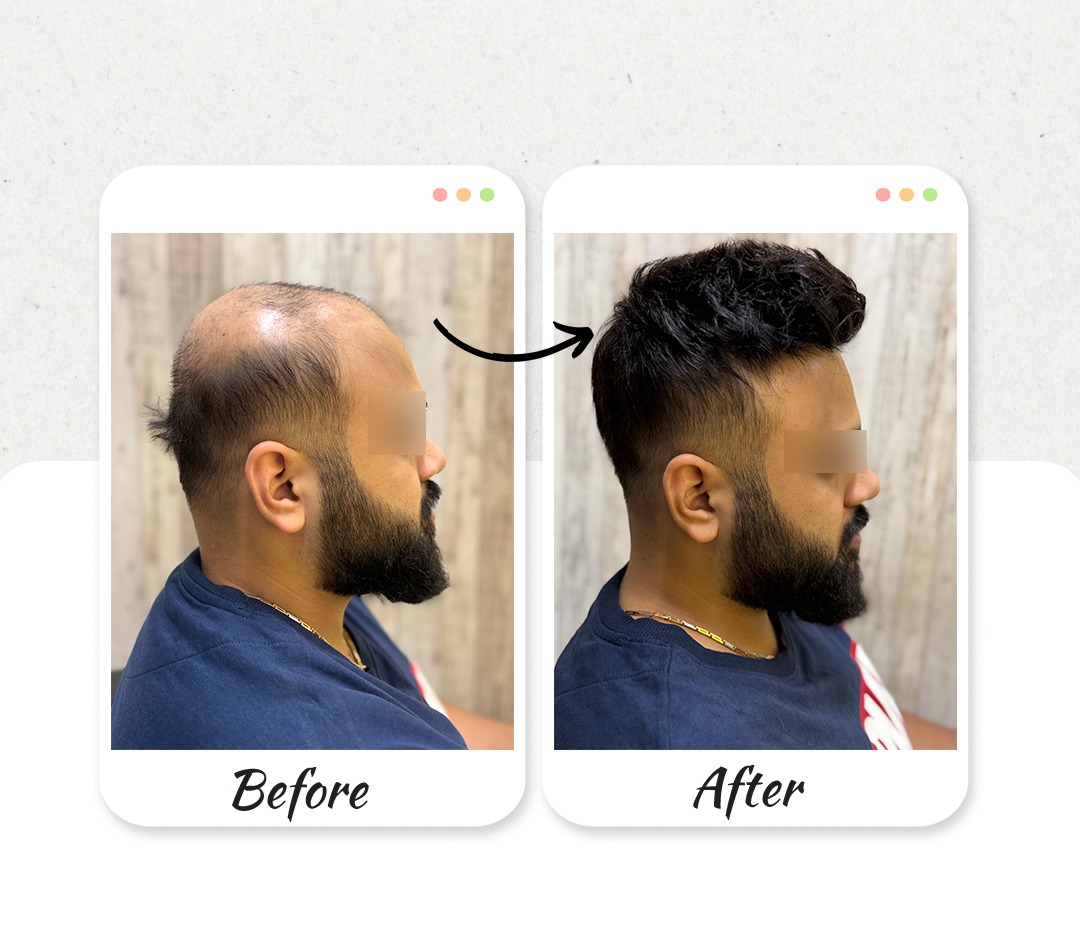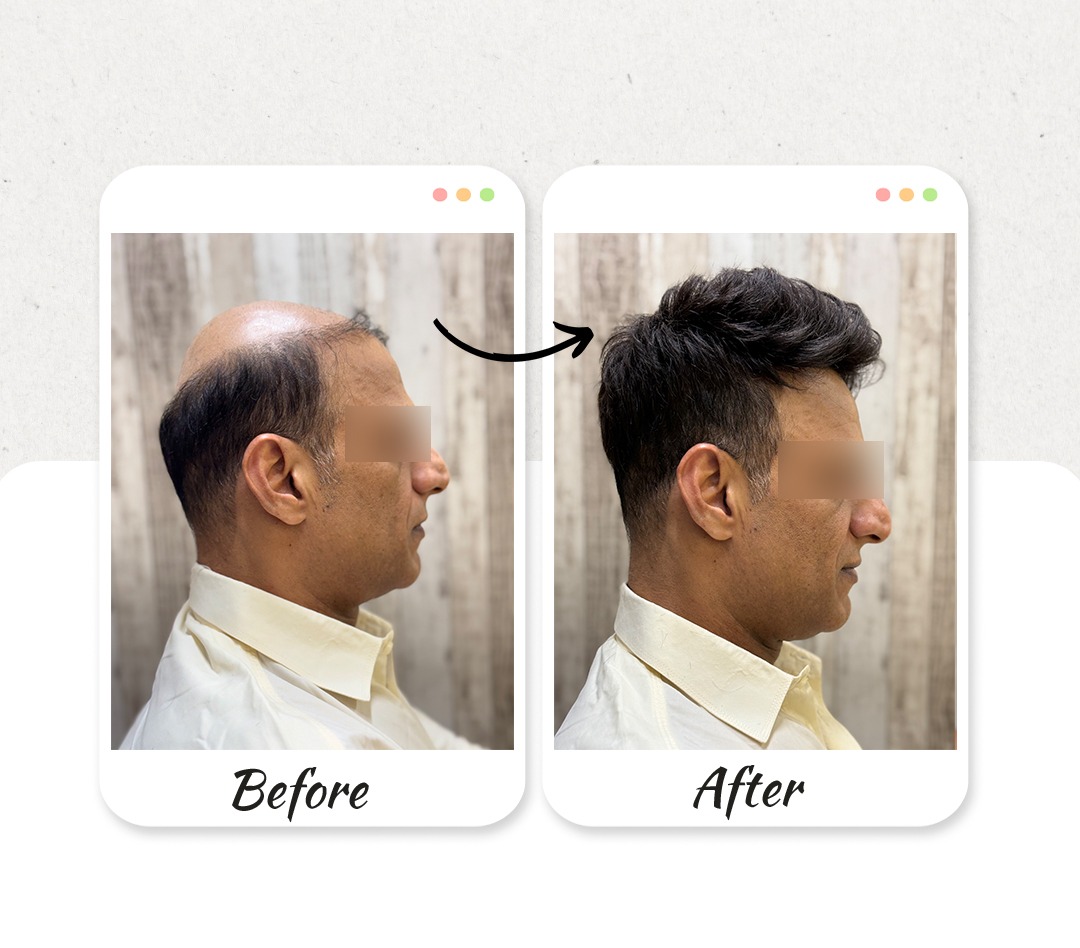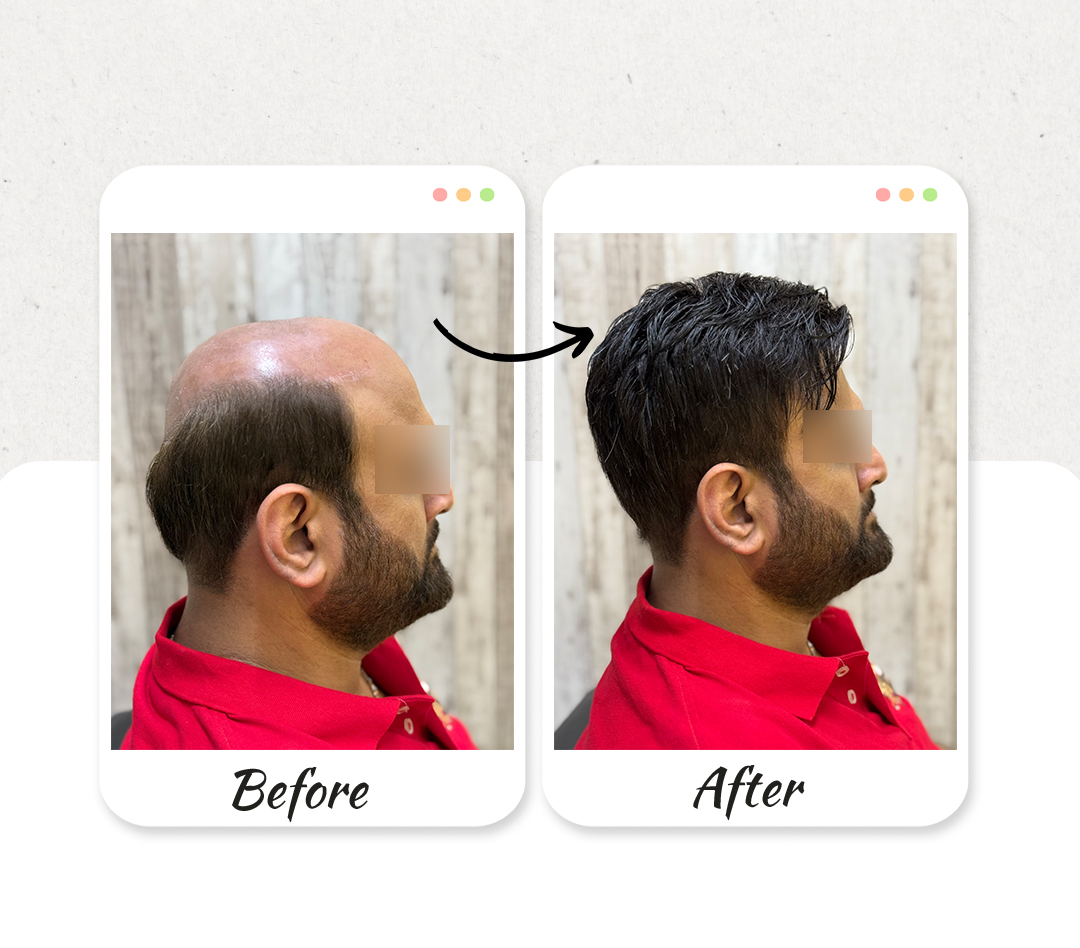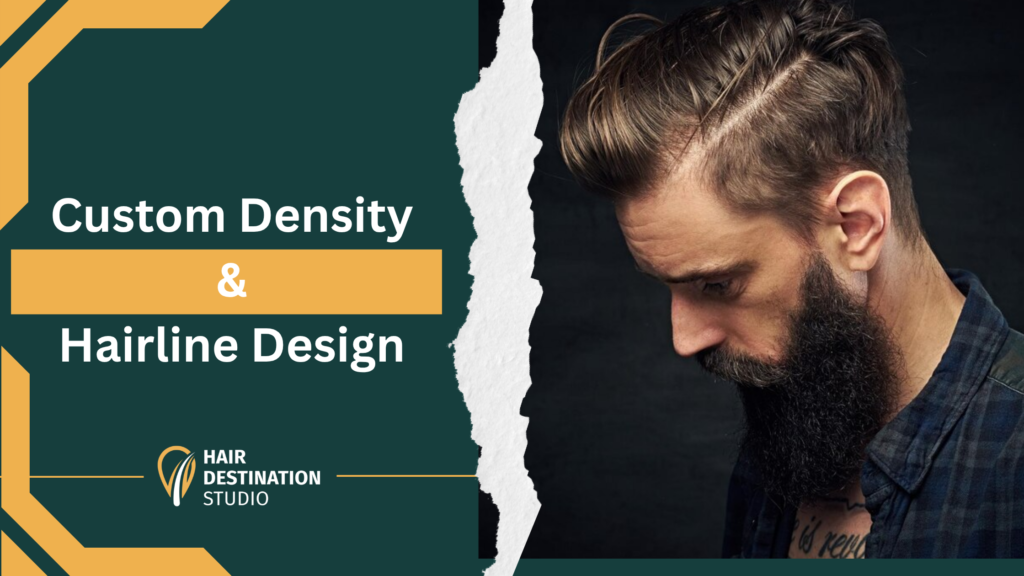
Nobody spots a good hair system by looking for the hair. They spot a bad one by noticing something is slightly off: a hairline too straight, a front too thick, a crown that looks fuller than the sides. The best hair systems are never noticed at all, and that isn’t luck. It comes down to two decisions made before the piece is ever fitted: how dense it is, and how the hairline is designed.
Most conversations about hair systems focus on colour and length. Those matter, but density and hairline decide whether a piece looks like your own hair or like a very good imitation of it. Here’s how each one works.
Why “Undetectable” Is Really About Proportion
Natural hair is never uniform. It’s thicker at the crown, lighter at the temples and finer at the front. A hairline isn’t a ruler-straight edge either. It’s a soft, slightly irregular transition where fine baby hairs give way to fuller growth.
A hair system looks obvious when it ignores this. Too much density everywhere, or a hairline drawn with a clean, sharp edge, tells the eye that something was added. Getting it right means copying the imperfections that real hair has.
Density: The Setting Most People Get Wrong
Density is how many strands sit on the base, and it’s the most common mistake we see. The instinct, understandably, is to ask for as much hair as possible. It feels like the whole point. But in practice, too much density is one of the fastest ways to give a system away.
Here’s what most people don’t realise: your natural hair has a certain density, and the system has to match it, not beat it. A dense system sitting on top of thinning hair creates a visible gap between the two, especially at the blend line where your hair meets the piece.
Light density suits those with fine hair, early thinning or older clients, where a subtle look is more believable.
Medium density works for most people and looks natural on a wide range of hair types.
Heavy density is only convincing on someone who genuinely has thick hair to begin with.
The other trick is to vary it. Density shouldn’t be identical across the whole piece. A slightly lighter front, a fuller crown and gently tapered sides copy how hair grows, and that variation is what makes a piece convincing in bright light and from every angle.
Hairline Design: Where Systems Are Won or Lost
If density is about the body of the hair, the hairline is the first thing people see. It frames the face, and it’s where scrutiny lands.
Softness matters more than sharpness. A real hairline isn’t a crisp line. It’s a gradual fade, with fine, sparse hairs at the very front building slowly into thicker growth behind. A well-designed system recreates that gradient. A flat, heavy front edge doesn’t.
Irregularity is a feature. Natural hairlines are slightly uneven, with small dips and points. A little asymmetry makes a piece more believable than a perfectly balanced one.
Placement should suit your face. A hairline set too low can look youthful in the wrong way and draw attention. One set to match your age, brow position and face shape looks like it belongs.
Direction counts. Hair at the front and temples grows in specific directions. When a system respects those angles, it settles and moves naturally instead of sitting stiffly.
The Role of the Base
None of this works if the base gets in the way. The base is the foundation the hair is attached to, and it needs to lie flat, stay thin and blend into the scalp.
A base that’s too thick, too stiff or badly matched to your skin tone will show at the edge regardless of how carefully the hair was placed. This is why the design of the hairline and the quality of the base go hand in hand. The front edge, where the base meets your skin, is the part that most needs to disappear.
Attachment also plays into this. Whether the piece is held with tape, bonding or clips affects how flat the edge sits, and a fresh, clean attachment keeps the hairline crisp. Old adhesive or residue is one of the most common reasons a well-made system starts to show its edges.
Matching Colour, Texture and Movement
Density and hairline get the outline right. The last layer is matching the details.
Colour should follow your natural hair, including its subtle variation. Almost nobody has one flat shade, and a slightly blended tone reads as real. If you have greying hair, the ratio and placement of greys matter too.
Texture covers wave, curl and thickness of the strand. A straight piece on naturally wavy hair stands out no matter how good the hairline is.
Movement comes from the quality of the hair. We use Remy human hair, where the strands run in one direction, so the system falls, shines and moves like your own. That’s a large part of why it blends.
Why Customisation Beats Off-the-Shelf
A ready-made piece has fixed density, a fixed hairline and a fixed base shape. It has to compromise, because no two heads, hairlines or hair types are the same. Custom hair systems start from you: your head shape, your existing hair, your natural growth pattern and how you actually wear your hair.
At Hair Destination Studio, customisation is central to how we work. The system is designed around your features, from density and hairline to colour and texture, so it blends with what you have instead of sitting on top of it. That personal fit is what gets a system past the point where people stop looking.
Keeping It Undetectable Over Time
A perfect design can still fade if it isn’t maintained. The hairline is delicate, and it shows wear first. With proper care, our systems last roughly 6 to 8 months, and regular servicing is how you get there.
That means professional cleaning, timely reattachment and trims to keep the blend clean as your own hair grows. Small habits between visits also help: gentle washing, a good conditioner and careful handling when the hair is wet. Do this consistently and the result you walked out with stays close to what you saw on day one.
What to Ask Before You Commit
Can density be varied across the piece, or is it uniform? How will the hairline be designed for my face and age? What does the base look like at the front edge, and can I see it up close? Will the colour and texture be matched to my natural hair?
A studio that answers these clearly, and lets you see and touch samples, understands the craft. Be cautious about anyone who leads with “maximum density” as the selling point.
The Details Are the Whole Point
A convincing hair system isn’t the fullest or the thickest. It’s the one designed with restraint: density that matches your own, a hairline that fades softly, and a base that disappears at the edges. That’s what makes people look at you, not at your hair.
If you’d like to see how this works on your own head, Hair Destination Studio offers free consultations and demos at both our Powai and Malad studios. Come in, talk through the look you want, and we’ll show you what a well-designed piece can do.