Hair loss doesn’t arrive with permission.
It shows up quietly—first in mirrors, then in photographs, and eventually in the way you stand, style, and second-guess yourself. By the time you’re actively researching solutions, you’re no longer asking whether to act. You’re asking what won’t make things worse.
In our day-to-day consultations at Hair Destination Studio, one question dominates serious conversations:
Hair bonding vs transplant — which one actually makes sense for me?
This comparison is often framed online as a battle with a “clear winner.” That framing is misleading—and expensive.
Because the truth is simple:
There is no universally better solution.
There is only the right solution for your hair loss stage, lifestyle, and expectations.
Let’s break this down properly—without hype, without bias, and without pretending one option fits everyone.
Understanding the Two Options (Without Marketing Noise)
Before comparing hair bonding vs transplant, it’s critical to understand what each option really does—not what advertisements imply.
What Is Hair Bonding?
Hair bonding is a non-surgical hair replacement solution. A customised hair system is integrated with your scalp or existing hair using skin-safe bonding techniques.
It:
- Does not involve surgery
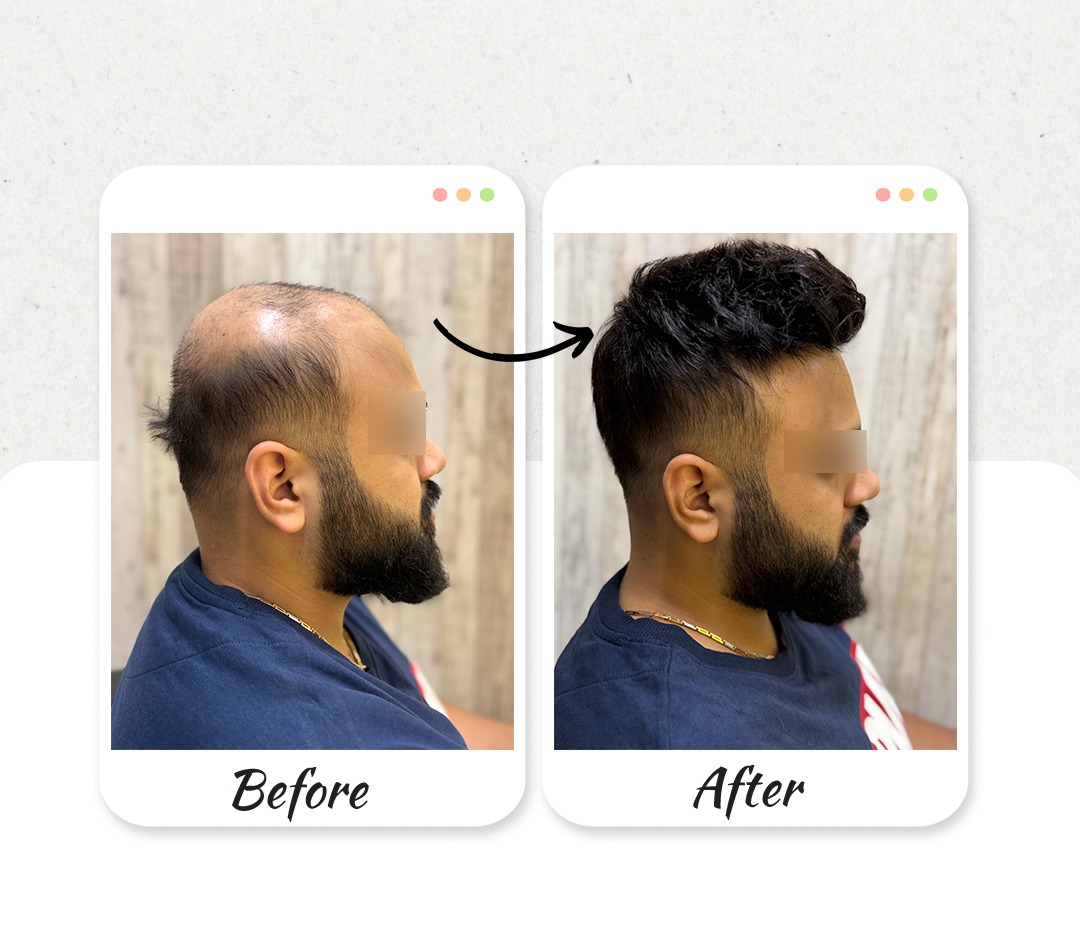
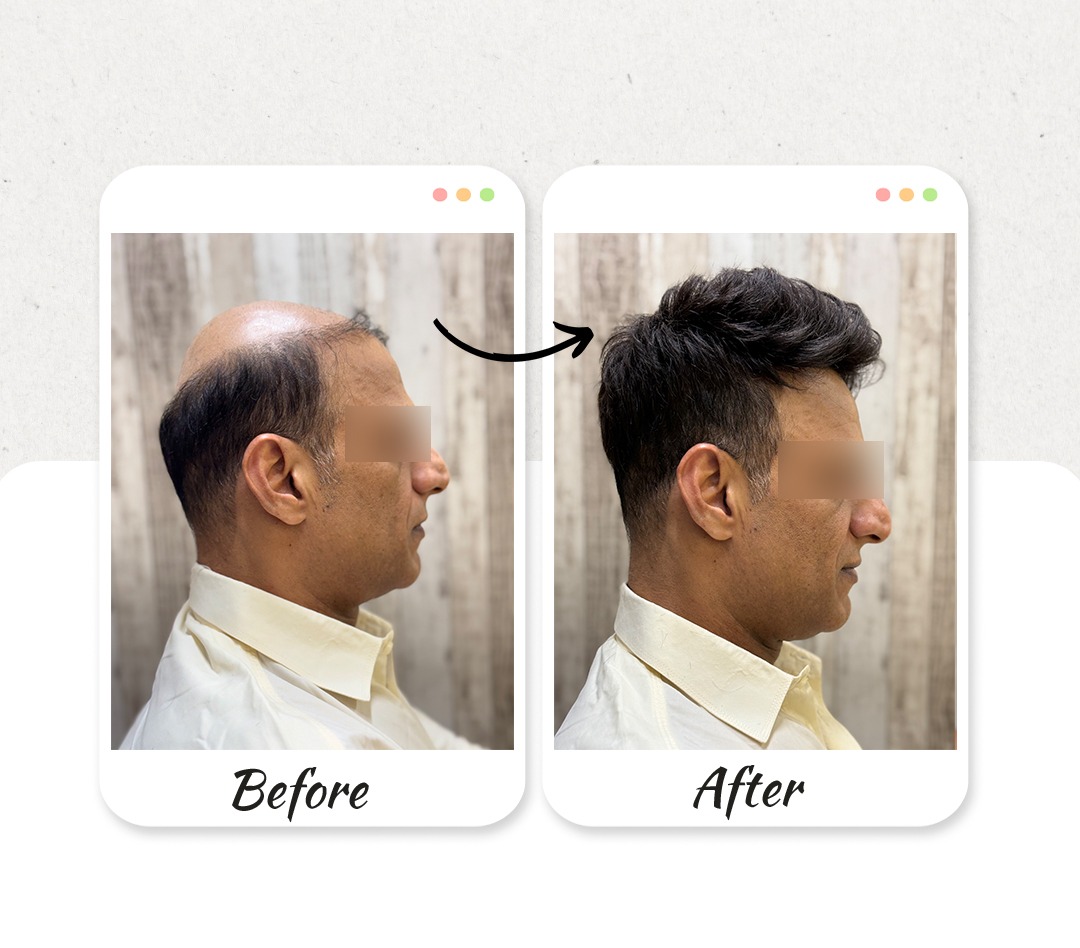
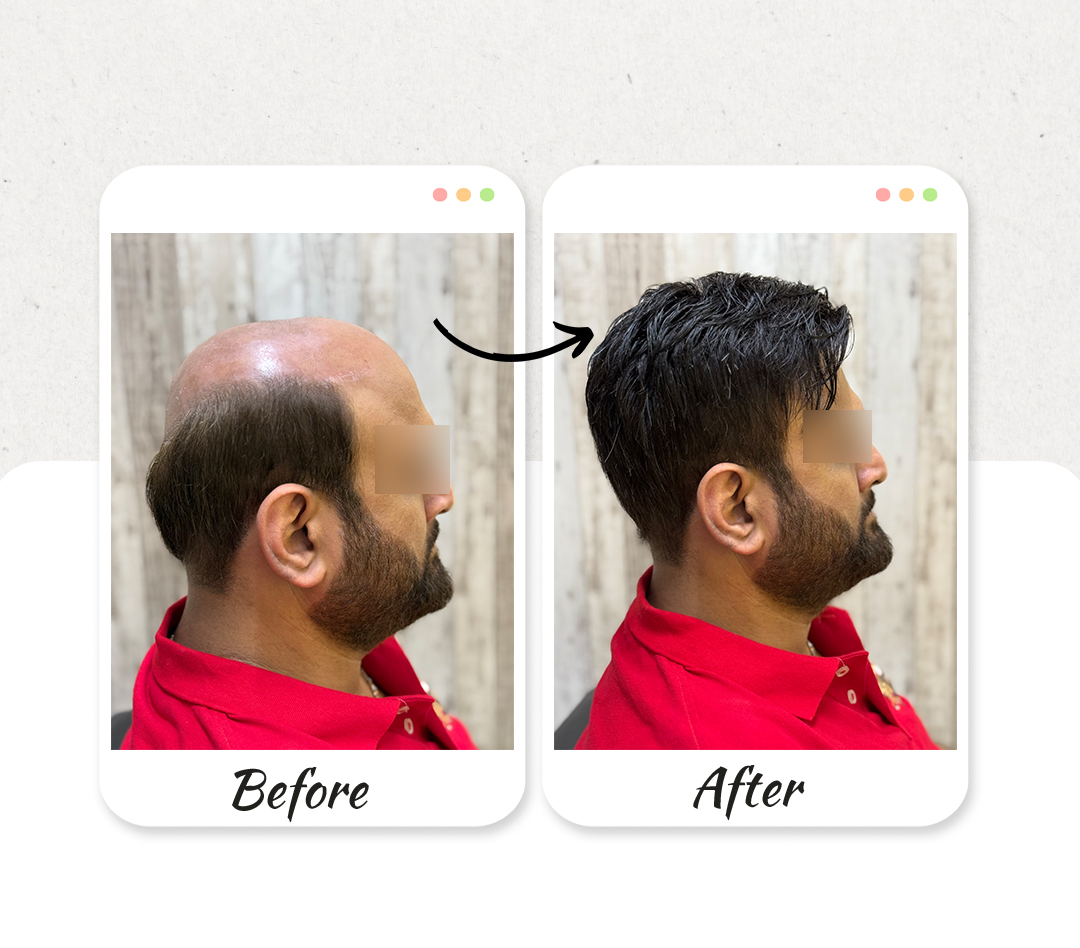
- Provides immediate visual results
- Is fully reversible
- Focuses on appearance, not regrowth
At Hair Destination Studio, hair bonding is treated as a precision cosmetic service, not a quick fix. The outcome depends on the quality of consultation, customisation, the fixing technique, and long-term care.
What Is a Hair Transplant?
A hair transplant is a medical surgical procedure. Hair follicles are extracted from a donor area (usually the back of the scalp) and implanted into thinning or bald areas.
It:
- Involves surgery and healing
- Depends heavily on donor hair quality
- Takes 6–12 months for visible results
- Has permanent outcomes—good or bad
Hair transplants are not cosmetic styling services. They are medical procedures that require realistic expectations and long-term patience.
The Core Difference Most People Miss
The fundamental difference between hair bonding and transplant is not technology—it’s outcome, timing, and control.
- Hair bonding restores appearance immediately.
- Hair transplant attempts biological regrowth over time.
Once you understand this, the comparison becomes clearer—and far less emotional.
Hair Bonding vs Transplant: Real-World Comparison
Let’s compare them across factors that actually matter in daily life, not brochure promises.
1. Results Timeline
Hair Bonding
- Instant transformation
- Walk in with hair loss, walk out with hair.
- No shedding phase
Hair Transplant
- Results take 6–12 months.
- Initial shedding is common.
- Final density is unpredictable.
Clear Advantage: Hair bonding
This is why many Hair Destination Studio clients choose bonding—they don’t want to wait a year to feel normal again.
2. Invasiveness & Risk
Hair Bonding
- Completely non-surgical
- No cuts, stitches, or anaesthesia
- No medical recovery
Hair Transplant
- Surgical procedure
- Risk of infection, scarring, uneven growth
- Healing downtime required
Clear Advantage: Hair bonding
Lower risk and no interruption to professional or social life.
3. Suitability Across Hair Loss Stages
Hair Bonding
- Works for mild to advanced hair loss
- Effective even with complete baldness
- No donor hair dependency
Hair Transplant
- Requires a strong donor area
- Limited success in advanced baldness
- Not suitable for everyone
Clear Advantage: Hair bonding
This is a significant reason many people arrive at Hair Destination Studio after being told, “You’re not a transplant candidate.”
4. Natural Appearance
This is where online debates get misleading.
Hair Bonding
- Appearance depends entirely on customisation and expertise.
- Hairline, density, and style are controllable.
- When done well, it looks incredibly natural.
Hair Transplant
- Uses your own hair texture
- Density is limited by donor supply.
- Results vary heavily by surgeon skill.
Verdict: Tie
Bad bonding looks fake.
Bad transplant looks patchy.
Method matters less than who is doing it.
5. Maintenance Reality
Hair Bonding
- Requires structured maintenance
- Periodic refixing and cleaning
- Professional follow-ups essential
Hair Transplant
- Lower daily maintenance after healing
- Often requires long-term medication.
- Additional sessions may be needed.
Winner: Depends on lifestyle
At Hair Destination Studio, we’re clear:
Hair bonding suits people who value consistency in appearance and are comfortable with planned upkeep.
6. Reversibility & Control
Hair Bonding
- Fully reversible
- Hairline and density can evolve.
- Style can change with age.
Hair Transplant
- Permanent
- Poor outcomes are challenging to correct.
- Limited flexibility once done.
Clear Advantage: Hair bonding
For many clients, this flexibility provides emotional relief—because control matters.
Hair Bonding vs Transplant: Cost Comparison (India Context)
Cost is often misunderstood because people only look at the first bill.
Hair Bonding Cost
- Lower initial investment
- Ongoing maintenance costs
- Predictable long-term spending
Hair Transplant Cost
- High upfront surgical cost
- Possible corrective procedures
- Medication expenses
- Outcome uncertainty
Insight from Hair Destination Studio:
People often underestimate long-term transplant expenses and overestimate hair bonding costs. Cost must be evaluated over time, not at entry.
Emotional & Psychological Impact (Rarely Discussed)
This is where the comparison becomes intensely personal.
Hair Bonding
- Immediate confidence restoration
- No awkward healing or shedding phase
- No need to hide during recovery
Hair Transplant
- Long waiting period
- Visible post-surgery stages
- Anxiety during shedding and regrowth
For professionals, entrepreneurs, and public-facing individuals, waiting months for results isn’t always realistic. This is where hair bonding vs transplant stops being medical—and becomes lifestyle-driven.
Common Myths That Distort the Decision
“Transplant is permanent, bonding is temporary”
Permanent doesn’t mean better if results disappoint.
“Bonding looks fake”
Only when done poorly.
“Transplants guarantee density”
They don’t.
“Bonding is for people who can’t afford a transplant”
False. Many choose bonding for control and certainty.
When Hair Bonding Makes More Sense
Based on real-world consultations at Hair Destination Studio, hair bonding is often the better choice if:
- You want immediate results.
- Hair loss is advanced.
- You’re not transplant-eligible
- You don’t want surgery.
- You value predictability
- You want flexibility over time.
When Hair Transplant May Be the Better Option
To be fair and transparent, a transplant can be suitable if:
- You have strong donor hair.
- Hair loss is limited.
- You’re comfortable with surgery.
- You can wait for results.
- You accept outcome variability.
A responsible studio will tell you this—even if it means not selling you a service.
Why Guidance Matters More Than the Method
The biggest mistake people make isn’t choosing bonding or transplant.
It’s choosing without proper evaluation.
At Hair Destination Studio, consultations are assessments—not sales pitches. We look at scalp condition, lifestyle, expectations, and long-term practicality.
Because the wrong choice—bonding or transplant—feels expensive, frustrating, and emotionally exhausting.
Final Verdict: Hair Bonding vs Transplant
There is no universal winner.
Hair bonding offers speed, control, flexibility, and certainty.
Hair transplant offers biological regrowth, but it requires patience and carries risk.
The real question isn’t:
“Which is better?”
It’s:
“Which fits my life, my expectations, and my reality right now?”
When that question is answered honestly, the decision becomes clear.
And when you’re ready to have that conversation with experience, transparency, and zero pressure—Hair Destination Studio is where it should begin.