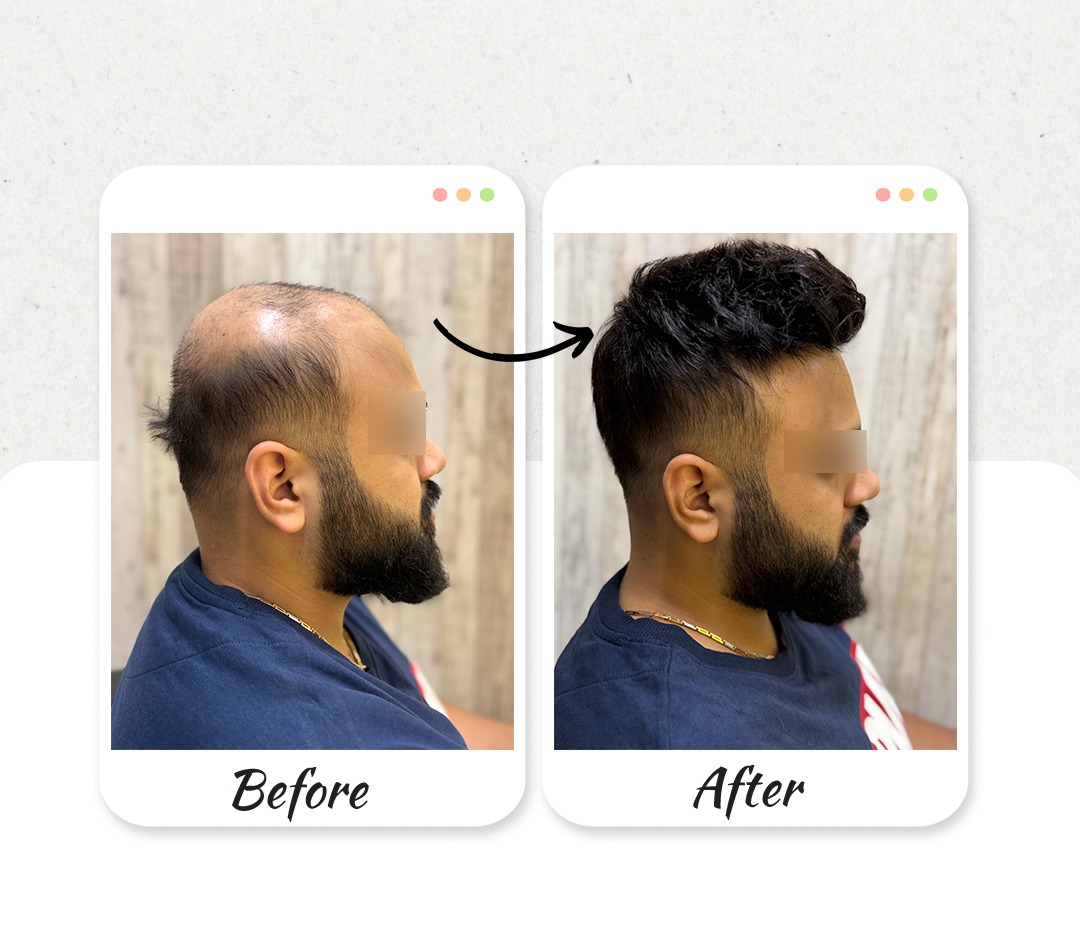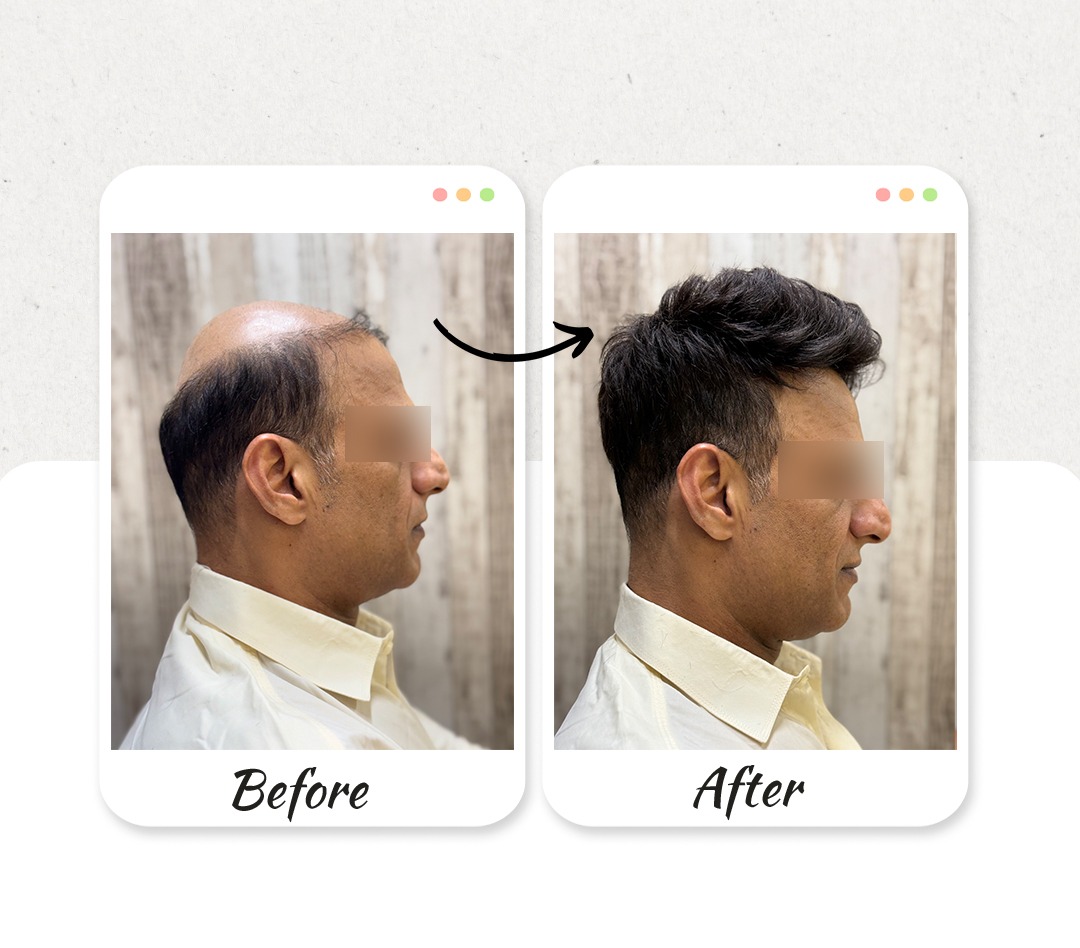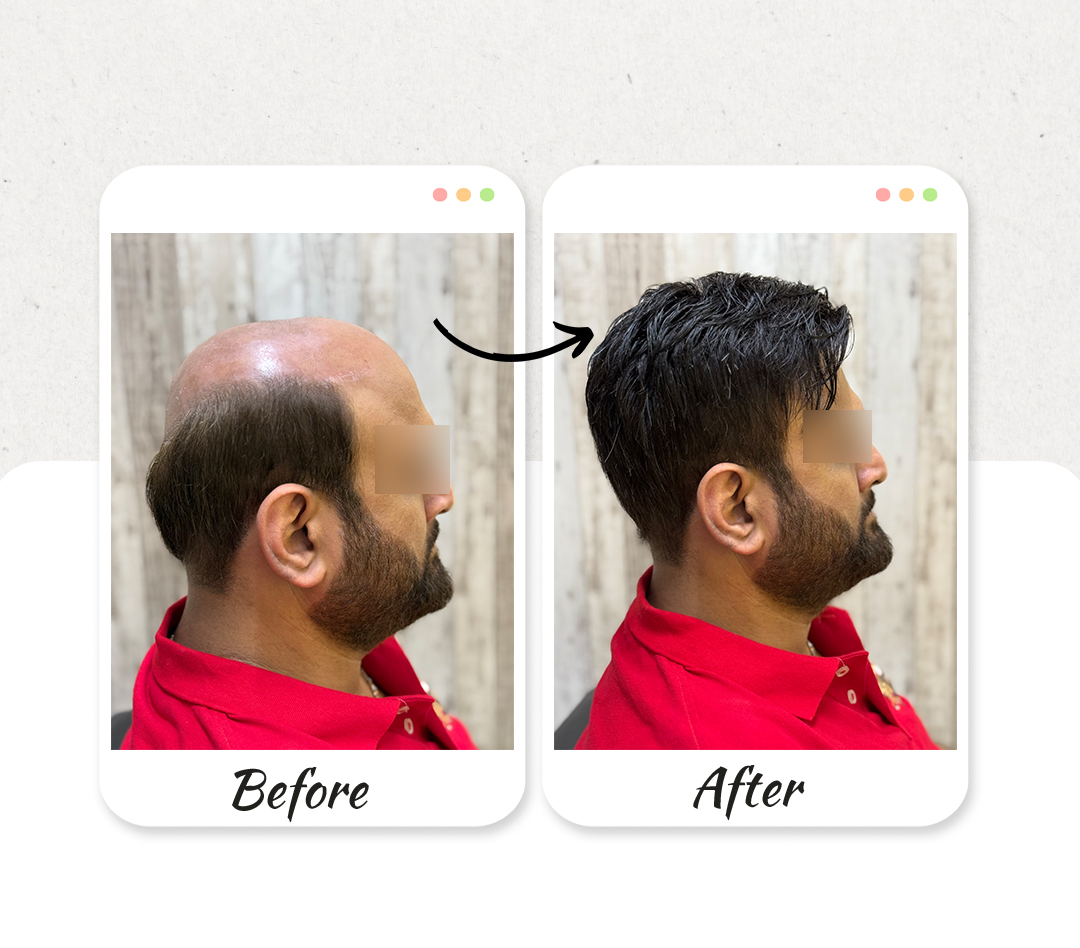
There’s a moment most people with thinning hair eventually reach. It’s not dramatic. It doesn’t come with a formal announcement. It’s just a quiet realisation, usually in the middle of an ordinary morning, that the hair you’ve been hoping would grow back probably isn’t going to.
For some, that moment arrives after months of trying products that didn’t work. For others, it comes after a doctor’s visit that finally puts a name to what’s been happening. Either way, the shift from “temporary shedding” to “this might be permanent” is a significant one, emotionally and practically.
What this piece is about isn’t the despair of that realisation. It’s what comes after it. Because permanent hair loss, as final as it sounds, is genuinely not the end of the road. There are hair restoration options available today that didn’t exist a decade ago, and the results, when done properly, are far better than most people expect before they see them.
But first, it helps to understand what permanent hair loss actually means, what causes it, and how to know when you’ve crossed that line.
What Makes Hair Loss Permanent?
Not all hair loss is equal. Some shedding is temporary, triggered by stress, illness, nutritional deficiency, or hormonal fluctuations, and the follicle recovers once the underlying cause is addressed. Permanent hair loss is different. It occurs when the hair follicle itself is damaged, scarred, or has atrophied to the point where it can no longer produce a viable strand of hair.
The most common cause is androgenetic alopecia, genetic hair loss driven by the follicle’s sensitivity to DHT. Over time, affected follicles miniaturise, producing progressively thinner and shorter strands until they stop producing hair altogether. Once a follicle has remained dormant for a prolonged period, the window for natural recovery closes.
Other causes of permanent hair loss include scarring alopecia, where inflammation damages the follicle irreparably; radiation therapy; certain autoimmune conditions; and severe traction alopecia, where years of tension on the follicle have caused lasting structural damage.
What’s worth knowing is that the line between temporary and permanent isn’t always clear-cut from the outside. This is one of the reasons professional assessment matters: the right intervention at the right stage genuinely changes outcomes.
How to Know If Your Hair Loss Has Become Permanent
The honest answer is that self-diagnosis here is unreliable. What looks like a receding hairline might be temporary shedding. What feels like normal seasonal hair fall might actually be the early stages of genetic baldness. The only way to know with confidence is to speak to someone who can properly examine your scalp, not through a search engine.
That said, there are signals worth paying attention to. If your hairline has been consistently receding over a period of two years or more without recovery, that’s a meaningful indicator. If the thinning is concentrated in the crown and temples, the classic pattern of male androgenetic alopecia, and has been progressing gradually rather than appearing suddenly, permanent hair loss is the more likely explanation than a temporary trigger.
The speed of loss also matters. Suddenly, rapid shedding over the course of weeks is more likely to be temporary. Slow, progressive thinning over the years that never seems to stabilise is the pattern associated with permanent follicle decline.
Baldness Solutions: Separating What Works From What Doesn’t
Once the permanence of hair loss is established, the conversation shifts to baldness solutions, and this is where the market becomes genuinely overwhelming and, frankly, misleading.
Medications like minoxidil and finasteride are the most widely prescribed interventions. They can slow the progression of androgenetic alopecia and, in some cases, stimulate modest regrowth in the early stages. But they are not a cure; they require daily use to maintain any benefit, and their effectiveness declines significantly as hair loss progresses. For follicles that have already stopped producing, they offer very little.
Hair transplant surgery is another major option that receives significant attention. It involves relocating donor follicles from the back and sides of the scalp to the affected areas. When performed well, the results can be natural-looking, but the procedure comes with real limitations. It requires a sufficient donor supply, which isn’t always available in advanced cases. Recovery takes months. The cost is substantial. And the outcome is never fully guaranteed. Many men who undergo a transplant in their 30s find themselves dealing with continued loss in surrounding areas years later, creating an uneven result that requires additional procedures.
What most people don’t realise until they start exploring properly is that non-surgical hair replacement has advanced considerably, to the point where, for a growing number of men and women, it outperforms surgical options on almost every practical measure.
Why Non-Surgical Hair Replacement Has Become the Preferred Choice
A hair replacement system, when designed and fitted with genuine expertise, delivers results that are immediate, natural-looking, and fully customisable, without surgery, recovery time, or the uncertainty of waiting months to see whether a procedure worked.
This is the core of what Hair Destination Studio has built its reputation on across 15+ years and more than 15,000 client transformations in Mumbai. The systems we use are made from 100% natural human Remy hair, fitted using US-trained techniques, and customised to a level of detail that most people don’t realise is possible until they see it firsthand.
Customisation here means more than colour and length. It means density, base type, hairline shape, implant direction, strand-by-strand, transitional density at the edges, and a fit calibrated specifically to your scalp. The result doesn’t just cover hair loss. It replicates how hair naturally grows, including the way it parts and moves. Clients routinely tell us they forget they’re wearing a system. That’s the benchmark we work to.
Hair Restoration Options: Matching the Solution to the Situation
One of the most important things we emphasise at Hair Destination Studio is that hair restoration options aren’t one-size-fits-all. The right solution depends on the extent of the loss, the condition of existing hair, lifestyle factors, and what the person actually wants from the outcome.
For someone with a specific bald patch or concentrated thinning, a customised hair patch, securely bonded and precisely matched to existing hair, can be transformative. For someone with more extensive loss across the crown and frontal zone, a complete hair replacement system provides full coverage with the kind of natural integration that surgery often struggles to replicate cleanly.
The attachment method matters too. Hair bonding with medical-grade adhesives provides a secure, seamless result that holds up to daily activities, exercise, and normal life without compromise. Re-bonding sessions every few weeks keep everything looking fresh and the scalp healthy beneath.
For women dealing with permanent hair loss, whether from alopecia, hormonal shifts, or thinning that no treatment has reversed, non-surgical options, including women’s hair replacement systems and volumising solutions, offer results that wigs simply don’t come close to matching.
The Psychological Weight of Permanent Hair Loss
It would be incomplete to talk about this topic without acknowledging what it actually feels like. Permanent hair loss carries a weight that goes well beyond appearance. It affects how people carry themselves in professional settings. It changes the way they approach social situations. It shifts how they see themselves in mirrors and photographs in ways that are difficult to explain to someone who hasn’t experienced it.
In our experience working with thousands of clients across Mumbai, the moment that tends to matter most isn’t the fitting itself, it’s the first time someone looks in the mirror afterwards. That moment when a person recognises themselves again is consistently the one that stays with us.
Confidence isn’t a superficial outcome. It shapes decisions, relationships, and opportunities in entirely real ways. Addressing permanent hair loss isn’t vanity; it’s the entirely reasonable act of taking back your self-image.
What the Right Next Step Actually Looks Like
If you’ve reached the point where you believe your hair loss may be permanent, the most useful thing you can do is stop trying to manage it alone and speak to someone who can give you an honest, expert assessment.
Not a sales pitch. Not a generic consultation that ends with a product recommendation. A real conversation about your scalp, your hair loss pattern, your lifestyle, and what kind of result you actually want, followed by a clear, practical recommendation.
That’s exactly what our free consultations at Hair Destination Studio are designed to be. Our Powai and Malad studios are open, and the first conversation costs nothing. For many of our clients, it’s the conversation that changes everything.
Hair Destination Studio | Non-Surgical Hair Replacement in Mumbai
Powai & Malad | +91 88283 81386