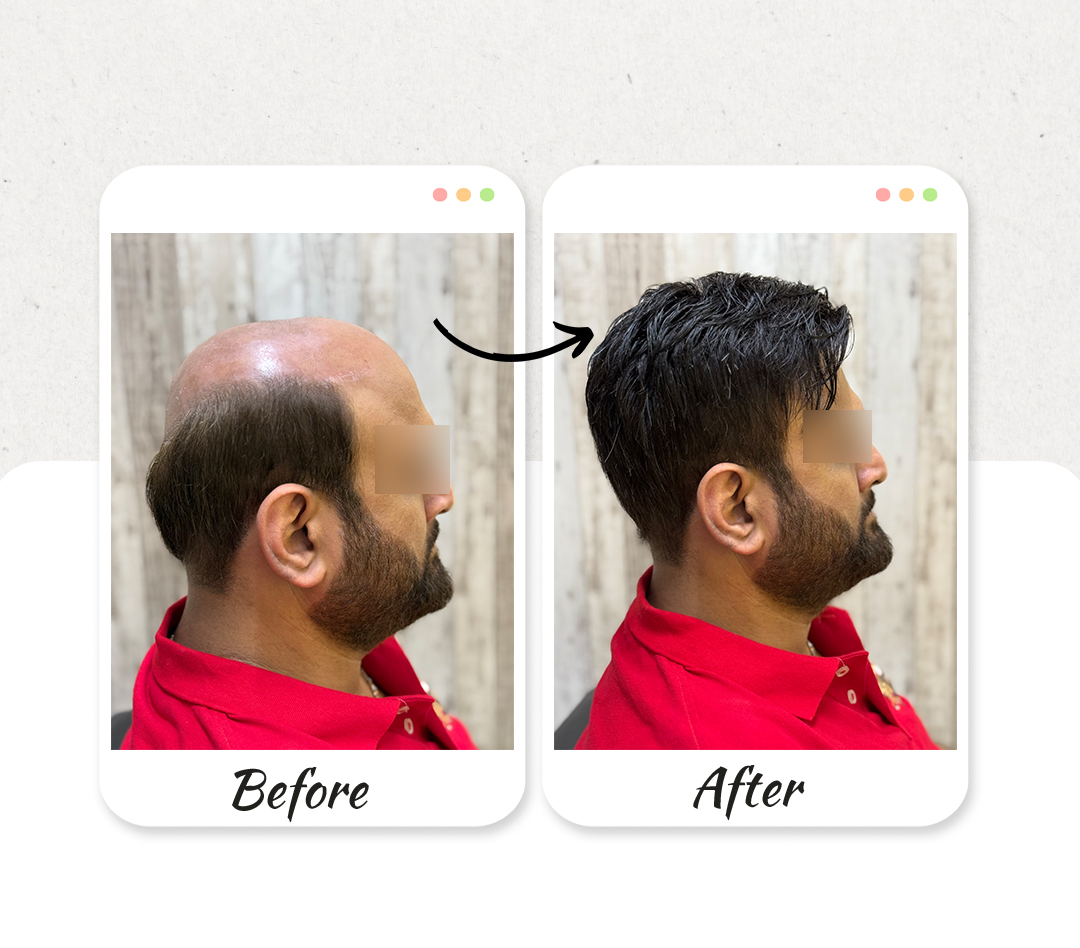
Nobody announces when a hair system stops looking its best. There’s no dramatic moment, just a small doubt: a corner that lifts in the mirror, a hairline that looks a shade flatter than it did a month ago, a patch of itching you’re starting to ignore. Most wearers of hair systems notice these things well before anyone else does, then spend weeks wondering whether they’re imagining it.
You’re usually not. The trick is knowing whether the problem is the bond, which a rebond will fix, or the system itself, which needs replacing. Getting that call right saves you money and stops you living with a piece that isn’t doing you justice.
Rebonding vs. Replacing: They’re Not the Same Fix
Rebonding means lifting the system off, thoroughly cleaning the scalp and base, and reattaching it with fresh tape or adhesive. The hair itself stays, and you get a renewed hold.
Replacing means retiring the system and moving to a new custom-made one, because the hair or base has reached the end of its natural life.
Here’s where things get interesting. People often replace a system that only needed a rebond, or keep rebonding one that stopped being worth it months ago. Both cost you. Each sign below points to a different answer.
Signs It’s Time to Rebond
These are attachment problems. The system is fine, but the hold isn’t.
Edges are lifting. Front and side edges are the first to go. If you can feel a corner catching when you run a hand over it, or you can see a gap at the hairline, the bond is weakening. Pressing it down at home works for a day, at best.
You can see the bond line. A visible shine or ridge along the hairline usually means old tape or adhesive is breaking down or collecting residue. A fresh application restores that clean, invisible edge.
The system shifts. If it moves when you sweat, sleep or pull off a T-shirt, the grip has given up. Shifting isn’t just cosmetic, since it rubs the scalp and wears the base faster.
Your scalp is itchy or irritated. Old adhesive and trapped oil build up over time. Irritation is your scalp telling you the bond and the skin beneath it both need cleaning.
You’ve passed your usual service window. Tape and adhesive have a natural lifespan of a few weeks, and that varies with how oily your scalp is and how active you are. If you’ve stretched past your usual gap between visits, book the rebond even if nothing looks wrong. Bonds tend to fail quietly.
Signs It’s Time to Replace
These are wear problems. A rebond won’t fix them, no matter how fresh the attachment.
The hair has lost its density. Every system sheds a little. But if you can see the base through the hair where you couldn’t before, particularly at the parting or crown, the piece is thinning out.
It’s dry, frizzy or tangling for good. Human hair systems behave like your own hair and need washing, conditioning and gentle handling. When the ends stay rough and dull no matter how well you care for them, the hair has reached its limit.
The base is damaged. Look for small tears, stretched or discoloured areas, or a base that no longer lies flat. A compromised base can’t hold a clean hairline, and no adhesive will change that.
The colour has faded. Sun, chlorine and years of washing lighten and dull hair. If the system no longer matches your natural hair, the mismatch shows most in daylight.
The hairline looks worn. A hairline is delicate. Once the front thins or flattens, it stops looking like growth from your scalp, and that’s the detail people notice first.
It’s simply been a long time. With proper care, our systems last roughly 6 to 8 months. Past that, even a well-kept piece is borrowing time.
What’s Different for Men
Men’s hair systems face a tougher environment than most people expect. Caps and helmets rub against the front. Gym sessions mean sweat and friction. Mumbai’s humidity and monsoon commutes test every bond. And short cuts and fades leave less room to hide any imperfection.
Because of this, wear tends to show up first at the front hairline and the crown of men’s hair systems. Regular short-back-and-sides trims also matter: as your own hair grows out around the system, the blend changes, and what looked seamless at week one can look obvious by week five. Often the fix is a trim and a rebond, not a new piece.
If you ride a bike or wear a helmet daily, expect to service the front edge more often than someone working at a desk. That’s normal, not a sign that anything is wrong.
A Quick Way to Decide
| What you notice | Most likely answer |
| Lifting edges, visible bond line, shifting | Rebond |
| Itching or residue build-up | Rebond, with a scalp clean |
| Thinning density, dull or tangled hair | Replace |
| Torn or stretched base | Replace |
| Faded colour or worn hairline | Replace |
| Past your service window, otherwise fine | Rebond |
If you’re seeing signs from both lists, replacement is usually the better use of your money. Rebonding a worn-out system means paying for maintenance on something that won’t reward it.
Three Habits That Cost You
Pressing down a lifting edge with extra glue. Home fixes trap moisture, damage the base and make professional removal harder. Please leave attachment to a trained technician.
Waiting until it looks bad. By the time others can tell, the scalp has usually been under strain for a while. Booking a little early is cheaper than a repair.
Skipping washes to save the bond. Dirt and oil shorten a bond’s life more than washing does. Follow the care routine your technician gives you, with the right products.
Getting More Out of Every System
The most reliable way to stretch a system’s life is regular maintenance visits. That means professional cleaning, timely rebonding and proper styling and trims, ideally by the same team who fitted it. They know how your system sits, how your scalp responds and where wear tends to begin.
Between visits, keep it simple: gentle shampooing, a good conditioner, no rough brushing when wet, and sleeping on a smooth pillowcase if you can. These small habits add up across a full cycle.
Know Your Signals, Then Act Early
Your hair system will tell you when it needs attention. Lifting edges and a visible bond line are calls for a rebond. Thinning density, a tired base and faded colour are calls for something new. The sooner you read the signal, the easier the fix.
If you’re not sure which side of the line yours falls on, the easiest step is to have someone look at it in person. Hair Destination Studio offers free consultations at both our Powai and Malad studios. Bring your system in, and we’ll tell you honestly whether it needs a rebond, a refresh or a replacement.