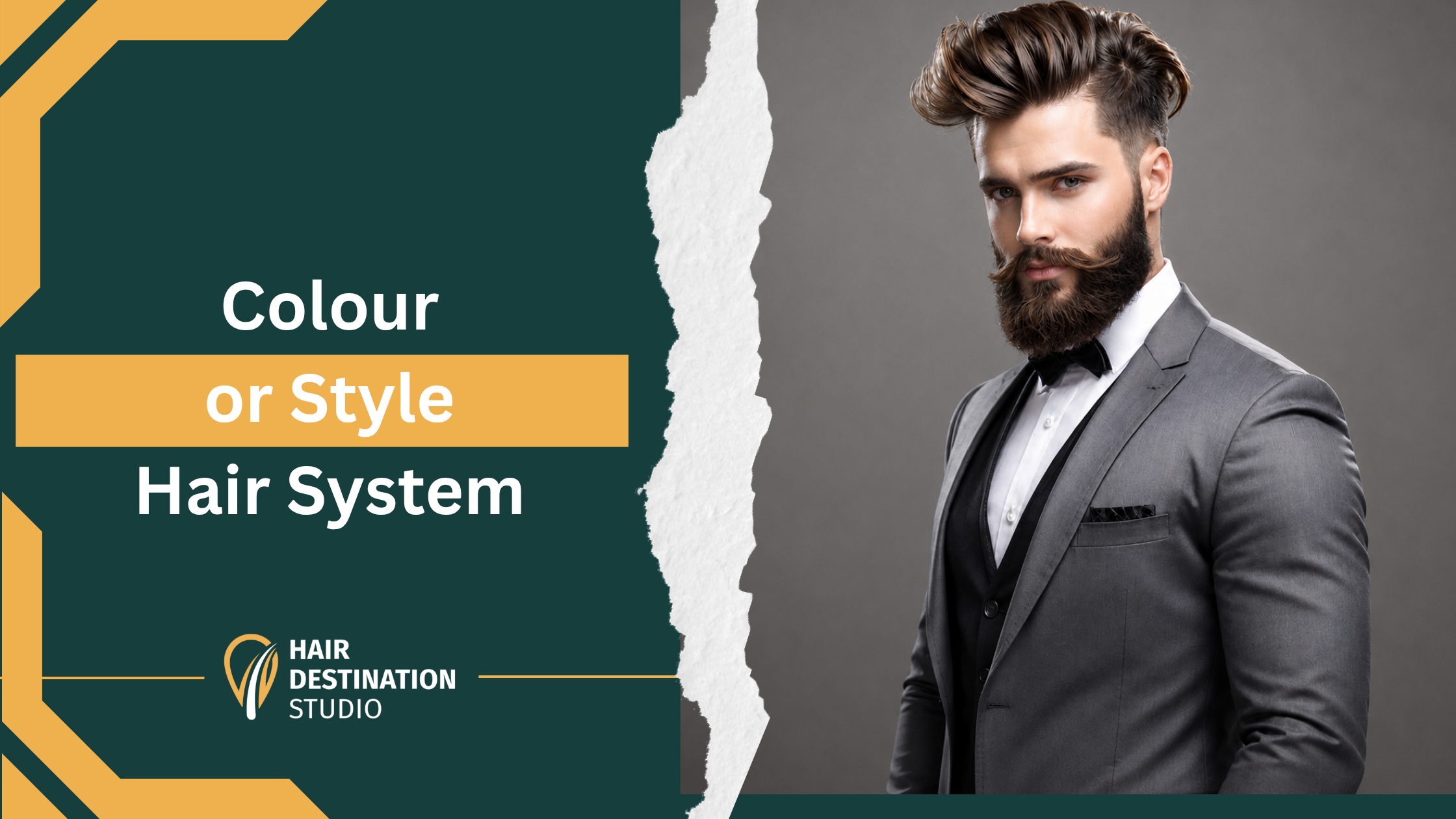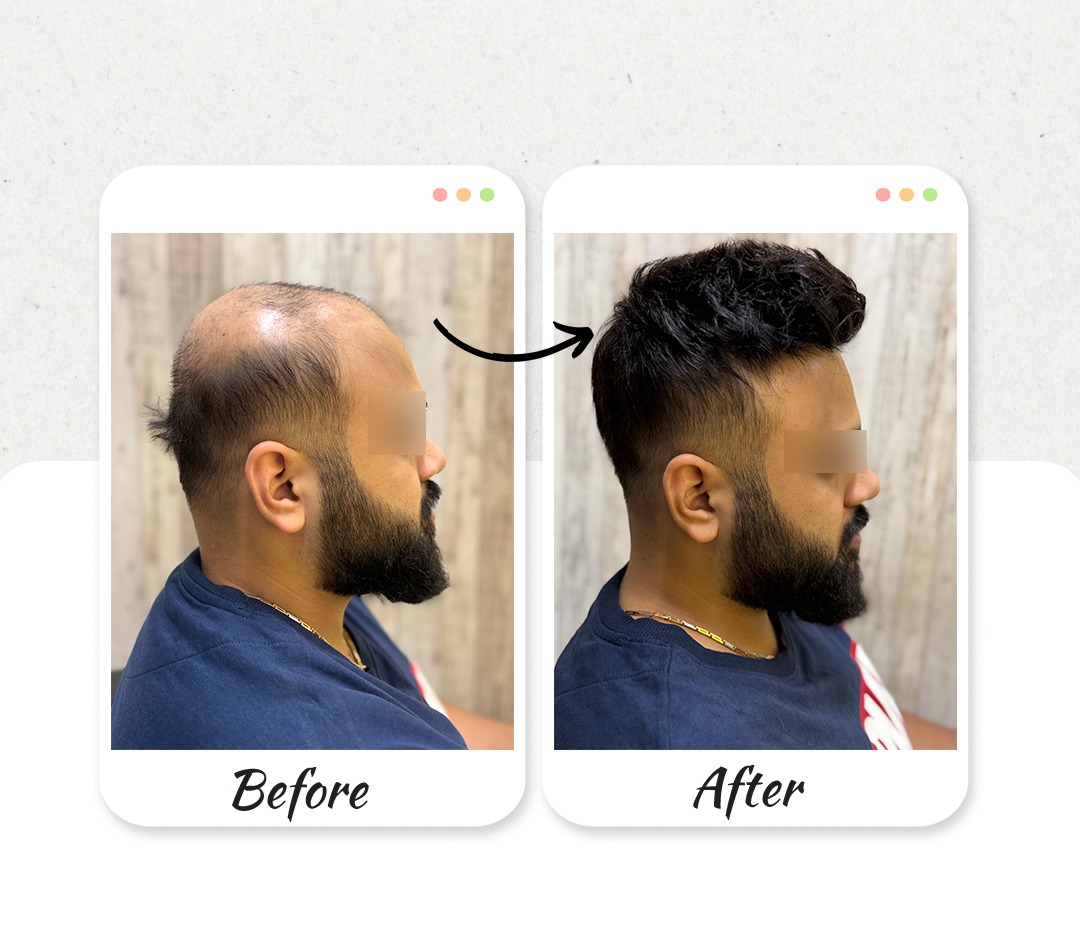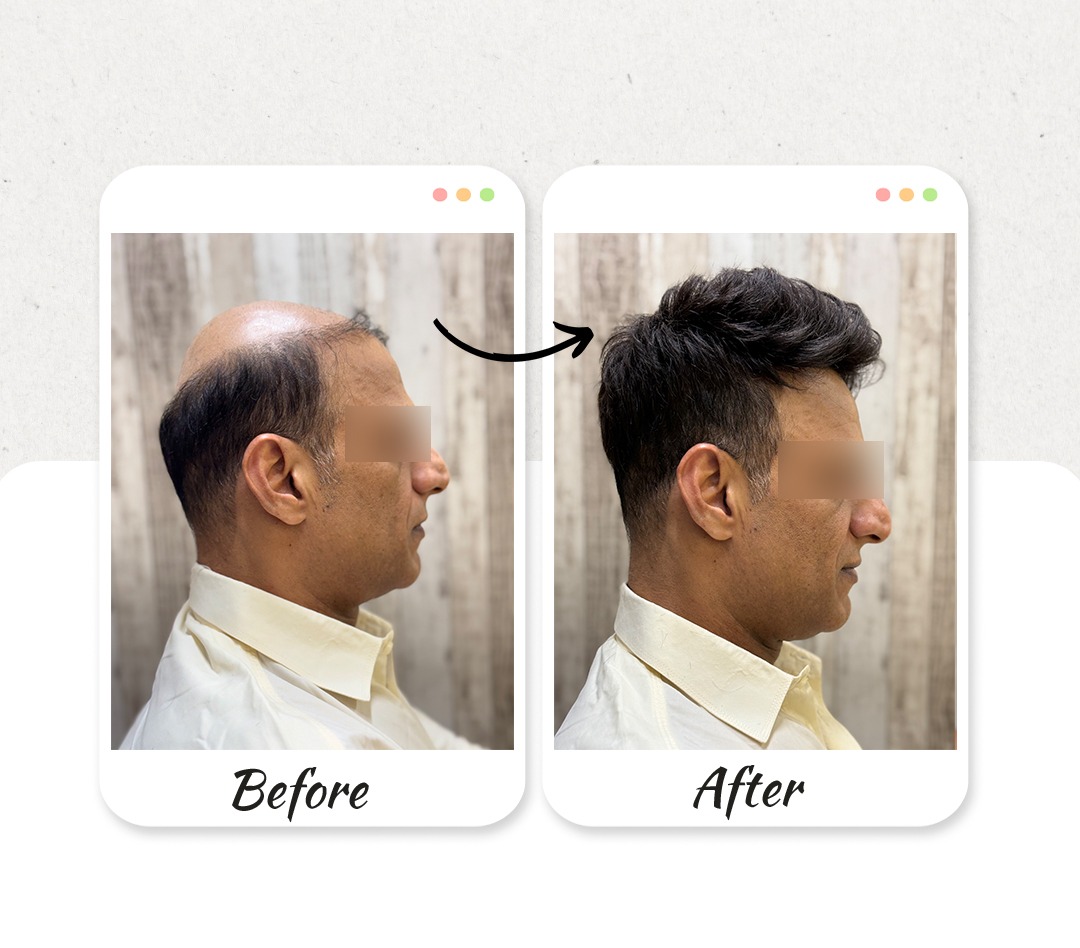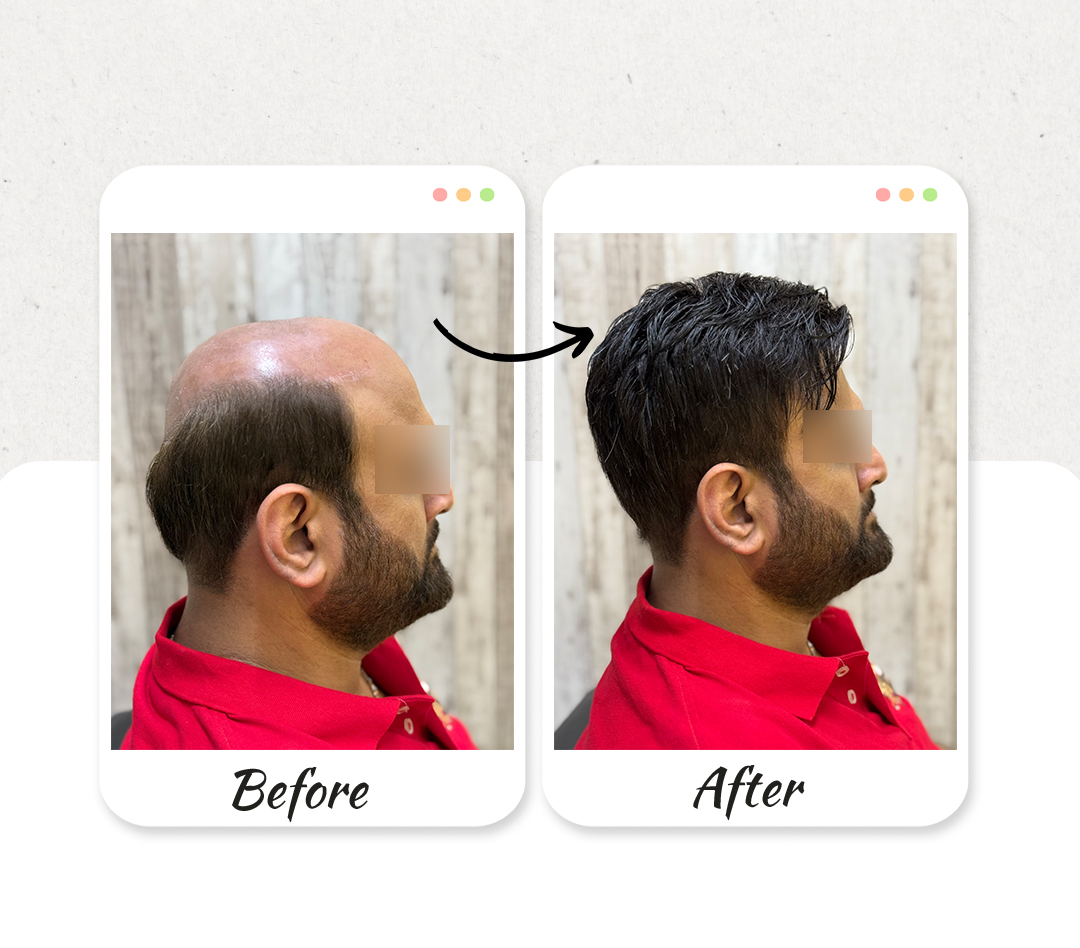
There’s a particular moment that happens in almost every consultation. Someone comes in, sits down, and says something along the lines of, “I just want it to look natural.” And what they mean, without spelling it out, is: I don’t want anyone to know I’m wearing a hair system.
That’s a completely reasonable expectation. A well-fitted hair system, chosen correctly, should be genuinely undetectable. People should look at you and see your hair, not a hair system. But here’s the thing most people don’t realise until they’ve been through the process: the fitting is only part of the equation. The bigger variable is customisation, specifically how accurately the colour, texture, and density of your system are matched to your own hair and natural appearance.
Get these three things right, and the result is seamless. Get them wrong, even one of them, and something just looks slightly off, even if neither you nor the people around you can immediately put a finger on why.
At Hair Destination Studio, we take customisation across all three parameters seriously. So let’s walk through each one in detail.
Colour: The Most Visible Factor
Hair colour is the first thing the eye registers. It’s also the most common area where people make mistakes, usually by going too dark, too uniform, or by trying to match their hair from memory rather than in person.
Why an Exact Match Is Harder Than It Sounds
Natural hair is never a single, flat colour. Even hair that appears to be a consistent shade of black or brown is actually made up of multiple tones: the base colour, undertones, subtle variations caused by sun exposure, and often some degree of natural greying at the temples or crown. When a hair system is selected in a single, uniform colour, it can look slightly artificial even when the shade is technically correct, simply because it lacks that variation.
What you’re aiming for is not just the right colour, it’s the right combination of tones. If your natural hair has a reddish-brown base with some lighter strands around the hairline, your system needs to reflect that. If you have salt-and-pepper hair, a system in pure black will look immediately inconsistent, no matter how well everything else is fitted.
How to Get It Right
The most reliable approach is to assess colour in natural daylight rather than under salon lighting. Artificial lighting, especially the warm overhead lights common in most interiors, makes hair appear warmer and darker than it actually is. Step outside or position yourself near a window before making any colour decisions.
It also helps to bring reference photos, not of celebrities or aspirational looks, but of your own hair from the recent past. A good photograph taken in natural light gives a colour specialist far more accurate information than a verbal description.
At Hair Destination Studio, systems can be matched to your specific colour profile, including multi-tonal blending. If you’re currently greying, we can replicate that pattern rather than defaulting to your original base colour, which often creates a more natural and age-appropriate result.
One more thing worth mentioning: if you colour your natural hair regularly, discuss this before finalising your system. You want the system colour to be calibrated to how your hair typically looks, not to how it looks immediately after a fresh dye.
Texture: The Detail That Makes or Breaks the Blend
Colour gets a lot of attention, but texture is arguably just as important, and considerably easier to overlook because it’s a subtler quality. Texture refers to the natural wave pattern and strand behaviour of the hair in your system.
The Main Texture Categories
Hair texture generally falls into a few broad categories: straight, slight wave, loose wave, deep wave, and curly. Within each of these, there’s further variation: some straight hair is silky and flat, while other straight hair has a slight body to it that gives it natural movement. Some curly hair is tight and springy; other curly hair is looser and more relaxed.
The goal is to match your system’s texture to what your natural hair looks like when it’s clean and dry, with no styling.
The Common Mistake
Most people choose a texture based on what they wish their hair did, rather than what it actually does. Someone with naturally slightly wavy hair might be tempted to choose a straight texture for a sleeker look. While this can work stylistically, it creates a visible inconsistency where the system meets the natural hair. The transition zone, particularly at the front and sides where the system blends with your existing hair, will look noticeably different in texture even if the colour is perfectly matched.
In our experience, the better approach is to match your natural texture first and use styling tools to adjust from there. A system with natural waves can be straightened for a sleek look when needed. The reverse, making straight system hair appear naturally wavy, is much harder to maintain consistently.
Density: Getting the Volume Right
Density guides to how much hair is packed into the system, essentially, how thick or full the hair looks and feels. This is the specification that people most commonly get wrong, and it’s usually in one direction: too dense.
Why People Choose Too Dense
It makes intuitive sense. If you’re replacing lost hair, you want the result to look full. More density feels like more confidence. But here’s where things get interesting: a system that is significantly denser than your natural hair doesn’t look fuller. It looks wrong. The mismatch between the top volume and the natural hair on the sides creates an immediately apparent visual disconnect, even to people who don’t know what a hair system is.
What Density Should You Choose?
Density is typically expressed as a percentage: light (60-70%), medium (80-100%), medium-heavy (110-120%), and heavy (130%+). For most people seeking a natural result, medium density is the most appropriate starting point.
The right density depends on a few factors:
Your age. Hair naturally thins as we age. A 45-year-old man wearing a heavy-density system will look out of place even if everything else is perfectly matched, simply because that level of volume isn’t natural for his age group.
Your hair type. Someone with fine natural hair should select a lower density. Someone with naturally thick, coarse hair can go a little higher. Matching the system’s visual weight to your natural hair type creates a convincing blend.
The coverage area. A smaller coverage area, say, just the crown, can typically carry a slightly higher density because there is more natural hair around it to blend with. A full-coverage system on someone with very little natural hair remaining should lean toward medium density to avoid looking unnaturally thick.
Transitional Density
This customisation detail makes a significant difference and is one of the things that sets a professionally fitted system apart from a generic one. Natural hair doesn’t have uniform density across the entire scalp; it’s typically denser at the back and crown, and thinner and finer toward the hairline and temples. A system with flat, uniform density throughout will look noticeably artificial at the hairline, even with an otherwise excellent match.
Transitional density means the system is built with varying density that mirrors how natural hair actually grows, slightly finer and softer at the front edge, fuller toward the back. Hair Destination Studio is among the very few providers in India that offer this level of customisation as standard, and it is one of the most impactful ways to enhance the natural appearance of your system.
Putting It All Together
Getting colour, texture, and density right isn’t about perfection; it’s about consistency. Each of these three elements needs to be consistent with your natural hair and with each other. A perfect colour match loses its impact if the density is off. A perfectly matched density looks wrong if the texture doesn’t align with your natural hair’s behaviour.
This is precisely why a proper consultation matters before any system is ordered or fitted. It’s not a formality; it’s the step where all of these decisions get made thoughtfully, with your actual hair in front of a specialist who knows what to look for.
If you’re considering a hair system in Mumbai and want to understand what the right specifications are for you, the team at Hair Destination Studio offers free consultations at our Powai and Malad branches. We’ll assess your natural hair, discuss your lifestyle, and help you arrive at a combination that genuinely works, not just on paper, but in practice, every single day.
Because the goal was never just a hair system, it was hair that looked like yours.