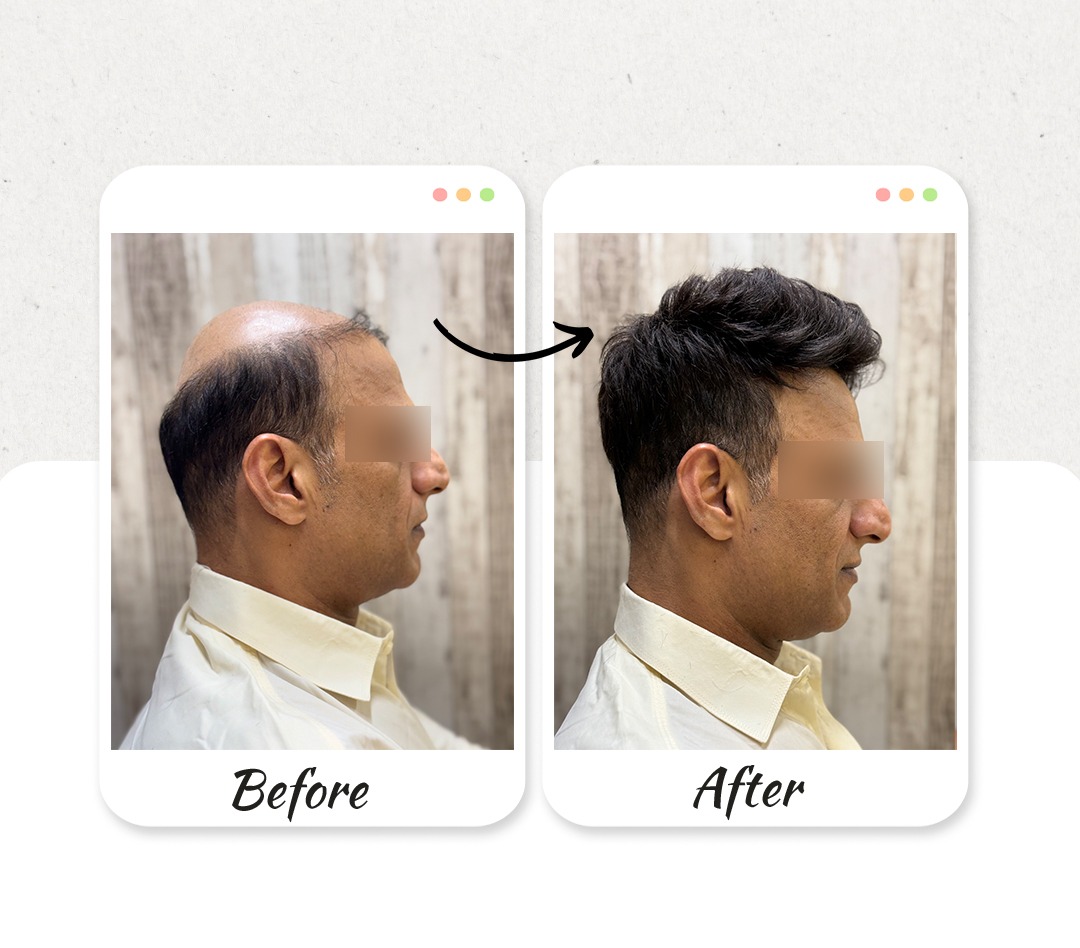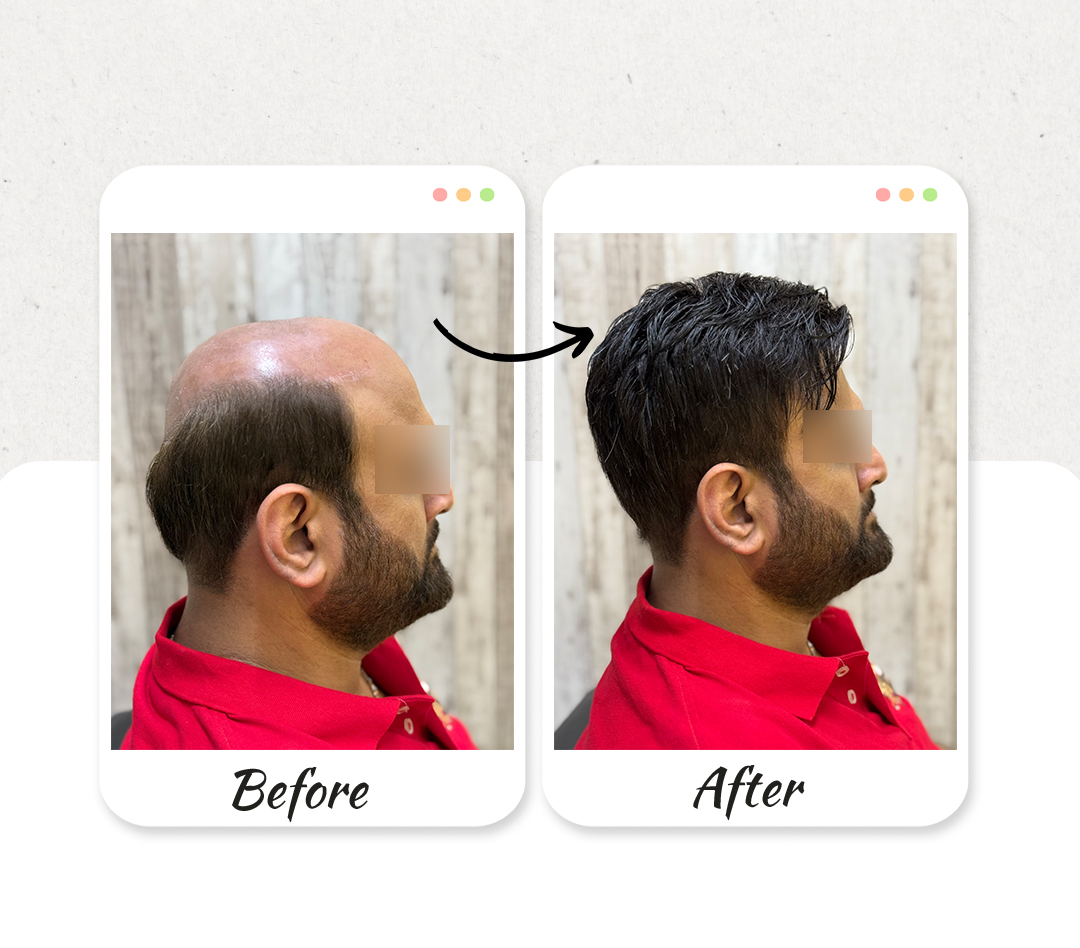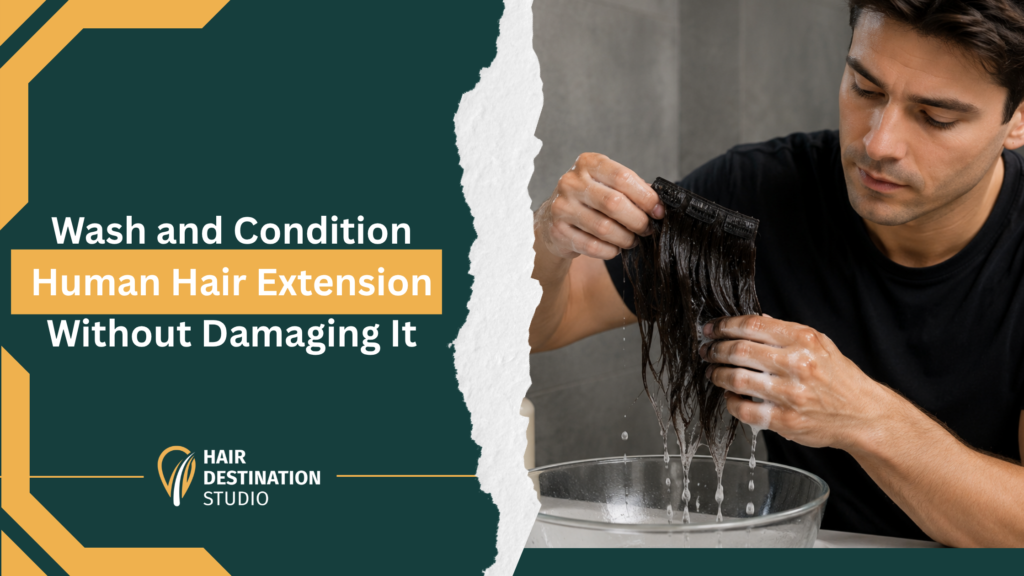
You splurged on a gorgeous set of human hair extensions. They blended perfectly, the length was everything you wanted, and for a few weeks, your hair looked exactly the way you’d always imagined it could. Then wash day arrived, and somewhere between the shampoo and the towel-dry, things started going wrong. The hair felt rough. The ends started tangling. The lustre you paid for was quietly disappearing.
This is one of the most common things we hear from women who come to us at Hair Destination Studio. Not that the extensions were poor quality, but that nobody told them how to wash them properly.
Human hair extensions are not the same as your natural hair growing from your scalp. They don’t receive oil and nourishment from your follicles. They don’t self-repair. Every wash is an event they need to survive well, and how you handle that process determines whether your extensions last six months or barely make it to three.
Here’s what to actually do.
Before You Even Turn On the Tap
The most major mistake people make is jumping straight into the shower with tangled extensions and expecting shampoo to sort everything out. It won’t. It’ll make it worse.
Detangle first, always. Use a wide-tooth comb and work from the ends upward, never root to tip. Human hair extensions, especially tape-in and micro-link types, are vulnerable at their attachment points. Dragging a brush from root to end puts direct stress on the bonds and, over time, weakens or dislodges them.
Take your time with this step. Gentle detangling before washing prevents the kind of matting that becomes very difficult to undo once the hair is wet.
Choosing the Right Products: This Matters More Than You Think
Not every shampoo is suitable for human hair extensions. Many popular drugstore shampoos contain sulphates, strong cleansing agents that aggressively strip away moisture. On your scalp, your sebaceous glands replenish that moisture. On a hair extension, there’s no such recovery mechanism. Sulphate-based shampoos will progressively dry out the hair shaft, leaving your extensions brittle, frizzy, and dull.
Always use a sulphate-free, alcohol-free shampoo. Look for formulas designed for colour-treated or dry hair; they tend to be gentler and more moisturising, which is exactly what extensions need.
The same logic applies to conditioner. Avoid anything with heavy silicones at the top of the ingredient list. Silicones can create a build-up on the hair shaft that initially feels smooth but eventually makes the hair heavier and harder to manage.
What works well: moisture-rich conditioners with ingredients like argan oil, shea butter, or keratin. These restore softness without build-up.
The Washing Process, Step by Step
Step 1: Wet the hair gently
Use lukewarm water, never hot. Hot water lifts the hair shaft’s cuticle, making the hair porous and prone to frizz. Lukewarm water cleanses effectively without that damage. Let the water run downward through the hair, in the direction the hair grows. Never scrunch or pile hair on top of your head while it’s wet.
Step 2: Apply shampoo the right way
Dilute your shampoo slightly before applying; you don’t need it concentrated. Apply it mainly to the scalp and roots, then let it travel down the length of the hair extension as it rinses out. Avoid scrubbing the mid-lengths and ends directly. The extensions don’t produce oil the way your scalp does, so they don’t need the same intensity of cleansing. Over-washing the lengths strips moisture and accelerates tangling.
Step 3: Rinse thoroughly
Leftover shampoo residue is one of the quieter causes of damage to extensions. It builds up around the bonds, making the hair feel heavy, sticky, and difficult to manage. Rinse until the water runs completely clear, still keeping it lukewarm.
Step 4: Condition properly, and don’t skip this.
Apply conditioner from mid-length to ends. Keep it away from the roots and, specifically, away from the attachment points of your extensions. Conditioner near the bonds of tape-in or micro-link extensions can soften the adhesive or loosen the micro-rings, significantly shortening the lifespan of your application.
Leave the conditioner in for 3 to 5 minutes. If your extensions are feeling particularly dry or have been exposed to heat styling recently, a deep-conditioning mask once a fortnight can make a real difference. Think of it as a moisture reset.
Rinse thoroughly with cool water at the end; the cool temperature helps seal the hair cuticle, which gives hair its shine and smoothness.
Drying: Where Most of the Damage Actually Happens
Here’s where things get interesting, because most people think washing is the risky part. In reality, how you dry your human hair extension is just as important.
Never rub extensions dry with a towel. The friction causes the cuticles to roughen and the hair to tangle. Instead, gently press out the water and wrap the hair in a soft microfibre towel for a few minutes to absorb excess moisture.
Air drying is always the safest option. If you have the time, let the extensions dry naturally before doing anything else with them. Brush gently with a wide-tooth comb while moist to keep them smooth.
If you need to use a blow-dryer, set it to a low to medium heat setting and hold it at least 15 cm from the hair. Always use a heat-protectant spray beforehand, and make sure it works on extensions, not just natural hair. Direct high heat, especially near the bonds, is one of the fastest ways to damage both the extension hair and the attachment method.
How Often Should You Wash Your Extensions?
This is one of those questions where the right answer is actually “less often than you think.”
Washing too frequently dries out human hair extensions faster than almost anything else. For most extension wearers, washing every 2 to 3 days is sufficient. If you’re someone who exercises regularly or lives in a humid city like Mumbai, a gentle co-wash (a conditioner-only wash) on non-shampoo days can help refresh hair without stripping it.
What most people don’t realise is that over-washing extensions is far more damaging than under-washing them. The extensions don’t get oily the way your scalp does, so there’s rarely a reason to shampoo them daily.
A Few Things to Avoid Entirely
Some habits seem harmless but significantly shorten the life of a human hair extension:
Sleeping with wet extensions. The friction of a pillow against damp hair causes matting and breakage. Always dry your extensions fully before sleeping, and consider sleeping with them in a loose braid to minimise tangling.
Applying products directly to the bonds. Oils, serums, and leave-in conditioners are wonderful for extensions, but when applied too close to the roots or bonds, they weaken the attachment method over time. Keep all product applications from mid-length downward.
Skipping the detangling before washing. We mentioned this at the start because it matters enough to mention again. Wet tangles are far harder to remove than dry ones.
When to See a Professional
Even with the best home care, human hair extensions benefit from professional maintenance. If you notice significant tangling or matting near the bonds, or a change in texture that your usual conditioning routine isn’t addressing, it’s worth coming in for a professional assessment.
At Hair Destination Studio, we work with premium human hair extensions fitted by our team across our Powai and Malad branches. Part of what we offer every client is guidance on exactly how to care for their specific extension type, because clip-in, tape-in, and micro-link extensions each have slightly different care requirements.
The goal is always the same: extensions that look and feel as good in month six as they did on day one. The right washing routine is a big part of getting there.
If you’d like to learn more about our hair extension services in Mumbai or would like a free consultation to find out which type of extension suits you best, our team is always happy to help.