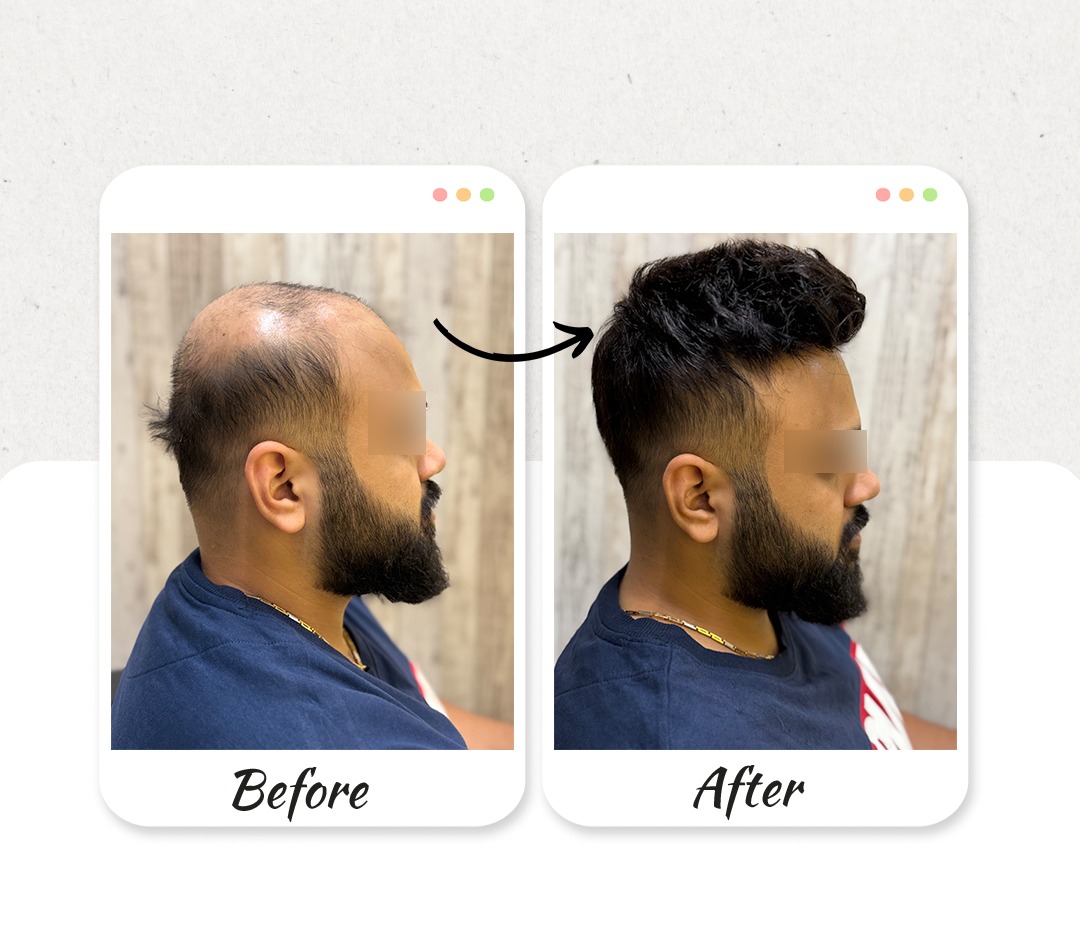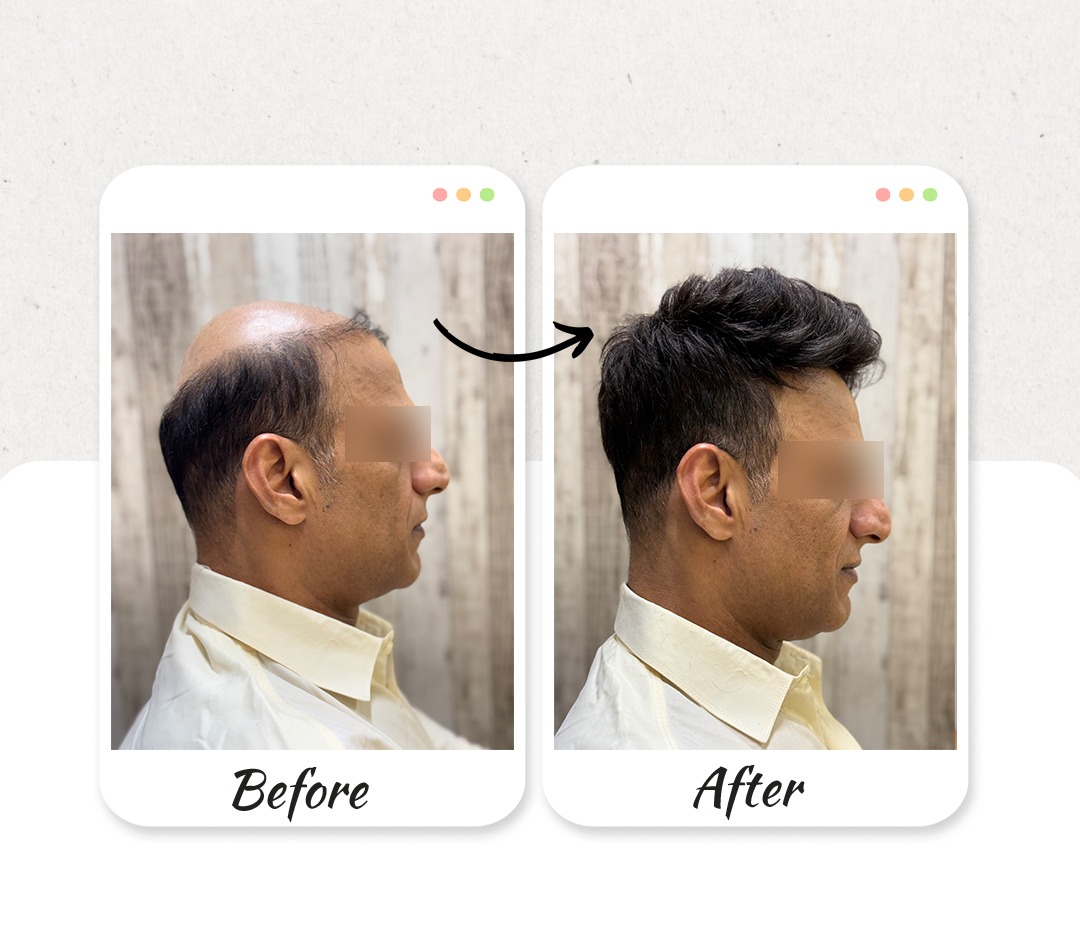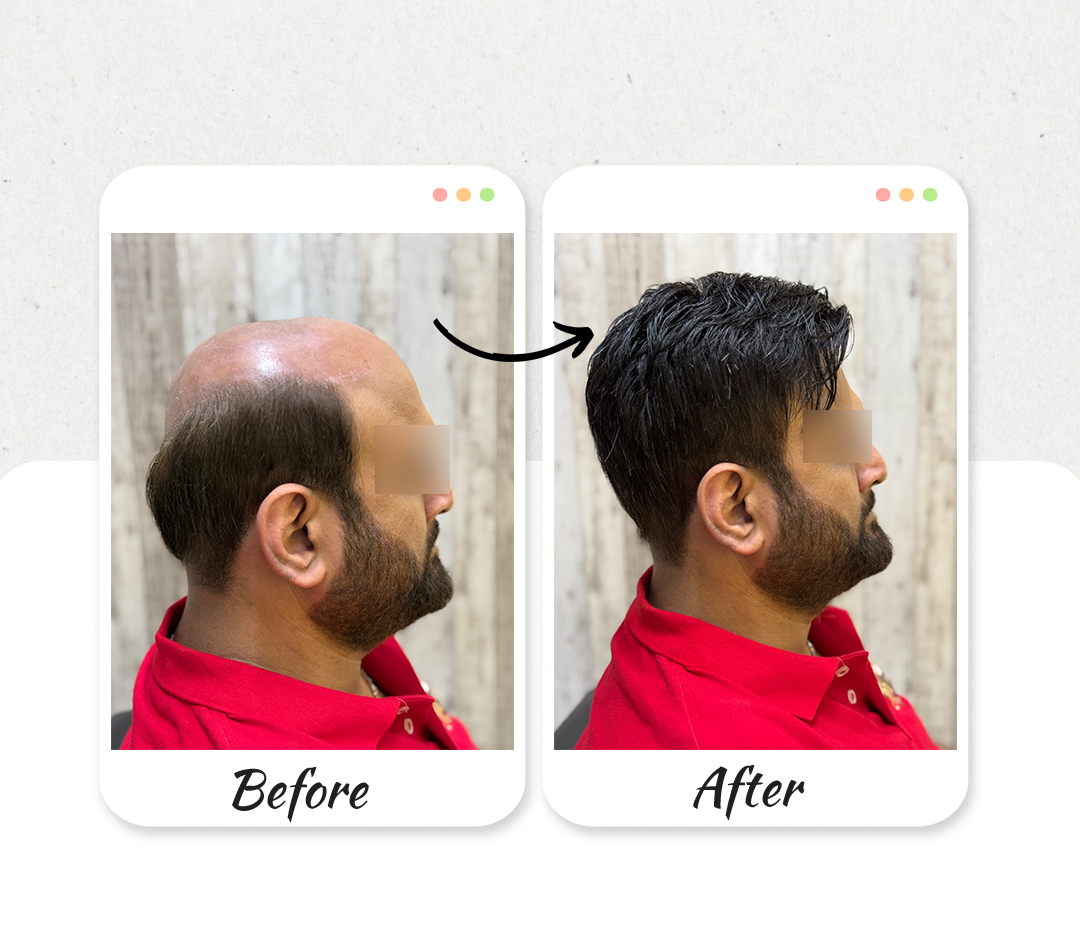
You can spot a bad hair patch from across a room, and it’s rarely because of the hairline. It’s the shine. Under a tube light or in direct sunlight, some patches throw back a glossy, plasticky glow that no real scalp has ever produced. That glow comes down to one decision made long before the patch reaches your head: what the hair is actually made of. The difference between a Remy human hair patch and a cheaper alternative shows up in every photograph, every monsoon morning and every close conversation.
At Hair Destination Studio, this is one of the first things we explain to new clients at our Powai and Malad studios in Mumbai. A human hair patch for men and a synthetic hair patch can look similar on a shelf. On a head, over weeks and months, they behave very differently. This guide breaks down exactly how, so you can choose based on what you’ll actually live with, not what looks good on day one.
Why Hair Type Matters More Than Most People Realise
When men start researching hair patches, they usually compare attachment methods, base materials and price. Hair type gets a quick mention, if that. Yet it decides four things you’ll notice every day:
- How natural the patch looks up close and in photographs
- How it moves, falls and reacts to wind, sweat and rain
- How you can style it, and how often
- How long it lasts before it needs replacing
Get this decision right, and the rest of the experience becomes easier. Get it wrong, and no part of clever fitting will fully hide it.
First, What Does “Remy” Actually Mean?
Remy is one of the most misused words in the hair industry, so it’s worth being clear.
Hair is called Remy when the strands are collected and kept with their cuticles all running in the same direction, from root to tip. The cuticle is the outer layer of each strand, a bit like the overlapping scales on a pinecone. When they all point the same way, the hair lies smoothly, reflects light naturally, and tangles far less.
In lower-grade human hair, strands are often mixed up with the cuticles facing opposite directions. They rub against each other, snag and eventually form knots. To hide that, manufacturers sometimes coat the hair with silicone, which looks good at first and washes off quickly, leaving a dull, tangled mess.
That’s why Remy matters. It isn’t a marketing label. It describes how well the hair behaves over time.
Remy Human Hair Patch: What You Get
It looks and moves like your own hair
A Remy human hair patch reflects light like real hair, with a soft, natural sheen rather than a glassy glow. It moves naturally in the breeze, falls with real weight and blends with your own hair at the sides and back.
It can be styled, cut and coloured
Because it’s real hair, a human hair patch for men can be trimmed, layered and shaped like your natural hair. It can often be styled with heat tools used gently, and a good stylist can adjust colour and tone to match your natural hair as it changes. This flexibility is a big reason many clients choose it.
It can last longer with proper care
With proper care, human hair generally lasts longer than synthetic alternatives. How long it lasts depends on the hair’s quality, how you care for it, how often you wear it, and your environment. In a city like Mumbai, with its heat, humidity and monsoon, care matters even more.
It needs real maintenance
Here’s the honest part. Human hair needs to be treated like human hair. It needs regular washing with products suited to hair systems, conditioning, gentle handling and sensible styling. It can also dry out, and it needs more care in swimming pools and hot climates. If you won’t do any of that, you’ll lose the advantages.
It costs more upfront
Quality human hair is more expensive to source and process, so the patch usually costs more upfront. We’d rather be upfront about that than call it a bargain.
Synthetic Hair Patch: What You Get
A synthetic hair patch is made from manufactured fibres designed to mimic hair. Synthetic options have improved over the years, and they have real strengths.
It’s budget-friendly
The main attraction is cost. A synthetic hair patch typically costs less, making it appealing for first-time wearers who want to try the idea without a large investment.
It holds its style
Synthetic fibres tend to keep the style they were set in. Wash it, shake it out, and it usually falls back into place. For men who want something low-effort with little styling, that’s a genuine plus.
It’s fairly resilient to humidity
Because the fibres don’t absorb moisture the way human hair does, they can handle damp weather without the frizz or limpness that natural hair sometimes shows.
The trade-offs
Here’s where we’d be straight with you.
- Shine. Even good synthetic fibres can look slightly shinier than real hair, especially in bright light and photographs.
- Limited styling. You usually can’t restyle it much. Heat tools can melt or damage standard synthetic fibres, and the cut it arrives with is largely the cut you keep.
- Shorter life. Synthetic hair generally wears out faster. It can become frizzy, matted or visibly worn with regular use, particularly if it’s worn daily.
- Blending challenges. Matching the texture and movement of your own hair is harder, because your hair behaves like hair and the patch behaves like fibre.
None of this makes synthetic a bad choice. It makes it a specific choice, suited to specific needs.
Side-by-Side Comparison
| Remy Human Hair | Synthetic | |
| Natural look up close | Excellent | Good, but can look shiny |
| Movement | Natural | Slightly stiffer |
| Styling and colouring | Flexible | Very limited |
| Heat tools | Used carefully | Usually not suitable |
| Maintenance effort | Higher | Lower |
| Lifespan | Longer with good care | Generally shorter |
| Upfront cost | Higher | Lower |
| Best for | Natural look, styling freedom | Budget, low-effort, short-term wear |
Treat this as a guide rather than a rule. Quality varies widely within each category, and a well-made synthetic can outperform a poorly sourced human hair patch.
What About Blends?
Some patches combine human and synthetic hair, aiming to balance price and a natural look. Blends can work in specific situations, but they come with their own compromises. The two materials age differently, respond differently to heat and care, and can start to look mismatched over time. If you’re considering one, ask exactly what the ratio is and how to maintain it.
Matching Hair to the Indian Head
Here’s something you won’t find in most generic guides: hair matching is not one-size-fits-all.
Indian hair tends to be dark, dense and strong, with its own texture, wave pattern and thickness. A patch has to match that texture and colour closely to disappear into your own hair. That includes the shade in sunlight, not just indoors, and how grey hairs are distributed if you have them.
In our experience, this is where a Remy human hair patch earns its keep. Real hair can be matched and adjusted in ways that fibre can’t, and it ages alongside your natural hair more gracefully. For men with a lot of natural hair remaining, a close match is everything.
How Mumbai’s Climate Changes the Equation
Humidity, heat, sweat, and the monsoon all affect a patch, and they affect each hair type differently.
Human hair absorbs moisture, so it can swell and frizz in damp weather and needs proper drying after rain. It also benefits from conditioning, since heat and washing can dry it out. Synthetic fibres shrug off moisture more easily but can look dull, tangled or heat-damaged with age.
Neither is perfect for this climate. The important thing is to choose the one that fits how much care you’re willing to give, and then give it. For a deeper look at keeping a patch in good condition through the seasons, ask us about our maintenance routines.
Which One Should You Choose?
Rather than a single answer, here’s how we think about it with clients.
A Remy human hair patch is usually the better fit if:
- Looking natural, even up close, is your priority
- You want freedom to cut, style and adjust the look
- You’re willing to follow a proper care routine
- You see the patch as a long-term part of your look
A synthetic hair patch may suit you if:
- You’re trying a patch for the first time and want a lower-cost start
- You prefer minimal styling and low daily effort
- You need something for a short period or a specific occasion
- Budget is the deciding factor
It’s also worth asking yourself:
- How much of my own hair remains, and how well do I need to match it?
- How much time will I realistically spend on care?
- Will the patch be on show for weddings, photographs or client meetings?
- How long do I plan to wear it?
Common Mistakes When Choosing Hair Type
- Choosing purely by price. The cheapest option on day one is rarely the cheapest over a year.
- Assuming all “human hair” is Remy. Ask what the hair is and how it’s sourced.
- Expecting synthetic to behave like human hair. It won’t take heat or restyling the same way.
- Skipping maintenance on human hair. It rewards care and punishes neglect.
- Ignoring colour matching in daylight. What looks right under shop lights can look different outside.
Questions to Ask Before You Buy
Whoever you buy from, these questions help you separate quality from marketing:
- Is this hair genuinely Remy, with cuticles aligned?
- Where is it sourced, and how is it processed?
- How should I wash, condition and store it?
- How long can I realistically expect it to last?
- Can the colour, texture and density be matched to my own hair?
- What happens if the patch needs adjusting or replacing?
A good provider will answer without hesitation. If the answers are vague, that tells you something.
Final Thoughts: The Hair Is the Foundation
Attachment methods, base design and styling all matter, but the hair itself sets the ceiling on how natural a patch can look. A Remy human hair patch gives you the most realistic finish and the most flexibility, but it requires more care and costs more. A synthetic hair patch offers convenience and affordability, but less realism and longevity. Neither choice is wrong. It’s about matching the material to your priorities.
If you’re weighing a human hair patch for men against a synthetic option, the best way to decide is to see and feel both in person. Visit our Powai or Malad studio for a free consultation. We’ll show you the difference up close, match shades to your hair in natural light, and help you choose what suits your head, routine, and budget.