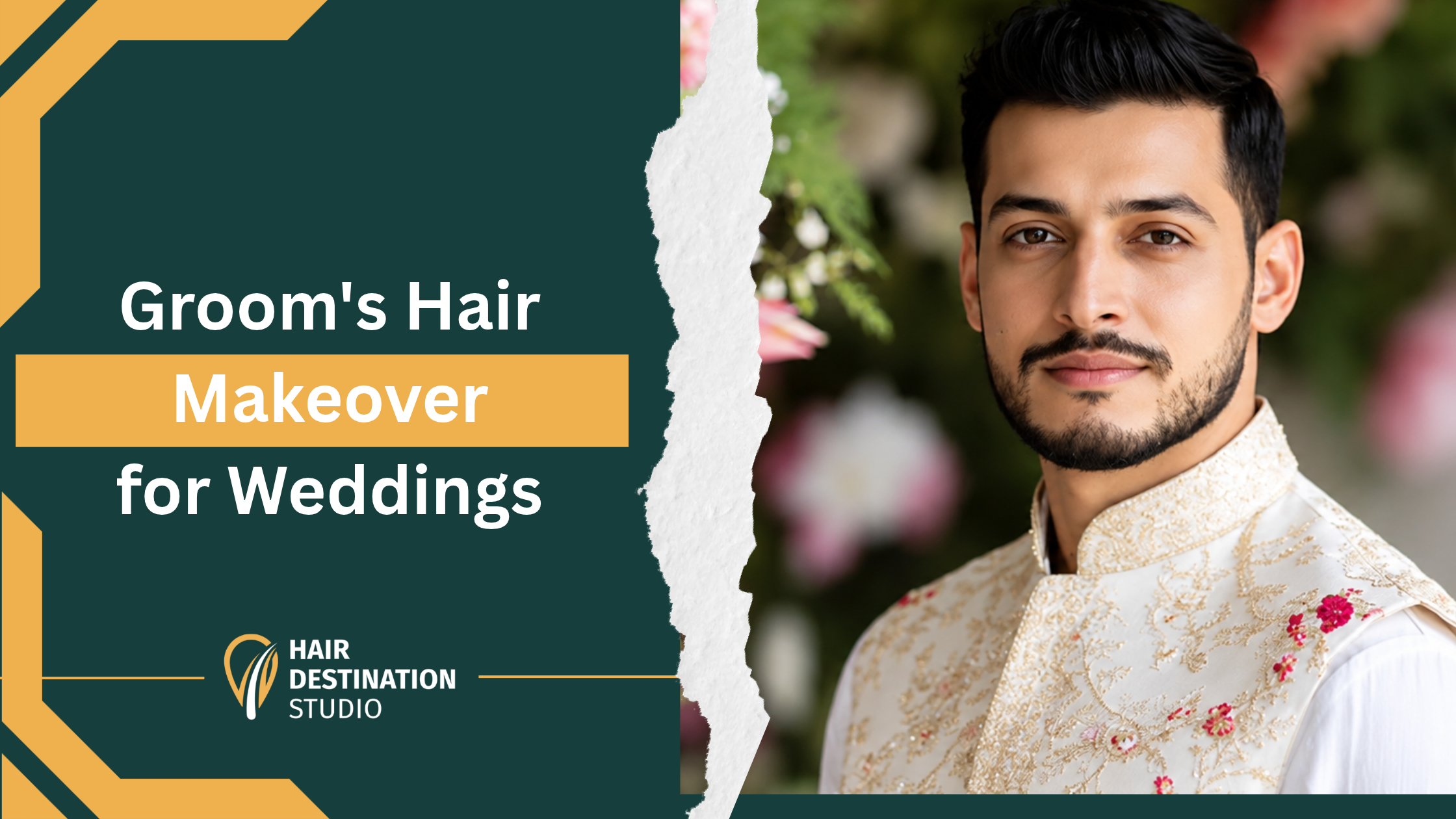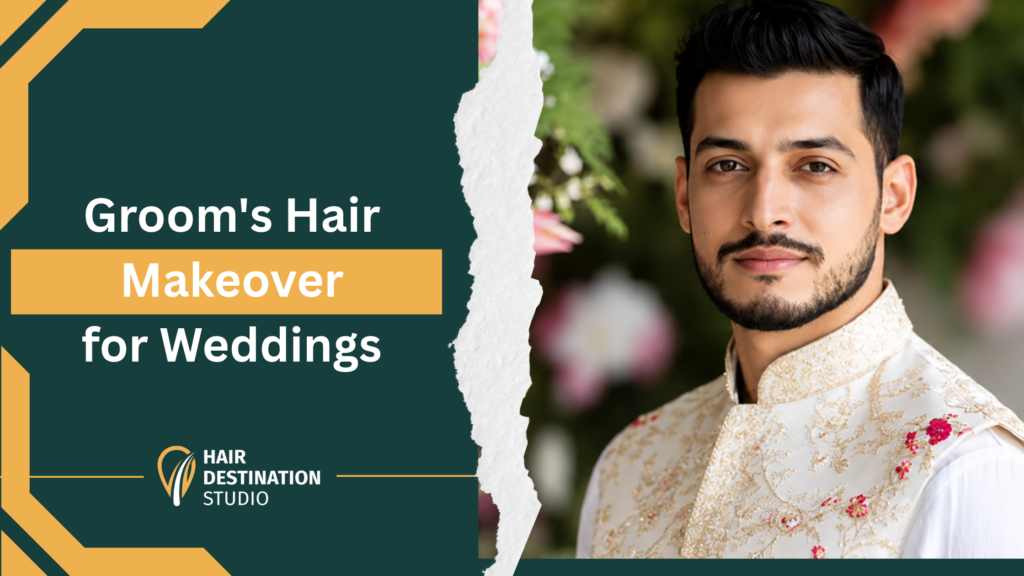
Nobody tells grooms this, but your wedding photos will outlive almost everything else about the day. The flowers wilt, the food is eaten, the playlist is forgotten. The photographs stay on the wall for decades, and your hairline is in every single one. For men quietly worried about thinning hair or a receding hairline, the months before the wedding can feel oddly stressful, and a well-planned groom hair makeover is often what finally lets them relax.
At Hair Destination Studio, we meet grooms every wedding season at our Powai and Malad studios in Mumbai. Some come in two years ahead. Some come in three weeks before the date, a little panicked. Either way, the questions are the same: Will it look natural? Will it survive the haldi, the baraat and the pheras? Will anyone be able to tell? This guide answers all of that, step by step, so a wedding hair patch for men feels like a plan and not a gamble.
Why More Grooms Are Choosing a Hair Patch
Weddings put you in front of everyone you know, usually under bright lights and a dozen camera lenses. That’s a lot of attention for a man who has been avoiding mirrors.
What we hear most often isn’t vanity. It’s a simple wish to look like the best version of themselves on a day that matters. Hair transplants take time, involve surgery and need months to show results. A hair patch is a non-surgical option, so there’s no downtime and no healing period to schedule around the event. For a groom with a fixed date, that practicality counts for a lot.
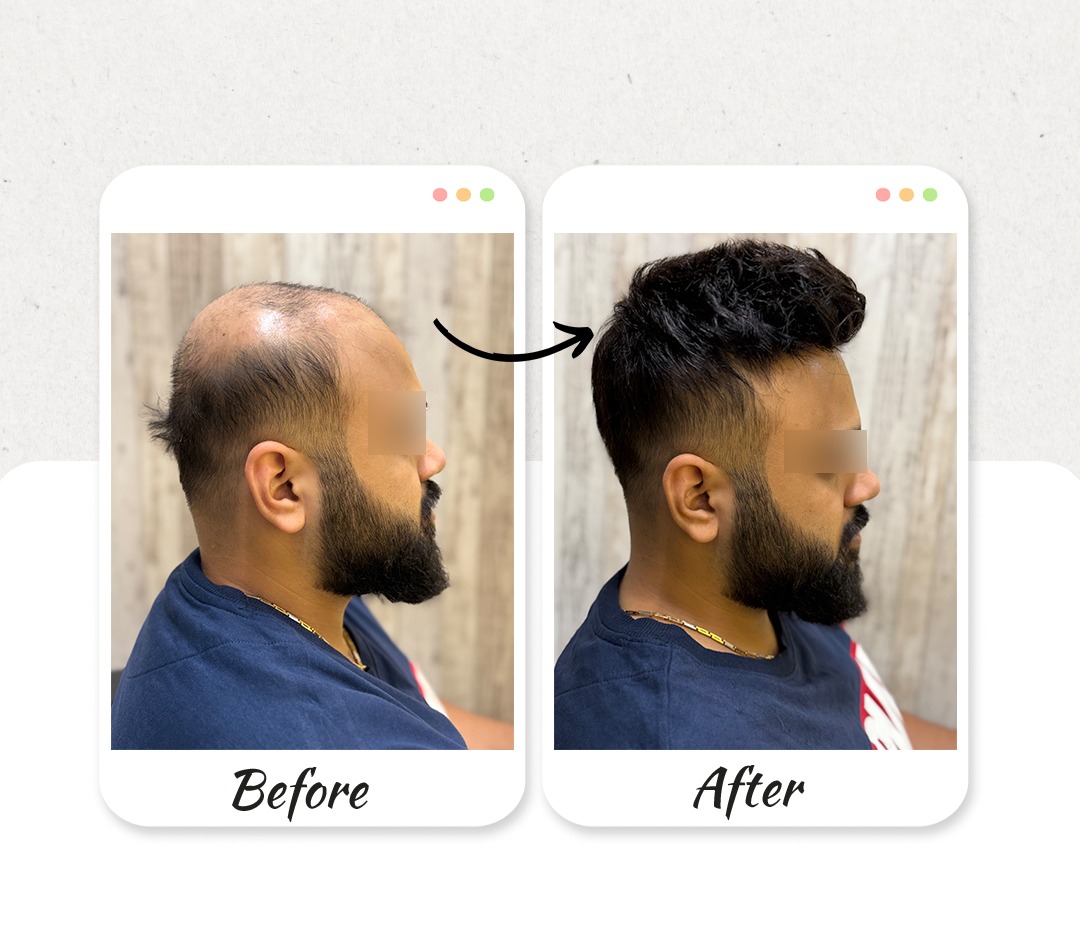
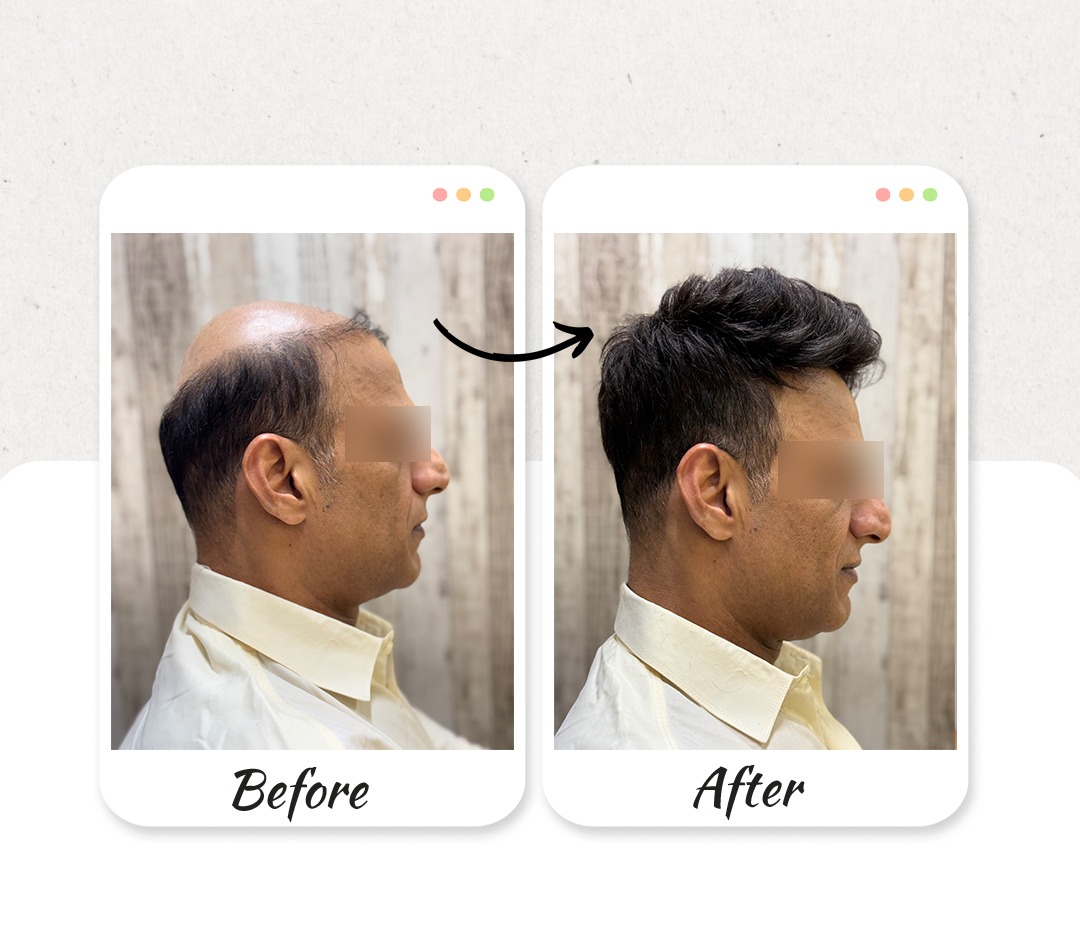
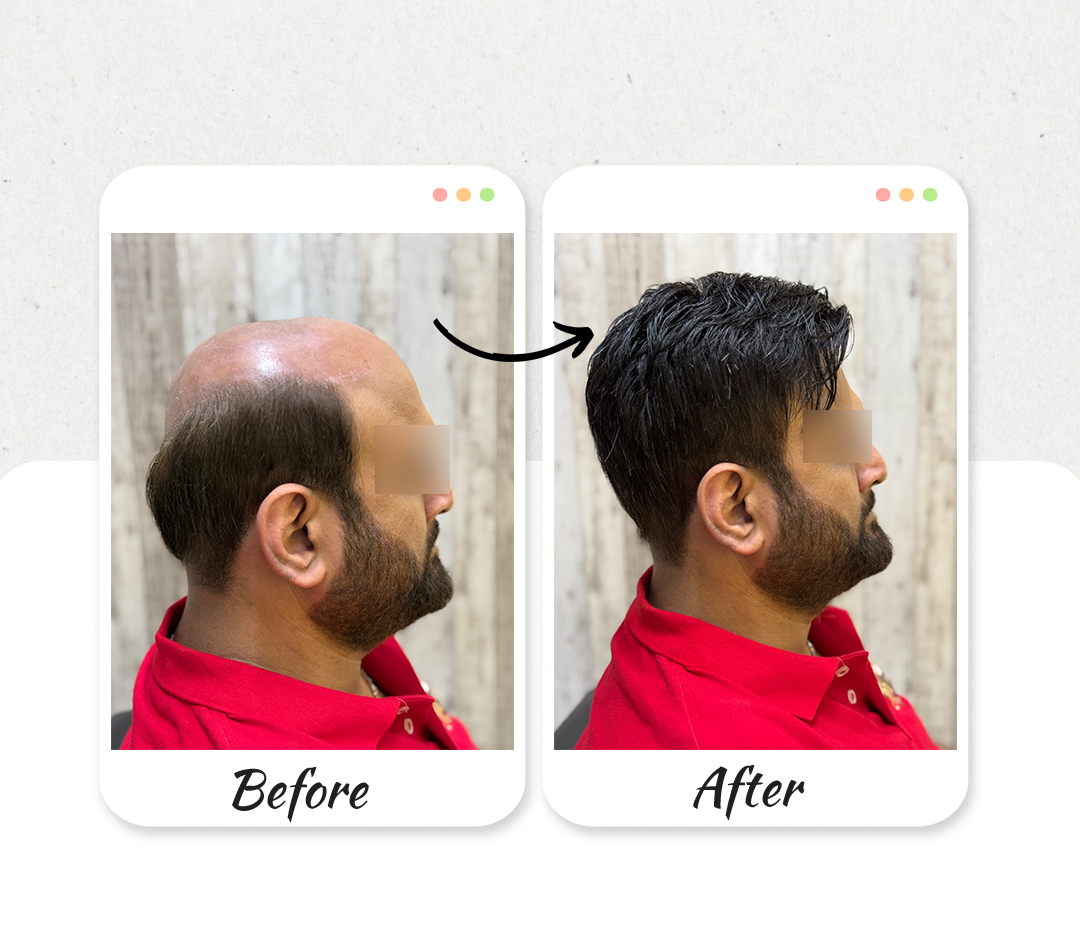
A good patch is also fitted to your hair, your colour, and your hairline. Done properly, the goal isn’t to look “different”. It’s to look like yourself, with more confidence.
Start Early: The Timeline That Actually Works
The most common mistake we see is leaving this to the last minute. A patch isn’t a product you buy off a shelf. It’s custom work, and your hair needs time to settle into its new look.
2 to 3 months before: Consultation and planning
This is the sweet spot. Book a consultation, bring your wedding date, and tell us what your ceremonies look like. A groom with a single church ceremony needs a different plan from one with a haldi, sangeet, baraat and reception over three days. We’ll look at your scalp, your hair-loss pattern, and your lifestyle, then recommend the attachment method that suits you. Early on, you also have time to change your mind.
4 to 6 weeks before: Fitting and first wear
Your patch is customised and fitted, and the hair is cut and styled to blend with your natural hair. Wearing it for a few weeks before the wedding matters more than people think. You get used to how it feels, learn how to care for it, and make small adjustments without pressure.
1 to 2 weeks before: Final trial
This is your dress rehearsal. Try the look with your wedding outfit, with a safa or sehra if you’re wearing one, and with the styling you plan to use on the day. Bring your photographer’s reference pictures if you have them. It’s far easier to fine-tune now than on the morning of the wedding.
2 to 4 days before: The final service
A fresh clean-up and a final check of the attachment mean your patch looks its best on the day. We never recommend a brand-new fitting this close to the wedding. Everything should already feel familiar by then.
If your wedding is closer than this timeline allows, don’t give up. Tell us the date, and we’ll tell you honestly what’s realistic.
Choosing the Right Attachment Method for the Big Day
The method that keeps your patch in place matters even more on a wedding day, because you’ll be dancing, sweating, posing and wearing headgear.
A bonded wedding hair patch for men offers the most secure hold. It’s popular with grooms who want to forget about their hair entirely and focus on the day. It suits long ceremonies, energetic dancing and hot, crowded venues.
Tape offers a firm hold with more flexibility, and some grooms like that it can be removed and re-applied. It’s more sensitive to sweat and oil, so it needs extra care in Mumbai’s humidity.
A clip-on works for grooms with partial loss and good surrounding hair. It’s easy to take off and gentle on the scalp, but it needs careful fitting, especially if you’ll be wearing a turban or sehra over it.
There isn’t one right answer. We’d rather talk it through with you than recommend a method before seeing your scalp.
Planning Your Groom Hairstyle With a Hair Patch
A groom hairstyle with a hair patch works best when the hair is designed for the occasion, not just for a mirror in the studio.
Keep it classic
Weddings are photographed from every angle. A clean, classic cut with a natural parting and soft texture will age better in photographs than a trendy style that dates quickly. We usually suggest a style that suits your face shape and the formality of your outfit, with enough movement to look like real hair.
Match the style to the outfit
A sherwani with a safa asks for something different from a three-piece suit or a sherwani with no headgear. If you’ll be wearing a turban, we’ll plan the hair so it fits comfortably underneath and looks neat when the turban comes off. If you’re going bare-headed, the front hairline gets extra attention, since it’ll be right in the camera’s focus.
Go light on product
Heavy gels, waxes and sticky sprays can build up on a patch and are harder to clean off. A light, patch-friendly styling product is usually enough. We’ll show you what works for your hair and what to avoid.
Get the haircut done at the right time
Get your patch cut and blended before the wedding, not after. Fresh trims close to the date keep the hairline sharp, and having the same stylist who fitted the patch do the blending keeps the look consistent.
Surviving Every Ceremony: A Practical Guide
Indian weddings, especially, come with a whole calendar of events. Here’s how a patch handles them.
Haldi. Turmeric, water and plenty of enthusiastic friends. If your head is going to get involved, talk to us in advance. We’d generally suggest protecting the patch, or planning the haldi before the final fitting if your schedule allows it. Turmeric can stain, so this is one to plan, not improvise.
Mehendi and sangeet. Dancing means sweat, so a well-attached patch and a clean scalp matter here. Keep a tissue handy, pat instead of rubbing, and don’t let anyone ruffle your hair for fun.
Baraat. Sun, heat, a horse or car, and a safa or sehra. This is the most demanding part of the day for the scalp. Take breaks in the shade when you can, and if you’re wearing a turban, put it on and take it off slowly and carefully.
Pheras and the main ceremony. Long sitting, warmth from the fire, and lots of ritual. Stay hydrated, avoid touching your hairline, and trust the plan you’ve already made.
Reception. Often the most photographed event of all. A fresh touch-up the same morning, if needed, and a quick check before the photos will keep you looking sharp.
The honeymoon. If it includes beaches, pools or humid destinations, ask us beforehand. Chlorine and salt water need extra care, and you may want a different routine for the trip.
Photography Tips for a Natural Look
Grooms often ask whether a hair patch shows up on camera. A properly fitted one shouldn’t, but a few things help.
- Tell your photographer about your plans early, so they can avoid harsh angles from directly above or extreme close-ups of the front hairline.
- Do a test shoot during your final trial. It takes five minutes and gives you peace of mind.
- Avoid pulling or adjusting your hair during the shoot. Every touch risks shifting it.
- Keep a small comb and a few tissues with a trusted friend or family member.
Most of these are habits you’ll build during the weeks you wear the patch before the wedding, which is another reason not to start late.
Telling People (Or Not)
A question we hear all the time: “Should I tell my family?” Some grooms do. Some tell only their partner. Some tell nobody. That’s entirely your call.
Most people don’t notice a well-made, well-fitted patch. The reaction we hear most often afterwards is some version of “You look great, did you do something different?” And that’s exactly what a good groom hair makeover should feel like: not a disguise, just a better version of what was already there.
Common Mistakes Grooms Make
- Starting too late. Rushed fittings leave no room for adjustments.
- Changing everything at once. A new patch, a new hair colour and a new haircut in the same week is a recipe for surprises. Keep it controlled.
- Skipping the trial. Test the look with your outfit, your headgear and your photographer’s angles.
- Ignoring skin sensitivity. If you’ve reacted to adhesives or products before, say so early. A patch test is quick, and a reaction on the wedding week isn’t.
- Forgetting aftercare. Even a short wedding schedule asks for clean, careful handling in the days leading up to it.
What to Bring to Your Consultation
You’ll get far more from your visit if you come prepared. Bring:
- Your wedding date and the list of ceremonies
- Photos of hairstyles you like, and of how you’ve worn your hair before
- Your outfit details, including any turban or sehra
- Any history of scalp sensitivity or reactions
- Questions, as many as you like
We’ll walk you through every part of the plan, from how the patch will be fitted to how to look after it before and after the wedding.
Final Thoughts: Look Like Yourself, Just Sharper
A wedding is one of the few days when everyone’s eyes are on you, and it’s easier to enjoy it when you aren’t thinking about your hairline. A thoughtful groom hair makeover isn’t about vanity or reinvention. It’s about walking in confident and staying that way until the last dance.
A wedding hair patch for men works best when you plan it early, fit it carefully, and style it for the day. Add the right groom hairstyle with a hair patch, a clear care routine and a trial run, and the patch stops being something you think about and becomes something that simply works.
If your wedding date is on the calendar, visit our Powai or Malad studio for a free consultation. Tell us about the day, and we’ll build a plan around it, so the only thing you have to focus on is saying yes.