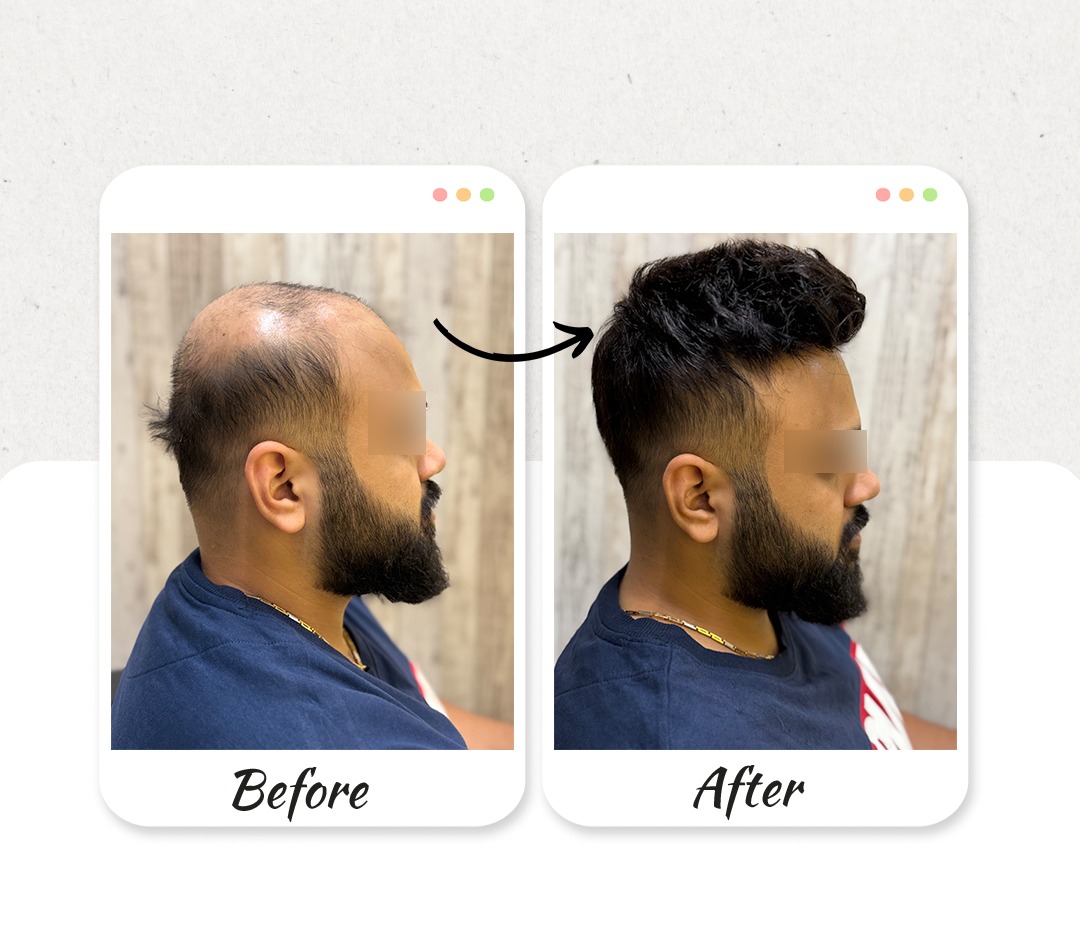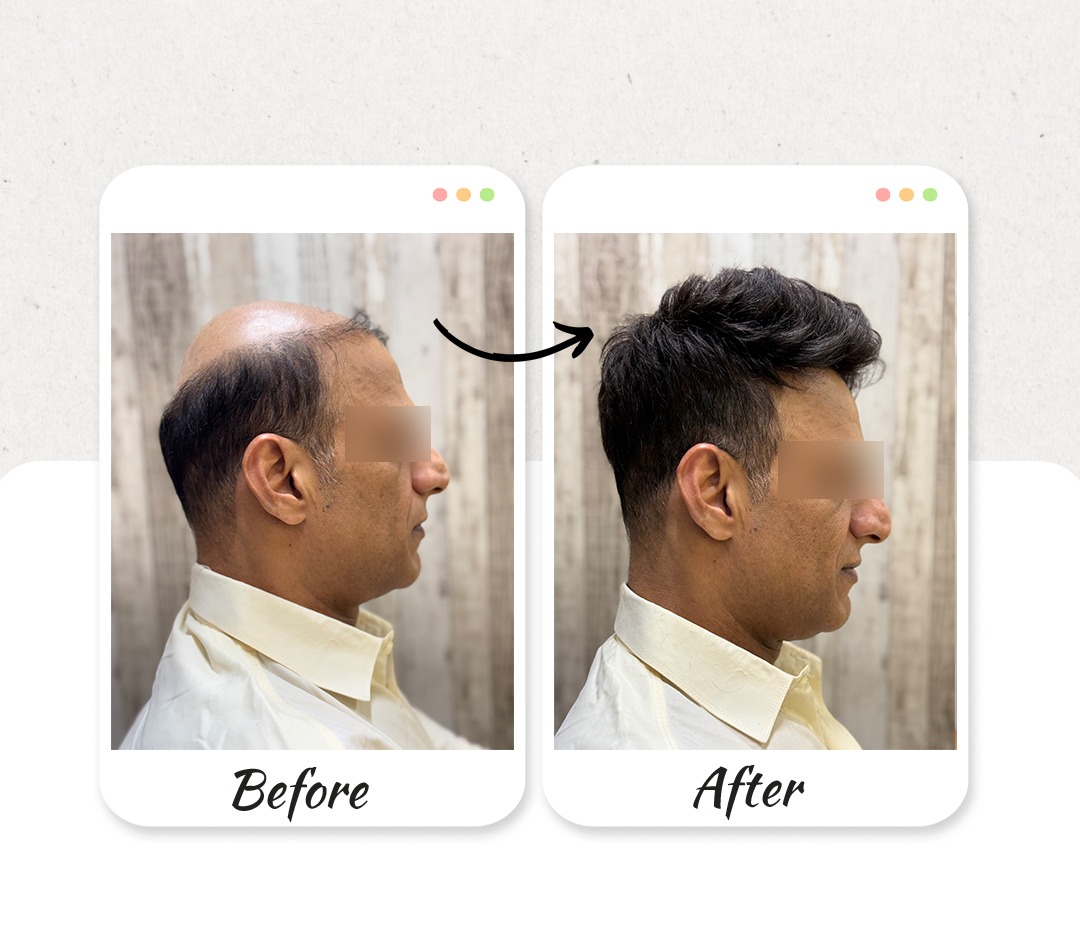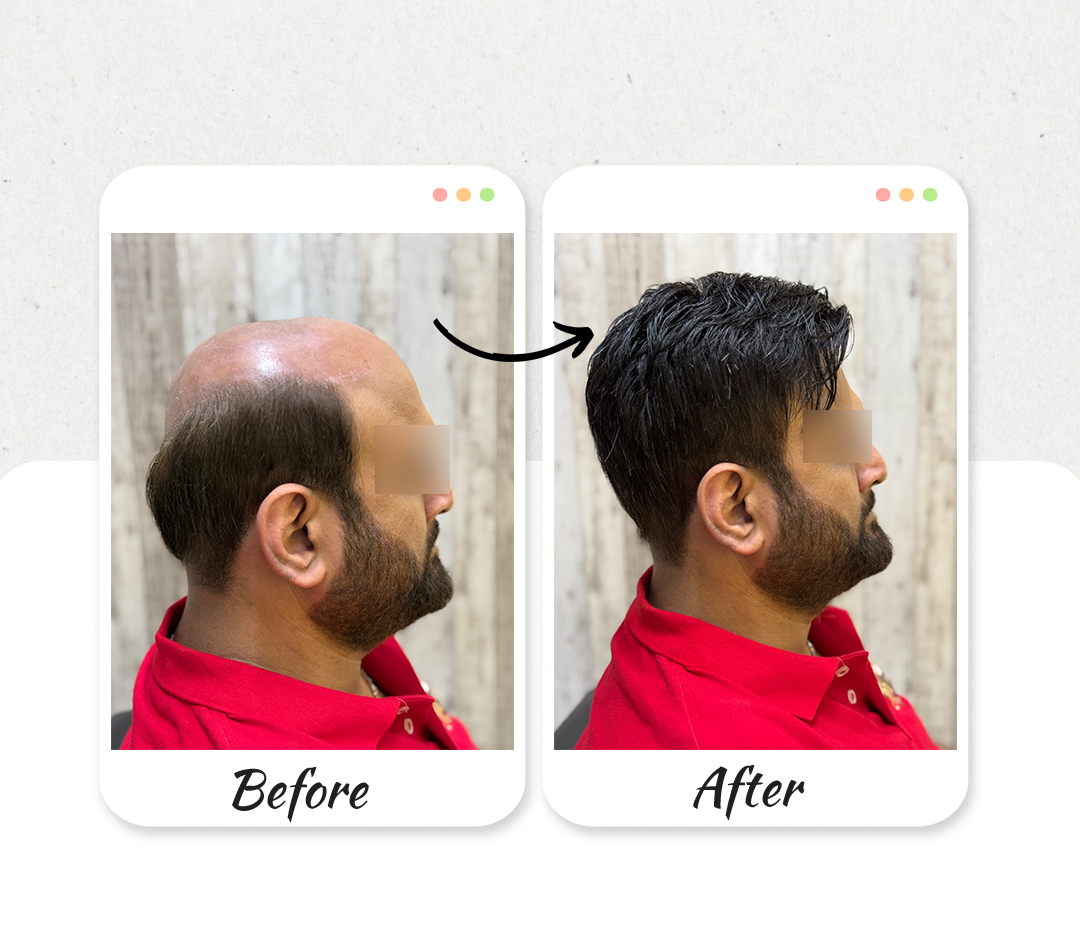
A packed local train at peak hour doesn’t care how good your hairline looks. Add heavy humidity, a standing spot near the door and a forty-minute ride, and your scalp does what every scalp in Mumbai does: it sweats. If you wear a hair patch, that’s where the worry starts. Are the edges lifting? Can anyone tell? Will it still sit right when you reach your station? The hair patch sweat problem is the concern we hear most from Mumbai clients, and it’s usually far more manageable than people expect.
At Hair Destination Studio, we fit and service patches at our Powai and Malad studios, so we see exactly how this city treats a patch through May heat, July downpours and everything in between. What follows isn’t theory. These hair patch maintenance tips come from what actually works for people who commute, train, ride bikes and get caught in the rain.
Why Mumbai Is Unusually Tough on a Hair Patch
A hair patch behaves differently depending on where you live. In a dry, cool climate, a well-fitted patch can run for weeks with very little fuss. In Mumbai, three things work against you at once.
Humidity. The air is already full of moisture, so sweat doesn’t evaporate the way it does elsewhere. It sits on the scalp, under the patch base.
Heat. A patch adds a layer over your scalp. That layer is designed to be breathable, but it still holds some warmth, and in peak summer you’ll feel it.
Movement and crowding. Trains, buses, auto-rickshaws and two-wheelers mean constant contact with poles, seats, helmets and strangers’ elbows. A patch that sits perfectly in the mirror at 8 a.m. gets tested by 9.
None of this means a patch can’t work here. Thousands of men and women wear one in this city every day. It means maintenance isn’t optional, and the routine needs to be built for Mumbai, not borrowed from a generic guide.
Understanding the Sweat Problem
What sweat actually does to a patch
Sweat on its own is harmless. The trouble comes from what it carries and where it collects. Salt, natural scalp oil, and moisture build up between the patch base and your skin. Over time, that mix can soften an attachment’s hold, leave the scalp itchy or irritated, and give the patch a stale smell if it isn’t cleaned properly.
That’s the real hair patch sweat problem. It’s less about visible dripping and more about a slow build-up that most people only notice once an edge starts to lift or the scalp starts to complain.
Which attachment methods feel it most
Not every method reacts the same way. In our experience, tape is the most sensitive to sweat and scalp oil, because it depends on a clean, dry surface to grip. Bonding generally handles moisture better, though it still needs regular cleaning and servicing so residue doesn’t build up. Clip-ons don’t use adhesive on the scalp, so the focus shifts to keeping the base fresh and the hair around the clips healthy.
If you already know you sweat heavily, mention it at your consultation. It’s one of the most useful things we can know when recommending a method, and it can change the entire plan.
Daily Habits That Keep Sweat Under Control
Small routines make the biggest difference. Here are the ones we’d put first.
Keep the scalp clean before the patch goes on.
Whatever method you use, a clean, oil-free scalp is the foundation. If you apply hair oil, know that oil near the attachment area is one of the quickest ways to weaken the hold. Many of our clients grew up with regular oiling, and we usually suggest keeping oil away from the patch area altogether.
Don’t fight sweat with more products.
When people see moisture, the instinct is to spray, powder or wipe aggressively. Heavy products can clog the base and leave a film that makes the problem worse. Keep it simple: gentle cleaning, proper drying, and the products your stylist recommends.
Pat, don’t rub
If your forehead is damp, blot with a clean tissue or a soft handkerchief. Dragging a cloth across the front hairline can shift the edge. Use short, light pressing motions and move on.
Carry a tiny kit
Keep a small pouch in your bag with a few tissues, a fine-tooth comb and a small mirror. It takes up no space, and it means a quick fix in a station washroom instead of a worried afternoon.
Give the scalp a break where your method allows
If you wear a removable patch, take it off in the evening and let the scalp breathe. A scalp that’s covered every hour of every day in this climate will complain sooner. Bonded patches follow a service schedule, so keep your appointments and let us clean the scalp during each visit.
Monsoon Rules: Rain Is Manageable, Dampness Isn’t
Here’s what most people get wrong about the monsoon: it’s not the rain itself that causes trouble. A patch can handle getting wet. The problem is staying damp.
Dry thoroughly, every tim.e
If you get caught in a downpour, don’t just let the patch air-dry on the way home. Once you’re indoors, gently pat the patch and the surrounding hair with a clean towel, then let it dry fully with cool air. Avoid hot blow-drying close to the base, since high heat isn’t kind to either the attachment or the hair.
Protect before you step out.
A cap, a hooded raincoat, or a compact umbrella does more for a patch than any product. Think of it as keeping the patch out of the worst weather, not hiding it.
Watch for damp-weather scalp issues.
Persistent moisture can irritate the scalp. If you notice unusual itching, redness, flaking or a musty smell, don’t wait for your next appointment. Come in and let us check it. And if the irritation is more than mild, a dermatologist’s opinion is always worth having.
Be extra strict with hygiene in July and August.
These are the months when we see more lifting edges and more scalp complaints. Clean on schedule, dry properly and keep to your service dates. A small delay in the monsoon costs more than the same delay in winter.
The Local Train Survival Guide
For many clients, the commute is the real test. Here’s how to get through it without a bad hair day.
Mind the pole. Leaning your head against a pole, a window bar, or a seat back puts friction on one spot, again and again. Try not to rest the top or front of your head on hard surfaces.
Avoid touching the front edge. We get it: when your forehead is sweaty, your hand goes there on its own. Every touch loosens things slightly. Make it a habit to use a tissue instead.
Stand where there’s airflow. Near the door or beside a window, you’ll catch a little breeze, which helps evaporation. Just keep your head clear of the open frame.
Wear a cap only if it’s loose. A tight cap can drag the patch with it when you pull it off. If you do wear one, take it off slowly and straight up, not with a sweeping motion.
Two-wheeler riders, take note. A helmet is non-negotiable, but it traps heat and moisture. A thin, clean cotton liner helps absorb sweat. Put the helmet on and take it off with both hands, gently, rather than yanking it.
Carry a spare shirt or a light layer. It may sound unrelated, but a sweaty back and neck can make you fidgety, and fidgeting is how people end up touching their hair all day.
Washing and Cleaning: How Often and How
This is where good hair patch maintenance tips matter most, because both under-washing and over-washing cause problems.
In Mumbai’s climate, regular cleaning isn’t a luxury. How often depends on your method, your activity level and how much you sweat, and your stylist will give you a schedule that fits. As a rule, a patch worn through hot, humid weeks will need cleaning more often than one worn in winter.
A few basics apply to everyone:
- Use shampoo and conditioner made for hair systems, not whatever’s closest to the tap.
- Use lukewarm water, never hot.
- Gently work the product through with your fingertips. Don’t scrub.
- Rinse thoroughly. Leftover shampoo commonly causes itching and dullness.
- Dry with a soft towel by pressing, then let it air-dry or use a cool setting.
- Never comb a wet patch roughly. Detangle gently from the ends upward.
These steps sound basic, but most patch problems we see in the studio trace back to skipping one of them.
Gym, Sleep and Everything In Between
The gym. Sweating during exercise is normal, and you don’t have to give up training. Wipe down gently with a clean towel afterwards, don’t tie a tight headband across the front edge, and clean the patch more often during heavy training weeks.
Swimming. Chlorine and salt water are tougher on the hair and the attachment. Check with your stylist before swimming, and rinse thoroughly afterwards.
Sleep. A clean, smooth pillowcase reduces friction while you sleep. A fresh one every few days is a simple habit that helps with both hygiene and the patch’s appearance. Avoid sleeping with damp hair.
Styling. Keep heat tools on low and away from the attachment area. Use products sparingly and avoid heavy oils or waxes near the base.
Keep Your Service Appointments
Home care keeps a patch comfortable between visits. It doesn’t replace professional servicing. We do these things better in the studio, with the right products and a clear view of what’s happening underneath.
In our experience, clients who stick to their service schedule have fewer sweat complaints, fewer lifting edges and patches that last noticeably longer. The ones who stretch the gap in July and August are the ones we see with problems.
Signs It’s Time to Call the Studio
Don’t wait for your scheduled visit if you notice any of these:
- Edges lifting or curling
- Persistent itching, redness or flaking on the scalp
- A smell that doesn’t go away after cleaning
- The patch feeling loose, shifted or uncomfortable
- Hair looking dull, dry or tangled well before its usual time
A quick check usually solves the problem. Ignoring it usually makes it bigger.
Final Thoughts: It’s a Routine, Not a Rule Book
Living with a hair patch in Mumbai isn’t about being careful every second. It’s about building a few reliable habits: a clean scalp, proper drying, a gentle hand on the front edge and regular servicing. Once those become second nature, heat, rain, and crowded trains stop feeling like threats and become just another part of your day.
The hair patch sweat problem is real, but it’s manageable. Most of the time, a small tweak to your routine, or a different attachment method that suits your scalp better, is all it takes.
If you’re struggling with sweat, if the monsoon has caught your patch off guard, or if you simply want a routine built around your commute and lifestyle, visit our Powai or Malad studio. Book a free consultation, and we’ll review your scalp, schedule, and patch, then share hair patch maintenance tips that work for how you actually live in this city.