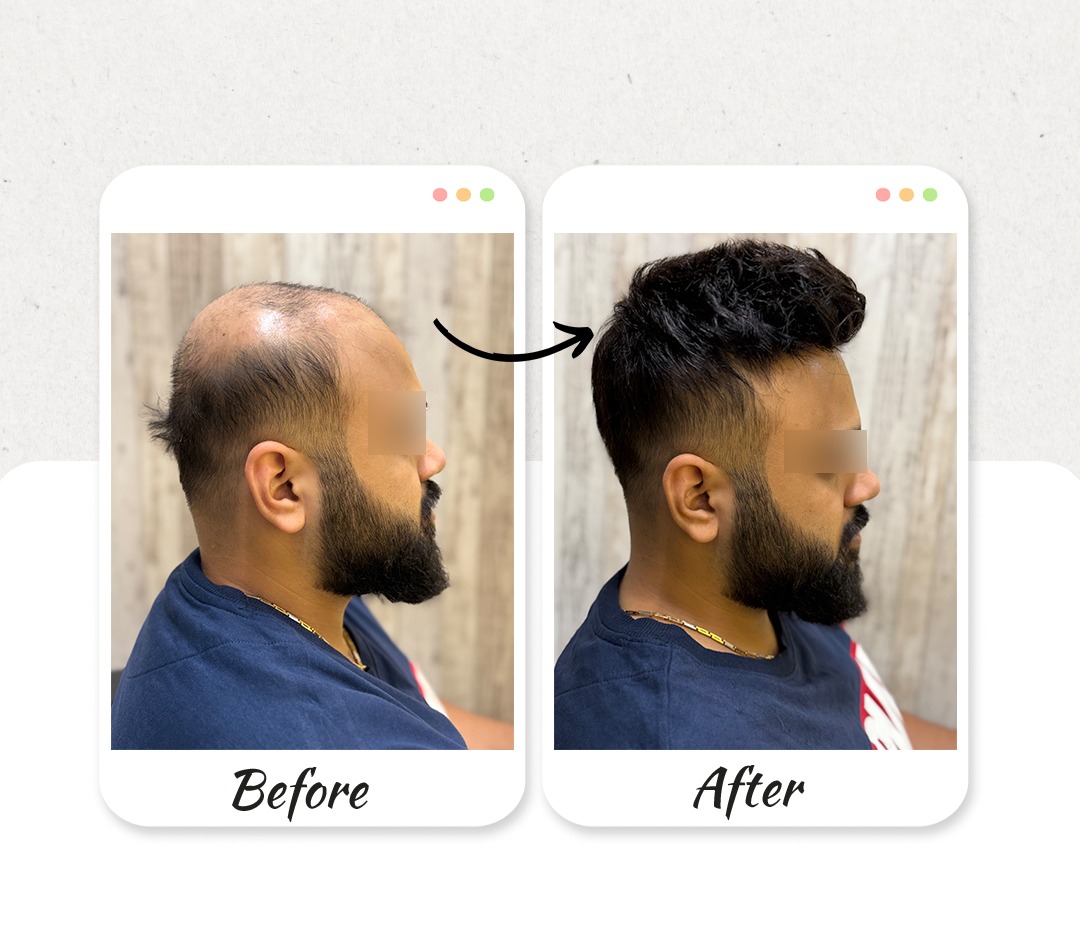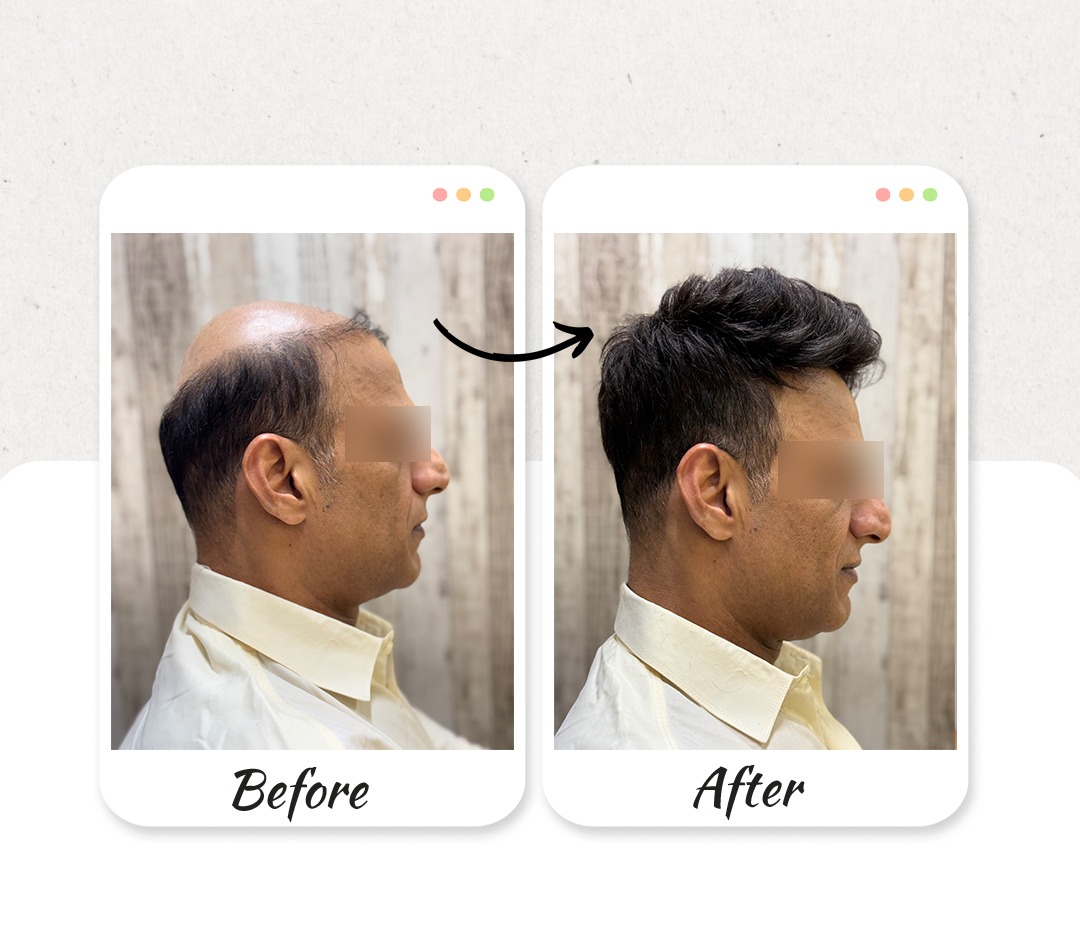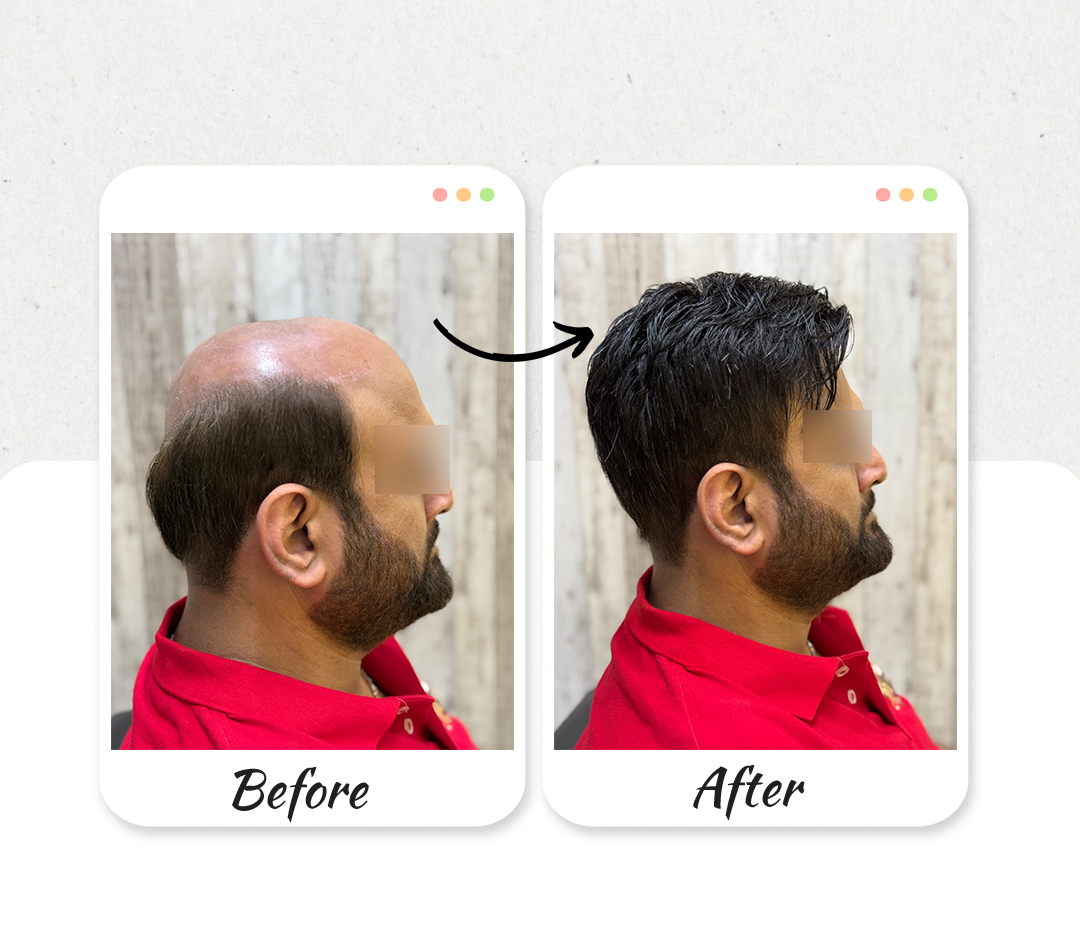
Two men walk into our studio with almost identical hair loss: a receding front and a thinning crown. One leaves with a patch he’ll clip on each morning and take off each night. The other leaves with one he won’t remove for weeks. The patch quality is the same, and the problem is the same, yet the daily experience is completely different. The only real difference is how the patch stays on. That’s the detail most first-timers overlook, and it’s why understanding hair patch attachment methods matters as much as choosing the patch itself.
At Hair Destination Studio, we fit patches at our Powai and Malad studios in Mumbai. After “Will it look natural?”, the question we hear most is “How does it actually stay on?” Three methods cover almost every case: hair bonding for men, clip-ons, and tape. Each is excellent for the right person and frustrating for the wrong one. Here’s how to tell which is which.
What “Attachment” Really Decides
The base material, density and hairline design of a patch get most of the attention. But the attachment method decides how the patch behaves in real life. It determines how it handles a sweaty commute, whether you can swim, how often you’re back in the chair, and how your scalp feels at the end of a long day.
It also decides how much flexibility you have. Some methods let you remove the patch whenever you like. Others are built to stay put until your next appointment. Neither approach is better in the abstract. What matters is whether the method fits your routine, your scalp and your pattern of hair loss.
Hair Bonding: The Set-and-Forget Option
How it works
In bonding, the patch is fixed directly to the scalp using a skin-safe bonding adhesive. The patch is custom-sized and matched to your hair colour and texture, then placed over the thinning area. In a studio, the application itself usually takes around 45 minutes to an hour. After that, the patch becomes part of your routine instead of something you manage.
Who it suits
Hair bonding for men works best for people who would rather not think about their hair at all. If you travel often, work out regularly, or simply don’t want a morning ritual, bonding gives you a patch that stays through showers, workouts and long days.
It’s also the most dependable choice when there’s little surrounding hair to anchor anything. A bald crown or a large frontal patch with sparse hair around it leaves clips with nothing to grip. Bonding doesn’t rely on your existing hair for support, which is why we recommend it so often for more advanced hair loss.
The trade-offs
Here’s what most people don’t realise before they start: bonding is a commitment to maintenance. You can’t take the patch off at will. In our experience, clients return every few weeks so we can remove the patch, clean the scalp, and re-bond it. Skipping appointments is the fastest way to end up with lifting edges, a dull-looking patch and an irritated scalp.
Skin sensitivity also matters. Adhesives don’t suit everyone, so we use hypoallergenic, skin-friendly products and always talk through your scalp history first. If you’ve reacted to adhesives, plasters or hair dye before, tell us at the consultation.
Clip-On Hair Patch: Freedom on Your Terms
How it works
A clip-on patch attaches with small, specially designed clips that grip your natural hair around the patch’s edges. No adhesive touches your scalp. You put it on, blend it in, and take it off when you’re done.
Who it suits
A clip-on hair patch for men is ideal when your hair loss is partial, and you still have a healthy border of natural hair. Think of a thinning crown or a widening top with decent hair at the sides and back. The clips need that surrounding hair to hold on to.
It’s also the natural choice for men who want to ease into the idea. If you’re nervous about committing, or you’d like to wear a patch only for work, weddings or events, a clip-on lets you test the waters without a long-term bond. Men with sensitive skin often prefer it too, since nothing sticky ever touches the scalp.
The trade-offs
A clip-on hair patch for men demands more from you every day. You’ll need to fit it correctly each time, and how natural it looks depends on how well the edges are blended with your own hair. That takes a little practice.
There’s also the question of your own hair. Clips put gentle tension on the hair they hold. If your natural hair is already fine and fragile, repeated clipping in the same spots can stress it further. A good fitting should position clips carefully and spread the load, and we’ll be honest if we think your hair can’t support this method.
Finally, a clip-on isn’t the best match for strenuous activity or high-movement days. It’s secure for normal life, but it doesn’t have the all-day, all-activity grip of a bonded patch.
Tape Hair Patch: The Middle Ground
How it works
Tape sits between the other two methods. A medical-grade double-sided tape is placed along the base of the patch, and the patch is pressed onto a clean, dry scalp. It holds firmly without the longer-term commitment of bonding, and you can remove and re-tape the patch as needed.
Who it suits
Tape suits men who want a secure hold but also want the option to remove the patch more often than bonding allows. It works well for people who like to give the scalp a break, who have varied schedules, or who want a cleaner-feeling attachment than adhesive.
Tape is also very forgiving on the sides and front edges, which is where a patch gets the most scrutiny. A flat, well-applied tape edge can look exceptionally clean.
The trade-offs
Tape and oil don’t get along. Scalp oil, sweat, and humidity can weaken the hold, so tape demands more from your scalp hygiene than bonding does. If you have a scalp that is oily, sweaty, or spend hours in crowded Mumbai local trains, tape may need changing more often than you’d like. And because each re-taping is an application in itself, you’ll either learn to do it carefully at home or visit the studio more often.
Side-by-Side: How the Three Methods Compare
| Hair Bonding | Clip-On | Tape | |
| Daily effort | Low | Higher (fit each time) | Moderate |
| Removable at will | No | Yes | Yes, but needs re-taping |
| Needs surrounding hair | No | Yes | No |
| Best for | Active, low-maintenance routines | Partial loss, occasional use | Flexible schedules, clean edges |
| Sweat and humidity | Handles well | Handles well | Can weaken hold |
| Maintenance visits | Regular, every few weeks | Minimal | Moderate |
Use the table as a starting point, not a verdict. Your scalp, hairline, and daily routine will adjust with each row.
Five Questions to Ask Before You Choose
- How much natural hair do you have left? This is the most practical filter. Plenty of border hair opens up all three options. Very little, or none, points toward bonding or tape.
- How active is your day? Gym sessions, long commutes, outdoor work and swimming favour a more secure hold. A desk job with an occasional event suits a clip-on hair patch for men just fine.
- How does your scalp behave? Oily, sweaty or sensitive skin changes the answer. This is why a proper scalp check matters, and why we’d never choose a method before seeing your skin in person.
- How much time can you give it? A clip-on trades studio visits for daily effort. Bonding trades daily effort for regular visits. Be honest about which one you’ll actually stick with.
- How permanent do you want it to feel? Some men want a patch they can remove in the evening and look like themselves. Others want to stop thinking about it for weeks at a time. Neither is wrong.
The Mumbai Factor
Climate matters more than most guides admit. Mumbai’s humidity, monsoon, and long journeys on crowded trains put every attachment method under pressure. Bonding generally copes best with sweat and moisture. Tape needs more attention during the monsoon months. Clip-ons hold up well but depend on how neatly your hair blends around the edges.
None of this means one method is wrong for the city. It means the best choice depends on how you live in it, and a good consultation should account for that. At our Powai and Malad studios, we start with your daily routine before we ever talk about products.
Common Mistakes We See
- Choosing by price or by what a friend uses. What works for someone else’s scalp and lifestyle can be a poor fit for yours.
- Expecting a clip-on to behave like a bonded patch. They’re different tools for different situations.
- Skipping maintenance. Every method works best when you clean, check, and re-fit it on schedule.
- Ignoring skin reactions. Redness, itching or discomfort is a signal to speak up, not something to push through.
- Treating the first choice as final. Your needs change, and your method can too.
Can You Switch Methods Later?
Yes, and many clients do. Someone might begin with a clip-on to build confidence, move to tape for a more secure hold, and eventually settle into bonding once the routine feels natural. Others go the other way when their lifestyle changes. Depending on its condition and design, the patch can often be adjusted or refitted for a different method, and we’ll tell you honestly if a change makes sense.
That’s another reason to treat your first choice as a starting point. Think of hair patch attachment methods as options you can revisit, not a one-time decision.
So, Which One Is Right for You?
If you want the most secure, low-effort experience and don’t mind regular servicing, hair bonding for men is usually the strongest option. If you still have good natural hair around the loss area and want the freedom to take the patch off, a clip-on hair patch for men is hard to beat. If you want a firm hold with more flexibility than bonding, tape is the practical middle path.
We’d gently push back on the idea that there’s a single “best” method. After 15+ years and thousands of clients, we’ve found that the right answer comes from a short conversation and a proper look at your hair and scalp, not a general ranking.
That’s what our free consultation is for. Come to our Powai or Malad studio, tell us how your week really looks, and we’ll walk you through the hair patch attachment methods that suit you, including what each would involve day-to-day. There’s no pressure and no commitment. Just clear answers from people who fit patches every day, so you can decide with confidence.
I’ve saved this blog topic and its keywords under your Hair Destination Studio notes. I kept the word count in the 1800-2100 range as agreed.