It starts quietly. A few extra strands on the pillow. A slightly wider parting. The hairline that looks just a little different in the bathroom mirror on a Tuesday morning. You tell yourself it’s nothing, and then, one day, it isn’t nothing anymore.
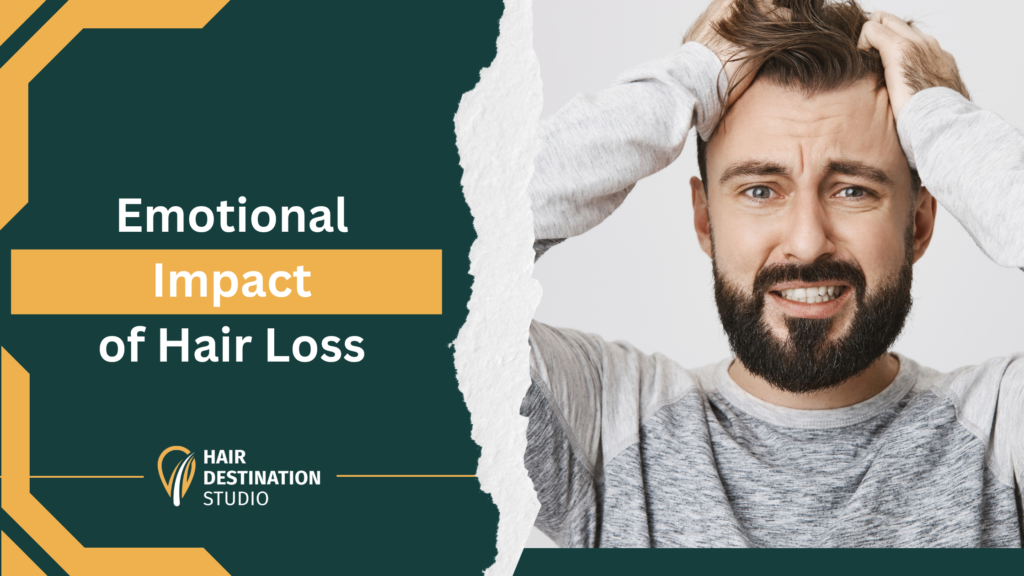
Hair loss is rarely talked about for what it really is: an emotional experience. The conversations are usually about treatments, costs, and procedures. But what most people don’t realise is that before anyone searches for a solution, they spend weeks, sometimes months, quietly carrying the weight of what thinning hair does to how they feel, about themselves, in social situations, and in front of the mirror every single day.
If that sounds familiar, this is for you.
Why Hair Loss Hits Harder Than It “Should”
There’s a phrase we hear often at Hair Destination Studio: “I know it’s just hair, but…” That “but” carries a lot. Because on some level, it isn’t just hair. Hair is one of the first things people notice about you. It frames your face, signals your age, and communicates personality. It’s tied to identity in ways that are hard to explain until you start losing it.
The emotional impact of hair loss is well-documented, including anxiety, reduced self-esteem, social withdrawal, and even depression in more severe cases. And yet, it’s one of those experiences people often suffer through in silence, partly because it doesn’t seem “serious enough” to talk about, and partly because the advice they receive, “just shave it,” “it’s not that bad,” “you can barely tell”, tends to minimise rather than acknowledge what they’re actually going through.
The reality? The psychological impact of hair loss is real, and it doesn’t require justification.
The Emotional Stages Most People Go Through
Across the 15,000+ clients we’ve worked with, a pattern shows up again and again. Hair loss rarely announces itself dramatically, and neither does the emotional response to it. Most people move through something like this:
Denial and minimising
The first stage is almost always some version of: “It’s just seasonal shedding” or “Stress does this sometimes.” Denial isn’t a character flaw; it’s a coping mechanism. The mind resists change, especially change that feels unwelcome.
Self-consciousness in everyday moments
Here’s where things get quietly painful. It’s not one dramatic moment; it’s a hundred small ones. Avoid being photographed from certain angles. Choosing seats with your back to the light. Spending twenty extra minutes in the morning trying to style your hair in a way that hides what you’re dealing with. Over time, these small adjustments accumulate into real anxiety.
Withdrawal and comparison
Social withdrawal is one of the least-discussed yet most common emotional effects of hair loss. Some people stop attending events. Others pull away from social media or avoid catching their reflection in glass doors. The constant mental comparison to how they looked before, or to others who still have a full head of hair, can be exhausting.
Seeking a way forward
Eventually, most people arrive at a point where they stop mourning what they had and start looking for what’s possible. This is where the conversation about solutions begins, not just for the hair, but for the confidence beneath it.
“I stopped going to family events for almost a year. Not because I didn’t want to, but because I couldn’t face the comments. Getting a hair system changed everything. I walked back in, and nobody even noticed I’d been gone; they just noticed I looked good.” Client, Mumbai
Men and Women Experience It Differently, But Both Experience It Deeply
There’s a social narrative that hair loss is more acceptable for men, that men can just “own it” by shaving their heads. But in our experience, that narrative doesn’t match reality. The emotional impact of hair loss in men is often suppressed because they feel they’re not supposed to care. That suppression doesn’t make the distress go away. It just makes it harder to seek help.
For women, the distress is often even more acute because hair loss in women is less socially normalised. A woman experiencing diffuse thinning or a receding hairline frequently reports feeling “unfeminine” or self-conscious in ways that can deeply affect professional and personal relationships.
What’s consistent across both, regardless of gender, age, or degree of loss, is that the emotional experience is valid. And it deserves a real, effective response.
What Actually Helps: Beyond Accepting It and Moving On
The standard advice for coping with hair loss tends toward the philosophical: “Accept yourself,” “Confidence comes from within,” “It’s what’s on the inside that counts.” And while none of that is wrong, it often misses the practical reality that for many people, feeling good about how they look is part of feeling good overall. There is nothing shallow about that.
Here’s what genuinely helps:
Talking about it. With a trusted friend, a partner, or a professional. Simply naming what you’re feeling reduces its hold on you.
Separating fact from perception. Most people with early-stage hair loss significantly overestimate how noticeable it is to others.
Exploring solutions without pressure. Understanding your options, including non-surgical ones, helps the brain move from “there’s nothing I can do” to “I have a choice here.” That shift alone can reduce anxiety considerably.
Taking action when you’re ready. Not because someone pushed you, but because you want to feel like yourself again.
Non-Surgical Hair Replacement: What Changes When You Look Like Yourself Again
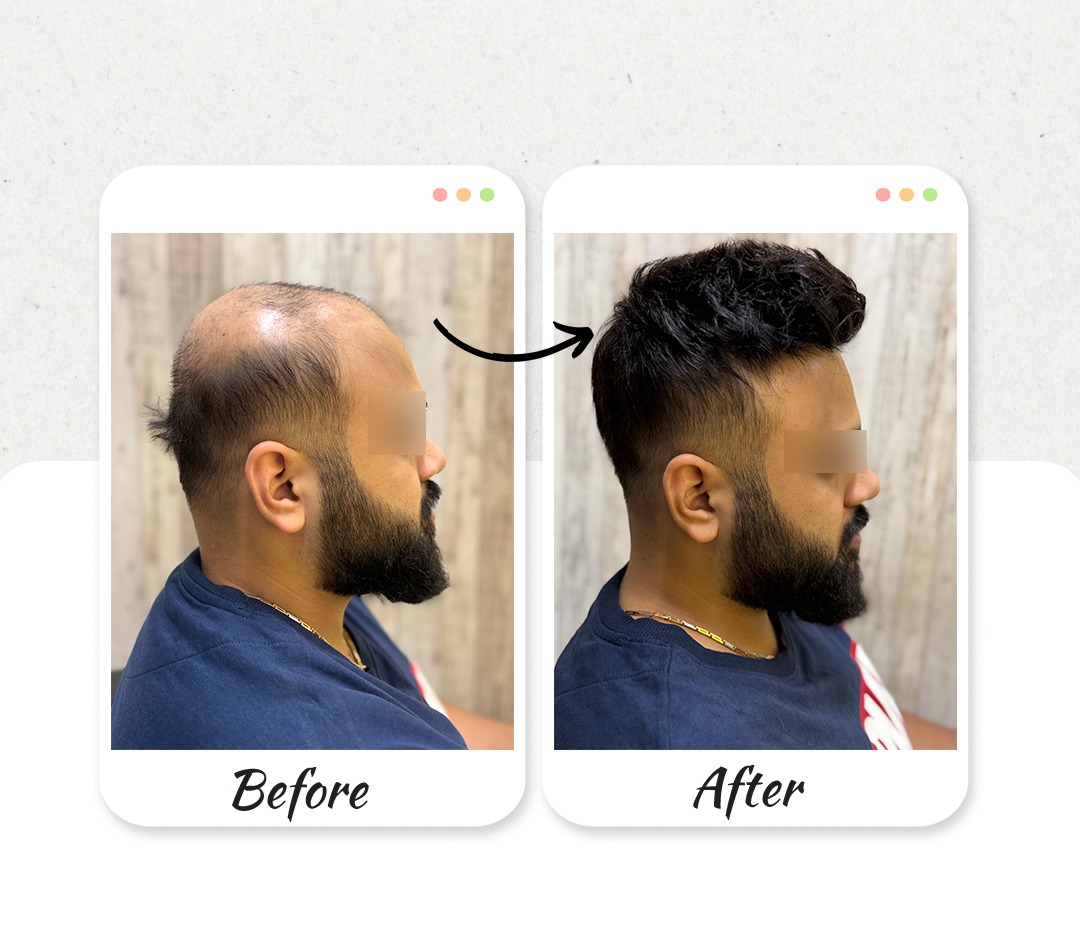
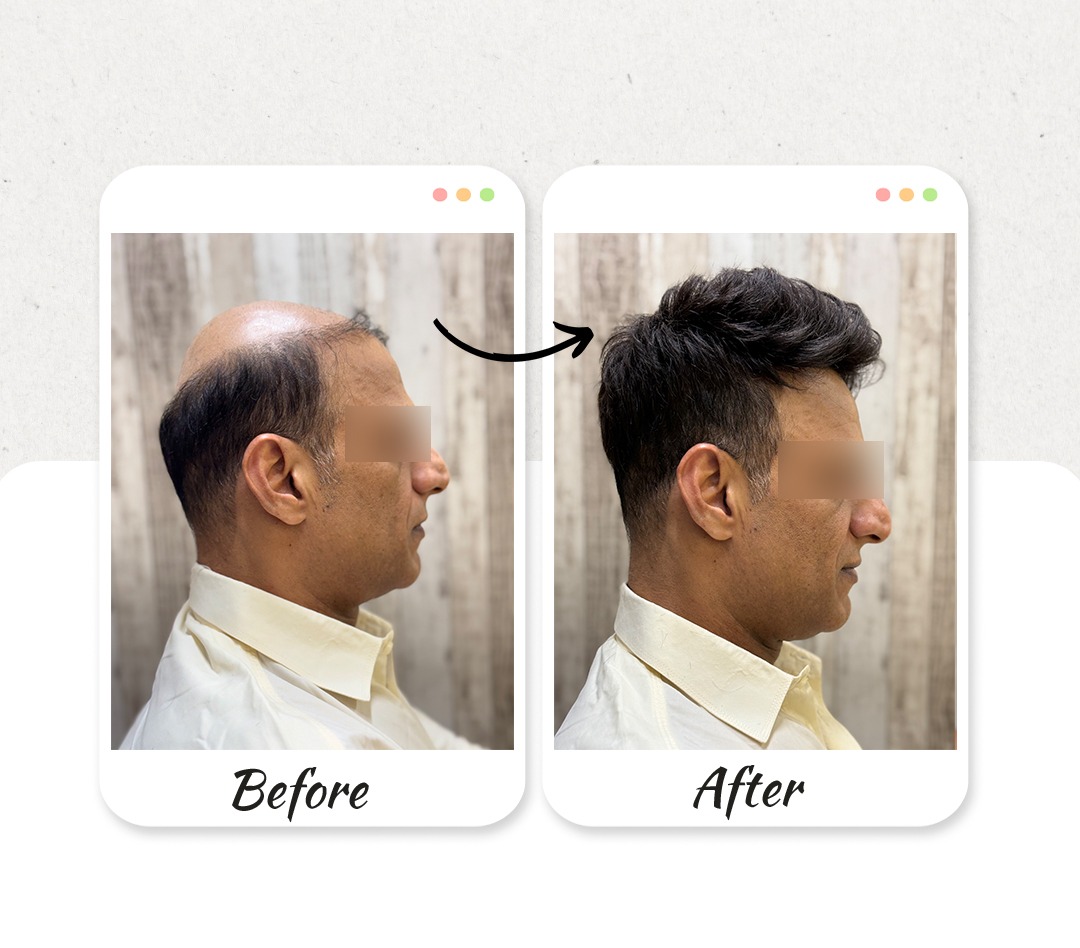
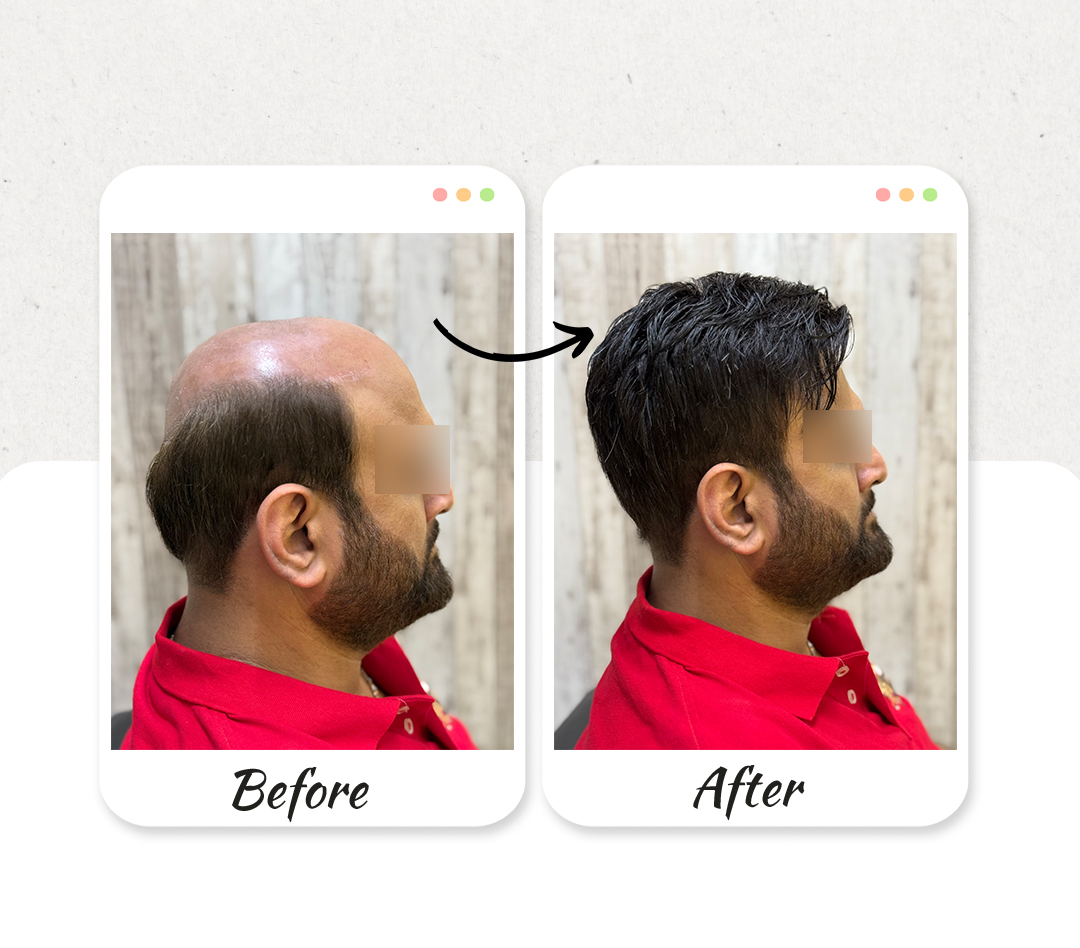
This is something we see directly at Hair Destination Studio. When a client walks out after their first hair system fitting, the transformation isn’t just physical. There’s a shift in posture. Eye contact returns. The person who walked in looking at the floor leaves looking straight ahead.
Non-surgical hair replacement in Mumbai has become an increasingly popular choice precisely because it addresses the emotional impact of hair loss without the commitment, cost, or recovery of surgical procedures. A well-fitted, customised hair system, crafted with 100% natural human hair and matched to your exact hairline, density, and texture , doesn’t just cover hair loss. It removes the daily emotional burden that came with it.
Clients who come to us often say the same thing: they didn’t realise how much mental energy they’d been spending on their hair, managing it, hiding it, thinking about it, until that weight was gone.
You Don’t Have to Just “Live With It”
There is sometimes an implicit message in the conversation around hair loss that the only emotionally mature response is total acceptance. But acceptance and action aren’t opposites. You can fully accept that hair loss is a natural biological process and still choose to do something about it, because it matters to you, and your confidence matters.
The emotional impact of hair loss is real. The desire to do something about it is legitimate. And the solutions available today, particularly non-surgical ones , are more natural-looking, more accessible, and more affordable than most people expect.
At Hair Destination Studio, every consultation starts not with measurements, but with a conversation. Because the hair is the solution. The real issue, the one worth addressing first, is how you feel.
Ready to feel like yourself again?
Hair Destination Studio offers a free consultation, no pressure, no commitment. Just an honest conversation about your hair and your options, with experts who understand what you’re going through.
Book a free consultation