Most men notice it the same way, in the shower drain, on the pillow, or in a photograph where the lighting was a little too honest. It rarely happens overnight. Hair loss in men tends to creep in quietly, almost politely, until one day you’re standing in front of the mirror and something feels noticeably different about the way you look.
And then the spiral begins. You start Googling. You read about oils, shampoos, supplements, and surgeries. Seventeen tabs later, you’re more confused than when you started, and still no closer to understanding what’s actually causing it.
Here’s the thing: the cause matters more than most men realise. Hair fall reasons vary dramatically from person to person, and the approach that works for one man may do absolutely nothing for another. If you’re serious about addressing the problem, whether through lifestyle changes, treatment, or a non-surgical hair replacement solution, understanding the root cause is the only sensible place to start.
Let’s break down the seven most common hair loss causes in men, plainly and without the fluff.
1. Genetics, The One Most Men Already Suspect
Androgenetic alopecia, or male pattern baldness, is responsible for the vast majority of hair loss in men worldwide. If your father, grandfather, or maternal uncles had a receding hairline or a thinning crown, there’s a real chance your hair is following the same inherited script.
What’s happening underneath the surface is this: certain hair follicles are sensitive to a hormone called DHT (dihydrotestosterone), a derivative of testosterone. Over time, DHT causes these sensitive follicles to shrink, producing progressively thinner, finer strands until the follicles eventually stop producing hair at all. The pattern typically begins at the temples or the crown and spreads gradually from there.
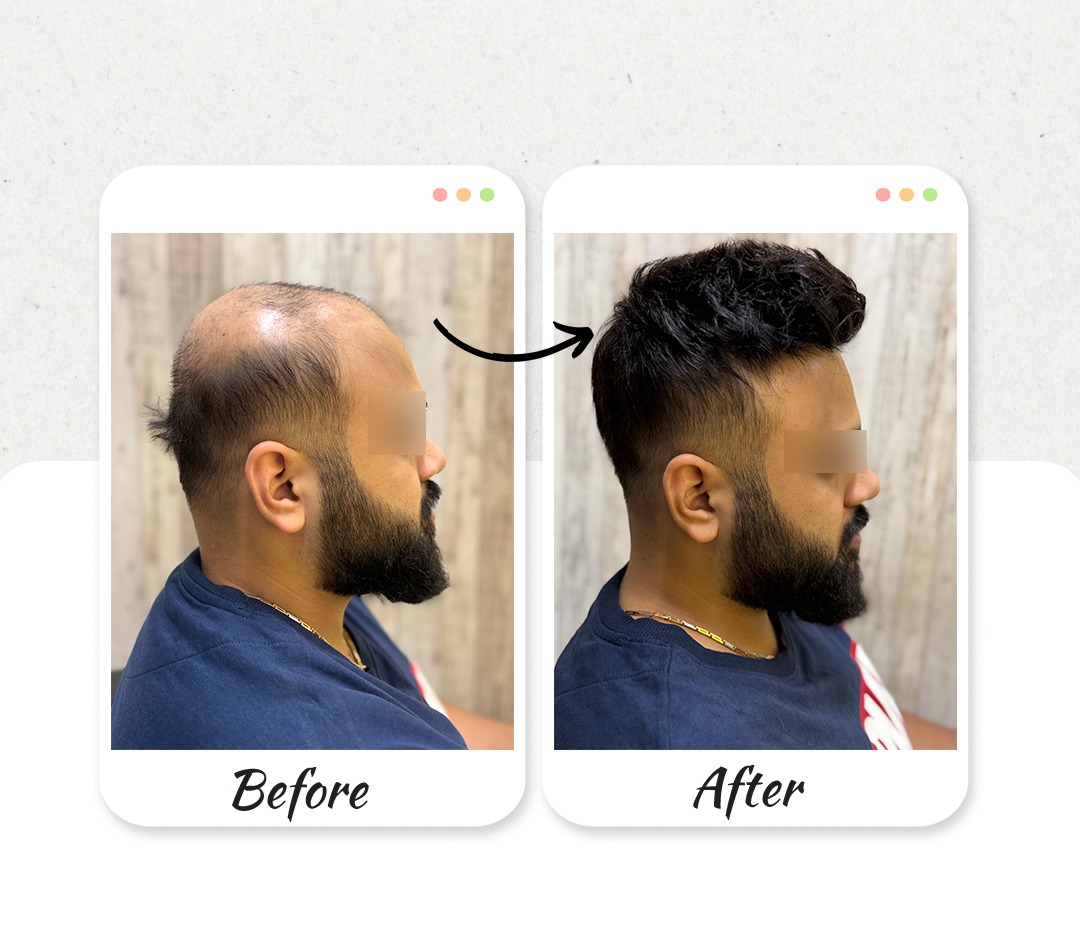
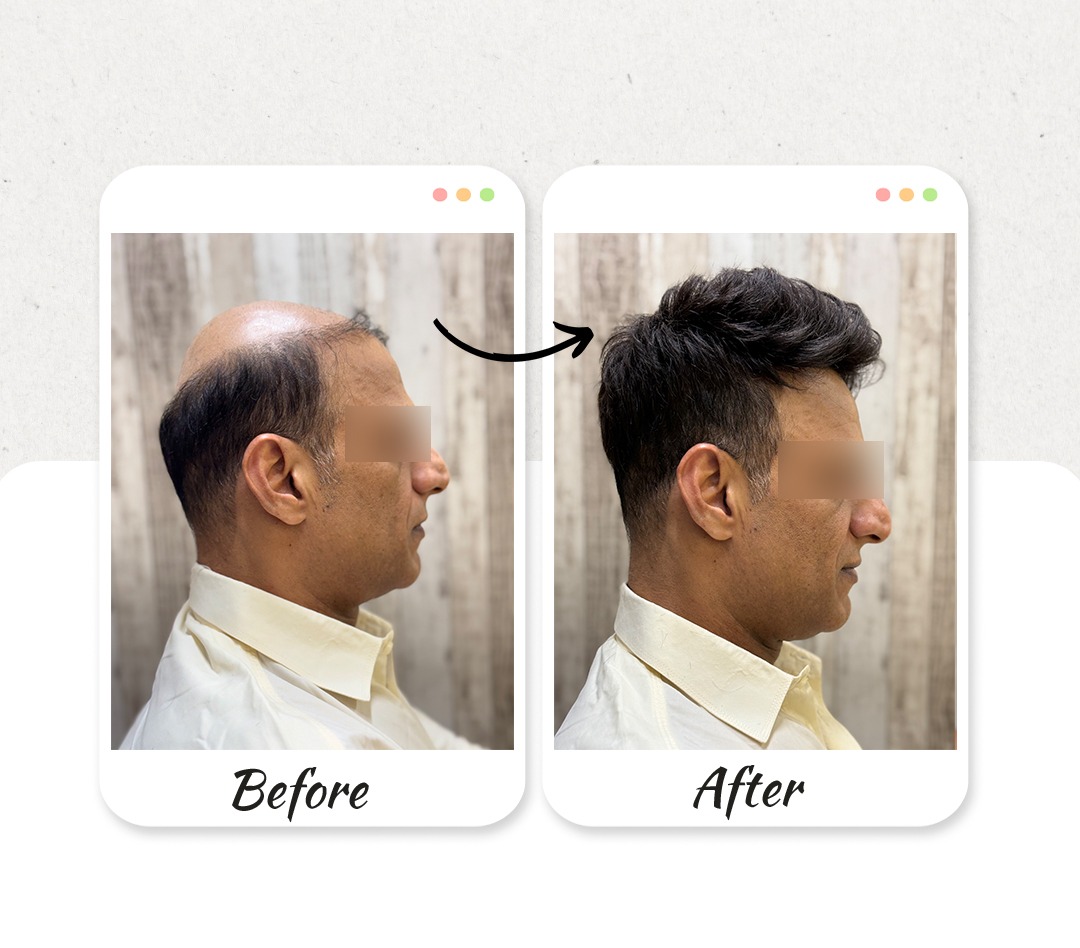
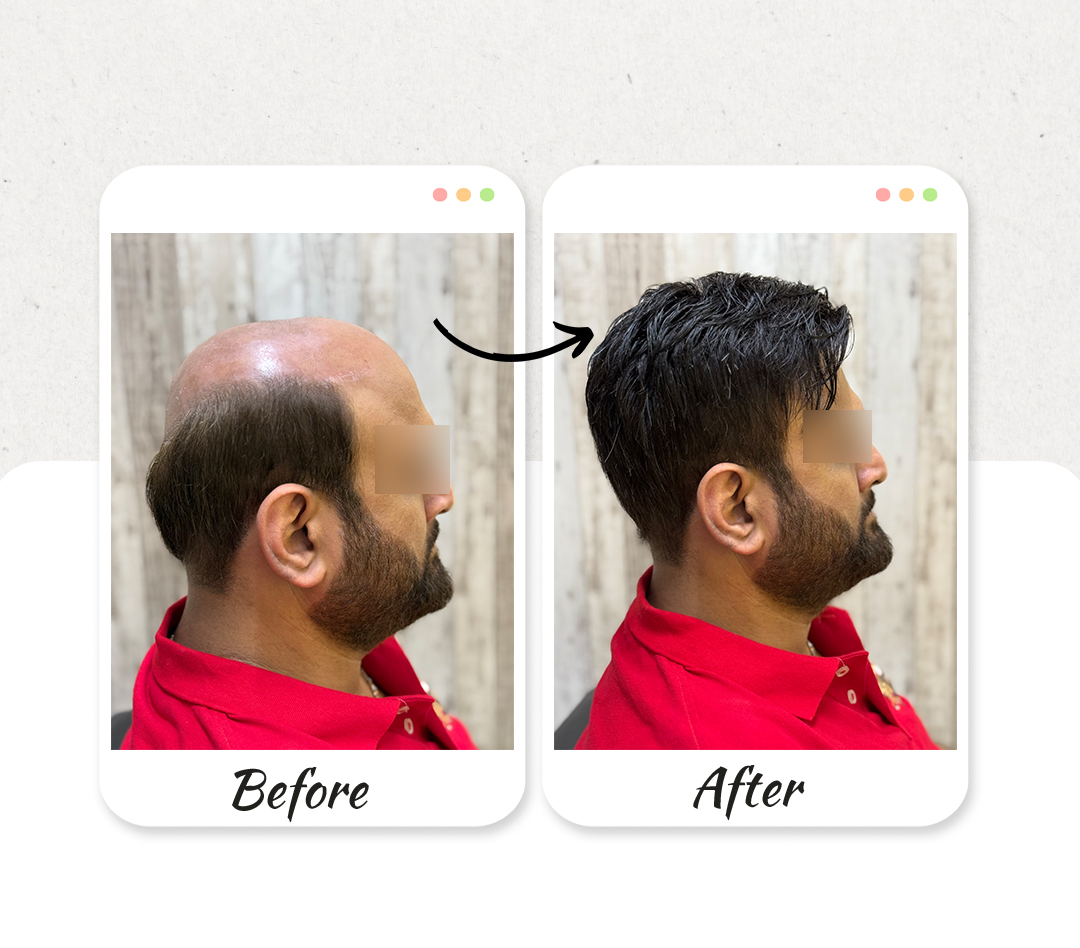
A lot of men feel a sense of resignation when they hear “genetics”, as if it ends the conversation. It doesn’t. Genetic hair loss doesn’t mean you’re helpless. It means the follicles have stopped functioning the way they once did. And that’s precisely the gap that well-designed, non-surgical hair replacement solutions exist to fill, immediately, naturally, and without putting you through surgery or a months-long recovery.
2. Chronic Stress, The Cause Most Men Dismiss Too Quickly
Stress and hair fall have a well-documented biological relationship. The trouble is, most men don’t connect the two until they look back at a difficult stretch, a brutal work period, a personal loss, months of broken sleep, and realise their hair thinned significantly around that time.
The condition is called telogen effluvium. Under prolonged physical or psychological stress, the body essentially goes into triage mode, redirecting resources away from functions it considers non-essential. Hair growth is one of them. A large proportion of hair follicles shift simultaneously into a resting phase, and shedding tends to appear weeks or even months after the stressful event, which is why the connection is often missed.
What most people don’t realise is that stress-related hair loss can be partially reversible, particularly when caught early and the triggers are properly addressed. But here’s the catch: if stress becomes chronic and goes unmanaged over a long period, it doesn’t just cause isolated shedding, it compounds the impact of other hair loss causes and accelerates what might otherwise have been a much slower process.
3. Poor Diet and Nutritional Deficiencies
Hair is made of keratin, and keratin is a protein. What you consistently eat, or don’t eat, has a direct bearing on hair quality, growth rate, and how long each strand stays healthy before it sheds. Men who eat highly processed diets, skip meals regularly, or follow extreme calorie restriction often develop nutritional gaps that show up in their hair before they notice any other symptoms.
The most common deficiencies linked to hair fall reasons in men include iron, zinc, biotin, and vitamin D. Iron deficiency reduces the oxygen supply reaching hair follicles. Zinc disrupts the natural hair growth cycle when it’s insufficient. Vitamin D plays a role in activating dormant follicles, and given how much time most people spend indoors, particularly in a city like Mumbai, low vitamin D levels are far more common than most men would expect.
Crash dieting deserves a specific mention here. Rapid, severe caloric restriction triggers significant hair shedding because the body interprets the sudden drop in nutrition as a form of stress and responds accordingly. The hair loss from crash dieting can feel alarming in its speed, even though the underlying cause is often straightforward.
4. Scalp Conditions That Get Ignored for Too Long
A healthy scalp is the literal foundation of healthy hair. And yet scalp health is one of the most consistently neglected parts of a man’s grooming routine. Conditions like dandruff (seborrhoeic dermatitis), scalp psoriasis, and fungal infections inflame the scalp, disrupt the follicular environment, and create conditions in which sustained hair growth becomes genuinely difficult.
The mistake most men make is treating visible flaking or persistent itching as purely a cosmetic problem and reaching for a generic anti-dandruff shampoo without ever investigating whether there’s an underlying inflammation driving the issue. Consistent scalp irritation, left unaddressed for months or years, can quietly accelerate hair thinning in ways that feel disproportionate to what seems like a minor scalp issue.
If your scalp regularly feels itchy, oily, or inflamed, particularly in the same patches, that’s a signal worth taking seriously. It won’t resolve itself by switching shampoos alone.
5. Hormonal Imbalances Beyond DHT
DHT gets the majority of the attention in conversations about the causes of male hair loss, and rightly so. But it’s not the only hormonal factor involved. Thyroid dysfunction, both hyperthyroidism and hypothyroidism, is a recognised contributor to hair thinning in men, though it’s significantly underdiagnosed because most people associate thyroid issues with women.
An underactive or overactive thyroid disrupts the natural hair growth cycle, typically producing diffuse thinning across the scalp rather than the recognisable receding pattern of androgenetic alopecia. This diffuse thinning is often one reason men fail to identify a hormonal imbalance as the culprit, because it doesn’t look like “typical” hair loss.
Elevated cortisol from prolonged stress also suppresses normal hormonal function and can interfere with follicle activity in ways that go beyond the direct shedding discussed earlier. Hormonal hair loss in men is genuinely harder to self-diagnose. A straightforward blood panel can reveal far more than months of guesswork and trial-and-error product purchases.
6. Hairstyling Habits and Product Overuse
This one tends to surprise people, but it’s more relevant than most men think, particularly for anyone who styles their hair regularly, uses strong-hold products daily, or has maintained the same tight hairstyle for years.
Traction alopecia is hair loss caused by consistent physical tension on the follicle. Men who wear tight topknots, man-buns, braids, or any pulled-back style daily over an extended period are gradually stressing the follicles at the hairline and temples. The damage doesn’t happen overnight, which is precisely why it goes unnoticed until the loss becomes visible.
Beyond hairstyle tension, frequent use of heat-styling tools without protection, harsh, chemical-laden products, and the habit of washing hair with very hot water all progressively weaken the hair shaft. The result looks like hair fall, but what’s often happening is structural breakage, a different problem with a different solution. The practical takeaway: if you’re a daily styler, your routine deserves as much attention as your diet or stress levels for hair health.
7. Medications and Medical Treatments
Many common medications list hair thinning or hair loss as a documented side effect, and many men never make the connection between starting a prescription and the shedding they’ve noticed since. Blood thinners, certain antihypertensives, antidepressants, and some cholesterol-lowering medications have all been associated with increased hair fall in men.
Chemotherapy is the most widely known example, sitting at the extreme end of this spectrum. But medication-related hair loss exists on a broader continuum. Even supplements consumed in excess, high doses of vitamin A, for instance, can trigger significant shedding that gets mistakenly blamed on other hair fall reasons.
If you’ve started a new medication in the last six to twelve months and noticed a change in your hair density or shedding rate, it’s a conversation worth having with your doctor. In some cases, adjusting dosage or switching to an alternative is possible. In others, the hair loss is temporary and resolves once the treatment course concludes.
Knowing the Cause Is Step One, Not the Finish Line
Understanding why your hair is thinning gives you clarity and a starting point. But it doesn’t automatically restore your hair, especially when the cause is genetic, when follicles have been inactive for a prolonged period, or when the underlying condition has progressed beyond what lifestyle changes alone can reverse.
At Hair Destination Studio, we’ve worked with men across all seven of these categories, from men in their early 30s catching genetic hair loss early to men in their 50s who’d been dealing with significant thinning for over a decade. Across 15+ years and more than 15,000 transformations, one thing has remained consistent: the right solution only becomes clear after a proper, honest look at what’s actually going on.
Our approach to hair thinning treatment is never one-size-fits-all. It starts with a free consultation, no pressure, no generic advice, just a real conversation with someone who understands the full picture. If you’ve been watching your hairline change and haven’t yet taken a step toward addressing it, that consultation is the only place to begin.
Our studios in Powai and Malad are open. The first step costs nothing.
Hair Destination Studio | Non-Surgical Hair Replacement in Mumbai
Powai & Malad | +91 88283 81386